










It may sound like science fiction to the layperson, but cryopreservation is here, and it’s bridging the gap between what’s medically possible today and the potential of future technologies. This technology sits at the intersection of biotechnology, medicine and long-term patient care.
Cryonics extends the principles of stasis maintenance to the human body, focusing on preserving the brain’s structure after legal death. Understanding the process reduces uncertainty and highlights how modern cryobiology translates into a controlled, step-driven procedure.
The Scientific Goal of Cryopreservation
At its core, it aims to stabilize biological structures at extremely low temperatures to halt ongoing cellular decay. In the context of human cryonics, the objective centers on preserving someone’s memories, identity and personality.
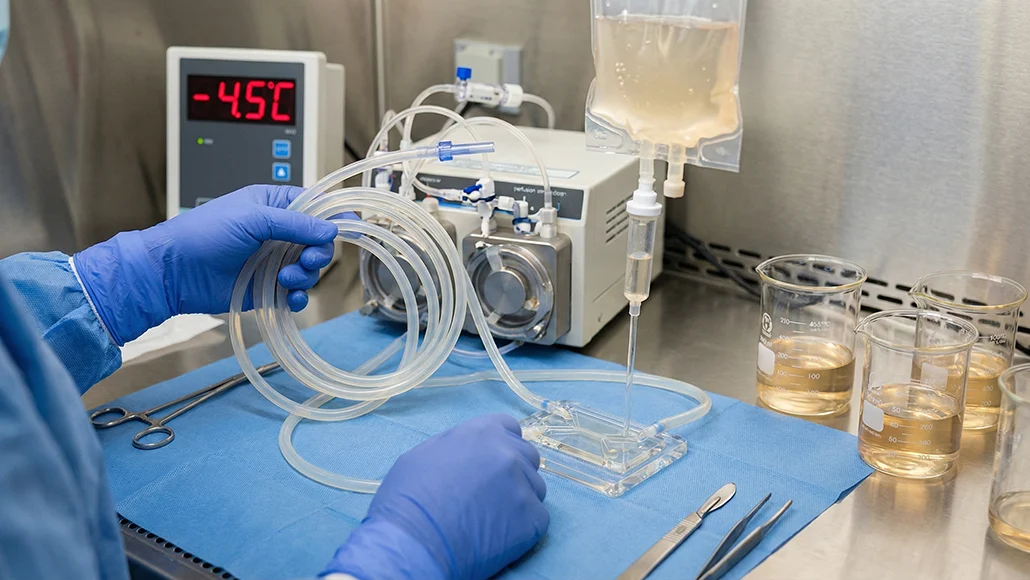
Rather than “freezing,” modern protocols rely on vitrification. This process prevents ice crystal formation, which would otherwise damage cells. Instead, tissues are cooled to very low temperatures and reach a glass-like state that maintains structural integrity at the microscopic level, perfectly preserving each brain’s unique form.
How does human cryopreservation work? It’s all about timing and control. The process begins immediately after legal death, when circulation and oxygen delivery stop. From that moment, every step focuses on minimizing damage and preserving as much biological information at the cellular level as possible.
The Alcor Cryopreservation Procedure: A Step-by-Step Guide
Understanding the cryopreservation steps explained in sequence removes much of the uncertainty around what happens to the body and why each phase matters. The Alcor Life Extension Foundation sets the benchmark for long-term patient care through its stasis units and approach.
Step 1: Rapid Response and Standby
The process begins at the point of legal death, and timing is critical. Alcor immediately deploys its Elite Deployment and Recovery Team (DART). They are on standby 24/7 and ready to initiate procedures with minimal delay.
The team’s role is to stabilize the patient and prevent early-stage degradation. The rapid response framework addresses one of the most common concerns about what happens in the critical minutes after death.
Step 2: Stabilization and Cooling
Once the team begins intervention, stabilization protocols start. You can expect several coordinated actions:
- Circulatory support: Mechanical systems maintain blood flow and oxygen delivery.
- Protective medications: Clinicians administer compounds designed to reduce ischemic injury and cellular stress.
- Initial cooling: The body temperature is lowered to slow metabolic processes.
This phase mirrors typical emergency medical care, with the goal shifting from recovery to preservation.
Step 3: Vitrification for Ice-Free Preservation
Vitrification represents the most scientifically complex stage. During this step, the following processes happen.
| Process | What It Entails |
| Cryoprotectant solutions replace blood | These specialized fluids reduce ice formation, thereby preventing tissue damage. |
| Water in cells is stabilized | The solution replaces over 50% of the body’s fluids and prevents expansion and crystallization of vital tissues during cooling. |
| Tissue transitions into a glass-like state | Structural integrity is preserved without ice damage. |
Pharmaceutical professionals may recognize this process as aligned with advanced cryobiology techniques used in organ preservation and reproductive medicine. The difference lies in the scale and precision across an entire human system.
Step 4: Indefinite Care
After vitrification, the patient undergoes gradual cooling to liquid nitrogen’s temperature. Key elements of this include the following.
| Key Element | Why It Matters |
| Controlled temperature descent | This prevents thermal stress and fracturing. |
| Placement in cryogenic dewars | Specialized containers maintain stable conditions. |
| Long-term monitoring | Systems ensure consistent environmental control. |
At this stage, as the company puts it, “Patients are then cared for indefinitely, until future medical breakthroughs enable the possibility for restoration and repair.” The focus shifts from active intervention to indefinite stewardship.
Commitment to Scientific Integrity and Patient Care
Alcor has developed its protocols more than 50 years, combining clinical precision with long-term operational planning. Key features of its program include:
- Established protocols: Decades of refinement based on ongoing research in cryobiology
- Dedicated emergency teams: DART teams ensure immediate response capability
- Secure Patient Care Trust: A legally separate structure that funds long-term care without operational overlap, ensuring no single shareholder or board member can make decisions that would impact the 252 patients already cryopreserved
- Advanced facilities: Purpose-built environments support stable cryogenic storage
- Continuous research: Ongoing efforts aim to improve preservation quality and outcomes
This integrated approach addresses both scientific and operational concerns. View the facility by arranging a tour, and see how the procedure works and how it remains stable over time.
Addressing Common Concerns About the Process
Many uncertainties stem from misconceptions about timing, safety and biological viability. Cryopreservation does not attempt to reverse death with the current technologies. Instead, it preserves biological structures in a state that future medical advancements may one day interpret and repair. From a pharmaceutical perspective, the concept aligns with long-term preservation strategies already used in repair, but extended to a more complex system.
FAQ
What is the difference between cryopreservation and freezing?
Freezing forms ice crystals that damage cells and tissues. Cryopreservation uses vitrification to prevent ice formation, maintaining the structures of the brain and body at the microscopic level.
What happens to a patient immediately after legal death?
A DART team begins stabilization procedures right away. This includes restoring circulation, administering medications and initiating cooling to slow cellular breakdown.
Who is eligible to become an Alcor member?
Register as a member by selecting your care plan and making arrangements with a life insurance policy that pays Alcor’s fees.
A Bridge to the Future
Cryopreservation is not an abstract concept. It follows a defined sequence grounded in cryobiology, emergency response and indefinite systems management. When you break the process down into its steps, rapid stabilization, vitrification and controlled storage, it becomes clear that each phase addresses a specific biological risk.
The parallels to existing preservation technologies make the field more approachable. The result is a structured, science-driven protocol designed to preserve what matters most the biological foundation of human identity.