









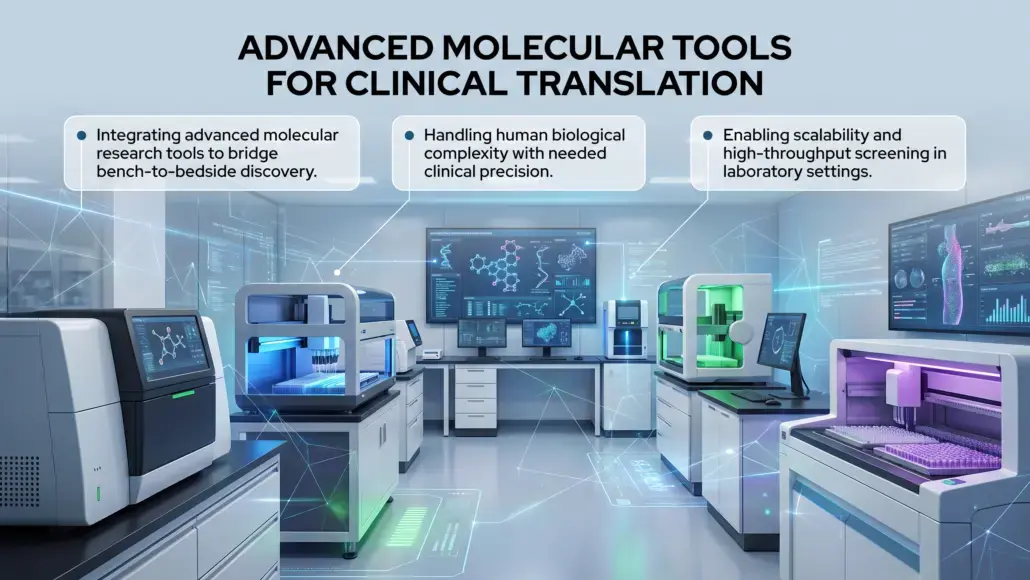
Clinical research organizations are currently integrating advanced molecular research tools and expanding translational applications to bridge the gap between basic laboratory discovery and patient-centered diagnostics. The transition from bench to bedside requires a suite of technologies that can handle the complexity of human biological systems while maintaining the precision needed for clinical decision-making.
Scalability and High Throughput Screening in Laboratory Settings
The expansion of advanced molecular research tools is significantly driven by the need for scalability and high-throughput screening in modern laboratory settings. Pharmaceutical companies are required to screen thousands of compounds daily, necessitating molecular tools that can maintain high accuracy at extreme volumes. Automated liquid handling systems and multi-parallel processing units are integrated into the workflow to ensure that the molecular analysis keeps pace with the speed of chemical synthesis. These high-throughput systems utilize microfluidic technologies and miniaturized assay formats to reduce reagent consumption and lower the cost per data point. Additionally, the implementation of sophisticated data management platforms allows for the real-time processing of the vast amounts of information generated by these screenings. By increasing the scale of molecular research, organizations can identify promising therapeutic leads more efficiently and reduce the time required to bring new drugs to market. The ability to perform complex molecular analyses at scale is a critical differentiator for leading research organizations, providing them with a significant competitive advantage in the global pharmaceutical market.
Regulatory Compliance and Global Quality Assurance Standards
Operating advanced molecular research tools within the pharmaceutical sector requires strict adherence to regulatory compliance and global quality assurance standards. Agencies such as the Food and Drug Administration and the European Medicines Agency mandate that all molecular research used in drug applications must be conducted under Good Laboratory Practice or Good Manufacturing Practice conditions. This necessitates the use of validated tools and standardized protocols that have been proven to deliver consistent and reliable results. Quality assurance programs are implemented to monitor the performance of molecular assays, including the use of certified reference materials and participation in external proficiency testing. Additionally, the documentation of instrument calibration, reagent lot tracking, and operator training is essential for maintaining the audit trail required by regulatory inspectors. By prioritizing compliance and quality, research organizations ensure that their molecular data is defensible and that their translational applications are safe for use in clinical settings. The commitment to meeting these high standards is a fundamental requirement for the success of any advanced molecular research program, providing the necessary assurance that the resulting data is of the highest quality.
These tools are designed to extract meaningful data from diverse sample types, including circulating tumor cells, microbial communities, and engineered genetic constructs. As the industry moves toward personalized medicine, the ability to profile individual molecular signatures with high accuracy becomes a fundamental requirement for the development of targeted therapies. The deployment of these advanced systems enables researchers to identify novel biomarkers, monitor treatment response in real-time, and engineer more effective delivery vehicles for genetic medicines. By standardizing these translational workflows, pharmaceutical companies can accelerate the validation of new drug targets and improve the overall success rate of clinical trials. The integration of high-throughput molecular analysis with clinical data streams is reshaping the pharmaceutical research environment, providing a more comprehensive view of human health and disease.
Exploring the Human Microbiome Frontier in Drug Discovery
The use of advanced molecular research tools is particularly impactful when navigating the human microbiome frontier, where the complex interactions between host and microbes influence therapeutic outcomes. Understanding the role of the gut, skin, and lung microbiotas in health and disease requires sophisticated metagenomic and metatranscriptomic analysis. These studies rely on the ability to isolate high-quality genomic DNA from challenging samples, such as fecal matter or mucosal swabs, which often contain high levels of PCR inhibitors. Specialized extraction kits and automated platforms are now available that can selectively enrich microbial DNA while minimizing host contamination, allowing for a more detailed characterization of microbial diversity and function. This information is critical for the development of microbiome-based therapies, including probiotics, live biotherapeutics, and small molecules that target microbial pathways. By mapping the microbial landscape of the human body, researchers can identify new opportunities for therapeutic intervention and gain a deeper understanding of how the microbiome modulates drug metabolism and immune response.
Optimizing Liquid Biopsy Workflows for Precision Oncology
A primary focus for Advanced Molecular Research Tools Expanding Translational Applications is the ongoing effort in optimizing liquid biopsy workflows for the detection and monitoring of cancer. Liquid biopsies offer a non-invasive alternative to traditional tissue biopsies, allowing for the analysis of circulating tumor DNA, RNA, and extracellular vesicles from a simple blood draw. However, the concentration of tumor-derived material in the bloodstream is often extremely low, requiring ultra-sensitive detection methods and highly efficient isolation techniques. Modern translational tools utilize specialized stabilization tubes and high-recovery extraction protocols to preserve the integrity of cell-free nucleic acids during transport and processing. Digital PCR and high-sensitivity sequencing panels are then used to detect rare mutations and copy number variations with high precision. These optimized workflows are essential for early cancer detection, the identification of minimal residual disease, and the monitoring of therapeutic resistance. By providing a real-time window into the molecular evolution of the tumor, liquid biopsies enable oncologists to tailor treatments to the specific needs of the patient, significantly improving the prospects for long-term survival.
Streamlining Plasmid Prep for Advanced Genetic Therapies
The production of next-generation biologics and viral vectors is heavily dependent on advanced molecular research tools for high-efficiency plasmid prep. Plasmids serve as the essential templates for the production of mRNA vaccines, gene editing components, and therapeutic proteins. In the pharmaceutical sector, the scale and speed of plasmid purification are critical factors in the development timeline. Modern technologies, such as high-capacity anion-exchange chromatography and automated vacuum-based systems, allow for the rapid isolation of milligram to gram quantities of transfection-grade DNA. These systems are designed to remove endotoxins and other impurities that could compromise the safety and efficacy of the final product. Additionally, the integration of real-time monitoring and quality control assays ensures that each batch of plasmid DNA meets the strict purity requirements of regulatory agencies. By streamlining the plasmid preparation process, researchers can iterate more quickly on genetic designs and move new therapies into clinical testing with greater confidence. The ability to rapidly produce high-quality genetic material is a cornerstone of the modern biotechnology industry, supporting the expansion of the genetic medicine portfolio.
Future Integration of Multimodal Molecular Diagnostics
The continued evolution of advanced molecular research tools expanding translational applications will likely focus on the integration of multimodal diagnostics that combine genomic, proteomic, and metabolomic data. This holistic approach to molecular profiling provides a more complete picture of the biological state than any single technology alone. By correlating changes in the genome with shifts in protein expression and metabolite concentration, researchers can gain deeper insights into the pathways that drive disease and the mechanisms that underlie drug response. The development of integrated platforms that can analyze multiple molecular species from a single sample is a key priority for the next generation of translational research. Additionally, the application of machine learning and artificial intelligence to these complex data sets will enable the identification of sophisticated molecular signatures that can predict patient outcomes with unprecedented accuracy. As these advanced tools become more widely available and cost-effective, their impact on the pharmaceutical industry will continue to grow, leading to more precise, effective, and accessible healthcare for populations around the world. The commitment to technical excellence in translational molecular research is the driving force behind the next wave of medical innovation.