











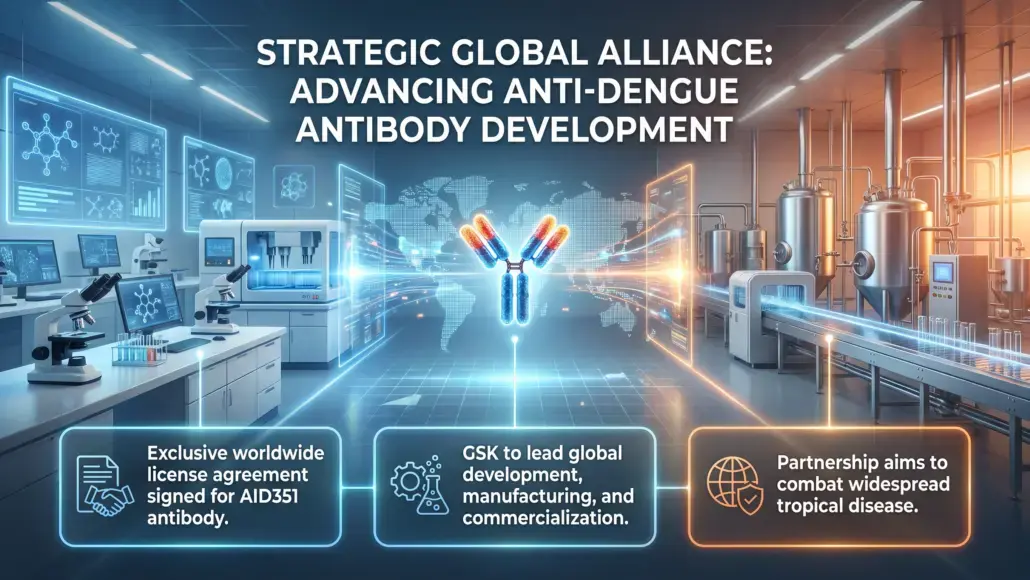
Japan-based Chugai Pharmaceutical has entered into an exclusive license agreement with British pharmaceutical company GlaxoSmithKline (GSK) for the anti-dengue virus antibody known as AID351, in a move that advances global efforts to combat one of the world’s most widespread tropical diseases.
Under the terms of the agreement, GSK obtains an exclusive, worldwide license from Chugai to develop, manufacture, and, if successful, commercialize anti-dengue antibody AID351. The antibody is expected to be used in managing flavivirus infections, including dengue fever — a disease classified by the World Health Organization (WHO) as one of the Neglected Tropical Diseases (NTDs).
Roles and Financial Terms
GSK will assume full responsibility for the clinical development of AID351, which includes overseeing Phase I clinical trials, as well as managing the manufacturing of the asset. Chugai, for its part, is eligible to receive royalties based on future product sales by GSK, should commercialization prove successful. Additionally, Chugai stands to receive a percentage of any sublicensing income that GSK may collect from third parties.
Foundations of the Collaboration
This agreement builds on a joint development initiative between Chugai Pharmabody Research (CPR) — the Chugai Pharmaceutical Group’s dedicated research base in Singapore — and the A*STAR Singapore Immunology Network (A*STAR SIgN). The lead antibody at the centre of this program was derived from A*STAR SIgN and the National University of Singapore (NUS).
GHIT Fund Support
The project has received grant funding on two separate occasions from the Global Health Innovative Technology (GHIT) Fund, underscoring the international commitment to advancing solutions for dengue fever and related flavivirus infections.
Accelerating Innovation in Dengue Treatment
Through this partnership, Chugai and GSK aim to further accelerate the development of an innovative new drug for dengue fever. The agreement represents the continued evolution of the existing collaborative framework between the two companies, now progressing into a globally structured licensing and development model centred on the anti-dengue antibody AID351.
Dengue fever, a vector-borne disease caused by flavivirus infections transmitted primarily through mosquito bites, continues to pose a significant public health burden, particularly across tropical and subtropical regions. Its designation as a Neglected Tropical Disease by the WHO reflects the ongoing need for effective, accessible treatment options — a gap that the AID351 program seeks to address.