












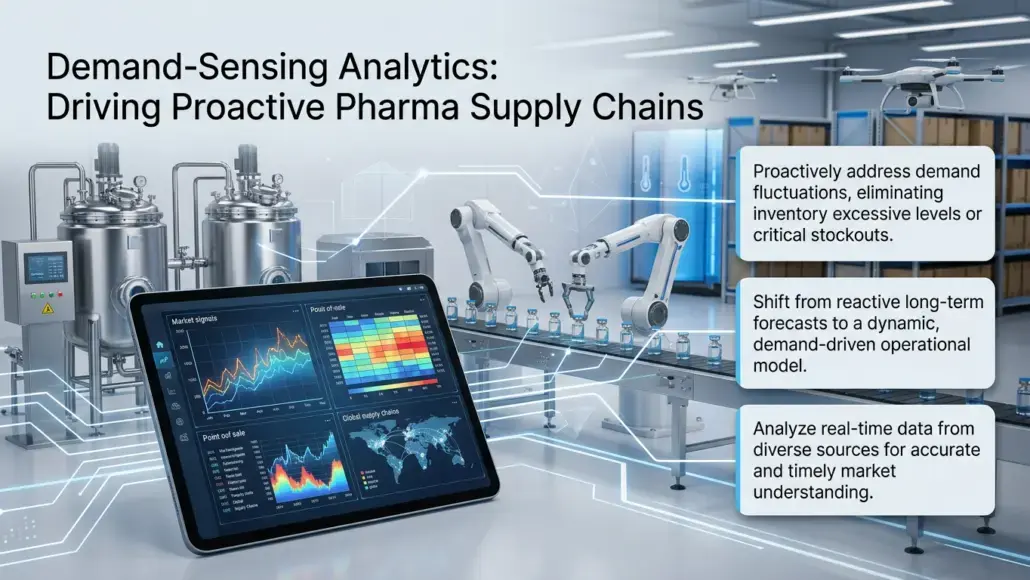
The pharmaceutical industry has traditionally relied on historical data and long-term forecasts to drive production and distribution decisions. However, this reactive approach often leads to significant inefficiencies, such as excessive inventory levels or critical stockouts. The introduction of demand sensing analytics marks a paradigm shift towards a more proactive and demand-driven model. By analyzing real-time data from a variety of sources, companies can gain a more accurate and timely understanding of current market needs. This increased visibility is essential for improving supply chain responsiveness, allowing organizations to adjust production and logistics in response to actual demand rather than predicted trends.
Transitioning to a demand-driven model involves integrating data from across the entire value chain, including point-of-sale data, distributor inventory levels, and even social media sentiment. This comprehensive view of the market allows for the identification of emerging trends and potential disruptions much earlier than traditional forecasting methods. The ability to sense and respond to demand changes in real time is a critical capability for maintaining competitive advantage in a fast-paced and unpredictable market. Organizations that successfully adopt these analytical tools are better positioned to meet the needs of patients and healthcare providers, ensuring that medications are available when and where they are needed most.
The move towards demand-driven models also requires a cultural shift within the organization, as departments must learn to work more collaboratively and share data more transparently. The traditional silos that exist between manufacturing, logistics, and sales can hinder the effective use of demand sensing analytics. By fostering a culture of collaboration and data sharing, pharmaceutical firms can build a more integrated and responsive network that is capable of handling the challenges of the modern market. This cultural transformation is just as important as the technological implementation, as it ensures that the insights generated by analytics are used effectively to drive strategic decisions.
Real-Time Data Integration and Streamlining Logistics
Effective demand sensing depends on the ability to integrate and analyze vast amounts of data from diverse sources in real time. This requires a resilient digital infrastructure that can support the continuous flow of information across the global network. Advanced analytical platforms, powered by machine learning and artificial intelligence, are capable of processing this data to identify patterns and anomalies that might indicate a change in demand. This real-time visibility allows for more efficient logistics and inventory management, as companies can optimize the movement of goods and materials to match actual market needs. The result is a more agile and responsive supply chain that is better equipped to handle disruptions and shifts in demand.
Streamlining logistics is a key benefit of demand sensing analytics. By understanding exactly where products are needed, companies can reduce transportation times and costs, improving the overall efficiency of the supply chain. This is particularly important for temperature-sensitive biologics and other specialized medications that require careful handling and rapid delivery. Real-time tracking of shipments provides an additional layer of visibility, allowing managers to identify and address issues before they lead to significant delays. This proactive approach to logistics management is essential for improving supply chain responsiveness and ensuring that patients receive their treatments without interruption.
- Integration of real-time point-of-sale data from pharmacies and hospitals to track actual drug consumption.
- Utilization of advanced route optimization software to reduce transportation times and carbon emissions.
- Deployment of IoT sensors within cold chain logistics to monitor product integrity and prevent spoilage.
- Implementation of cloud-based inventory management systems to provide a unified view of stock levels across all regions.
Improving the efficiency of logistics also involves collaborating more closely with external partners, such as third-party logistics (3PL) providers and distributors. By sharing data and insights with these partners, pharmaceutical companies can build a more integrated and responsive network that is capable of meeting the needs of patients worldwide. This collaborative approach fosters a culture of continuous improvement and innovation, as partners are encouraged to suggest improvements to processes and technologies that can further enhance the overall responsiveness of the supply chain.

Enhancing Patient Safety Through Inventory Precision
The ultimate goal of any pharmaceutical supply chain is to ensure the safe and timely delivery of medications to patients. Demand sensing analytics play a vital role in achieving this goal by providing a more accurate understanding of inventory needs. By reducing the likelihood of stockouts, companies can ensure that patients have continuous access to the treatments they need to manage their conditions. This is particularly critical for life-saving medications where even a brief disruption in supply can have serious consequences for patient health. Inventory precision also reduces the risk of overproduction, which can lead to product waste and financial losses.
Maintaining the right level of inventory at each stage of the supply chain requires a deep understanding of demand patterns and lead times. Demand sensing analytics provide the insights needed to optimize safety stock levels and reorder points, ensuring that products are always available when needed. This level of precision is also essential for managing the complexities of modern therapies, such as personalized medicines that are produced in small batches for individual patients. By leveraging these analytical tools, pharmaceutical companies can build a more responsive and reliable supply chain that is better equipped to meet the unique needs of every patient.
Generative AI integration improving pharmaceutical commercial decision-making is also enhanced by the insights generated through demand sensing. By understanding which products are in highest demand and where the most significant opportunities for growth lie, companies can allocate their resources more effectively. This strategic alignment between supply chain and commercial functions is essential for driving long-term success in a competitive market. The continuous monitoring and analysis of market demand provide a feedback loop that can be used to refine and improve both supply chain and commercial strategies over time.
Collaborative Ecosystems and Downstream Data Visibility
Building a responsive supply chain requires a high degree of collaboration between all partners in the value chain. Demand sensing analytics provide the data and insights needed to foster this collaboration and build a more integrated network. By sharing demand data with suppliers and distributors, pharmaceutical companies can ensure that all partners are aligned with the overall goals of the organization. This increased transparency allows for more effective planning and coordination, reducing the risk of disruptions and improving the overall efficiency of the network. A collaborative ecosystem is a critical enabler of supply chain responsiveness.
Downstream data visibility, in particular, is essential for accurate demand sensing. By having a clear view of how products are being used by healthcare providers and patients, companies can gain a much deeper understanding of market needs. This information can be used to optimize production and distribution strategies, ensuring that products are always available in the right quantities at the right locations. Achieving this level of visibility requires building strong relationships with downstream partners and establishing clear protocols for data sharing and analysis. The benefits of this collaborative approach are significant, leading to a more stable and responsive global supply chain.
Investing in technologies that facilitate data sharing and collaboration is a key priority for pharmaceutical firms looking to enhance their responsiveness. Cloud-based platforms and integrated data networks allow for the seamless exchange of information across the entire value chain. By fostering a culture of transparency and collaboration, organizations can build a more resilient and responsive network that is better equipped to handle the challenges of the modern market. This integrated approach to supply chain management is a critical driver of long-term success and sustainability.
Overcoming Implementation Hurdles in Global Pharmaceutical Networks
While the benefits of demand sensing analytics are clear, the implementation of these tools in a global pharmaceutical network can be challenging. One of the most significant hurdles is the complexity of integrating data from diverse sources and legacy systems. Many companies have a fragmented IT infrastructure that makes it difficult to achieve a unified view of the supply chain. Overcoming this challenge requires a significant investment in digital transformation and the development of a more resilient and integrated data architecture. This process involves modernizing existing systems and adopting new technologies that can support the continuous flow of information.
Data quality and consistency are also critical factors for successful demand sensing. Organizations must establish clear standards for data collection and management to ensure that the insights generated by analytics are accurate and reliable. This requires a strong commitment to data governance and the development of a culture that values data integrity. Training and development for employees are also essential for ensuring that they have the skills and knowledge needed to use these new tools effectively. A skilled and data-literate workforce is a vital asset for any organization seeking to improve its responsiveness.
Another significant hurdle is the need for greater collaboration and trust between supply chain partners. Sharing sensitive demand data requires a high level of confidence in the security and integrity of the data network. Building this trust takes time and requires a consistent commitment to transparency and collaboration. By working closely with partners and establishing clear guidelines for data sharing, pharmaceutical companies can overcome these hurdles and build a more integrated and responsive global network. The ongoing evolution of digital tools and analytical techniques will continue to offer new opportunities for enhancing supply chain responsiveness and protecting the long-term stability of the industry.