














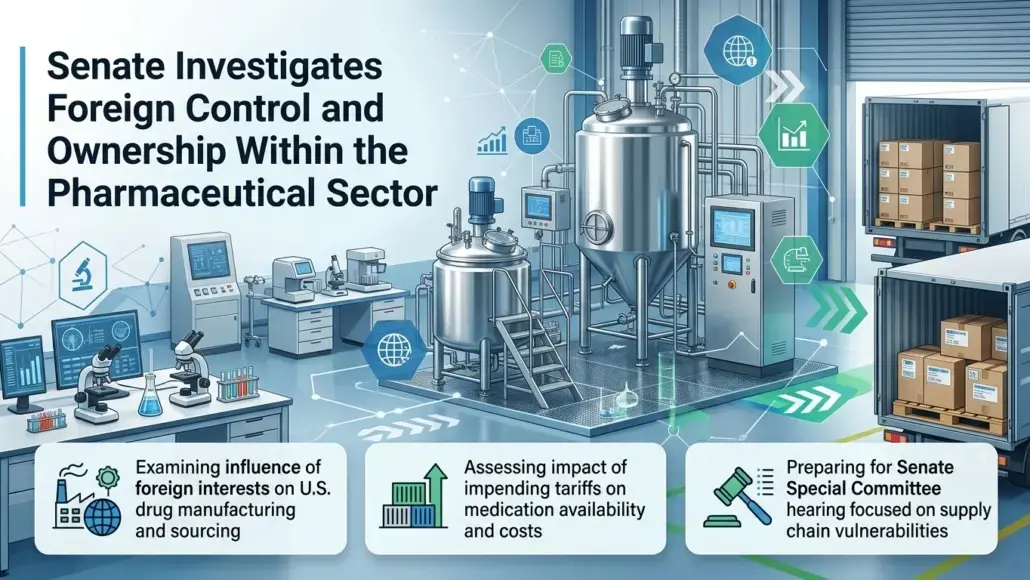
The Senate Special Committee on Aging is preparing to conduct a hearing titled “Behind The Label: Focusing On Foreign Ownership And Control In America’s Drug Supply Chain.” Scheduled for Wednesday, July 15, the session arrives as the industry faces significant pressure from impending tariffs on imported medications. Senator Rick Scott, serving as the committee chair, and Ranking Member Senator Kirsten Gillibrand will lead the examination into how foreign interests influence the availability and security of the domestic manufacturing sector. This inquiry coincides with a broader shift in federal legislation, moving from theoretical discussions toward immediate regulatory compliance for manufacturers and distribution entities.
Tariff Deadlines and National Security Directives
The urgency of the hearing is underscored by the application of Section 232 national security authority, which imposes a 100 percent tariff on patented pharmaceutical imports and their active ingredients beginning July 31. While generics and biosimilars remain exempt for the time being, the new regimen provides a path for reduced rates starting September 29 for companies that commit to domestic onshoring and Most Favored Nation pricing models. Industry stakeholders, including Phlow Corp., the Partnership for Safe Medicines, and the Healthcare Distribution Alliance, alongside major distribution entities like McKesson Corp. and Cencora Inc., have intensified lobbying efforts regarding drug supply chain resiliency and potential shortages.
Legislative efforts to harden the pharmaceutical infrastructure are expanding alongside the committee’s investigation. Bipartisan proposals, such as the Protecting America’s Medical Supply Chains Act of 2026 and the Medical Supply Chain Resiliency Act, aim to establish a national strategy for securing essential materials and mapping vulnerabilities within the manufacturing sector. These initiatives reflect a growing consensus on the need to diversify away from foreign control, particularly regarding key inputs identified as strategic vulnerabilities in reports like “The Pharma Choke Point: How to Reduce U.S. Dependence on China.” As the July deadline approaches, the focus on ownership transparency and domestic production capacity has transitioned into a primary security and compliance priority for the American healthcare industry.


