













The Operational Bottleneck in Advanced Therapeutics
The cell and gene therapy sector has transitioned from a proof of concept frontier into a highly competitive commercial market. While advanced gene editing tools like CRISPR and novel viral vectors dominate industry headlines, a quiet bottleneck in drug development timelines persists. This bottleneck is biological starting material variability.
Moving a drug candidate from preclinical research to scalable, compliant manufacturing frequently fails. These failures often happen not because of a flawed genetic construct, but because the foundational human cells are unstable, inconsistent, or poorly characterized. To de-risk immuno-oncology pipelines like CAR-T, CAR-NK, and TCR-T therapies, drug developers must shift their focus. They need to implement standardization, proper cryopreservation, and rigorous cell characterization at the absolute earliest stages of the research and development lifecycle.
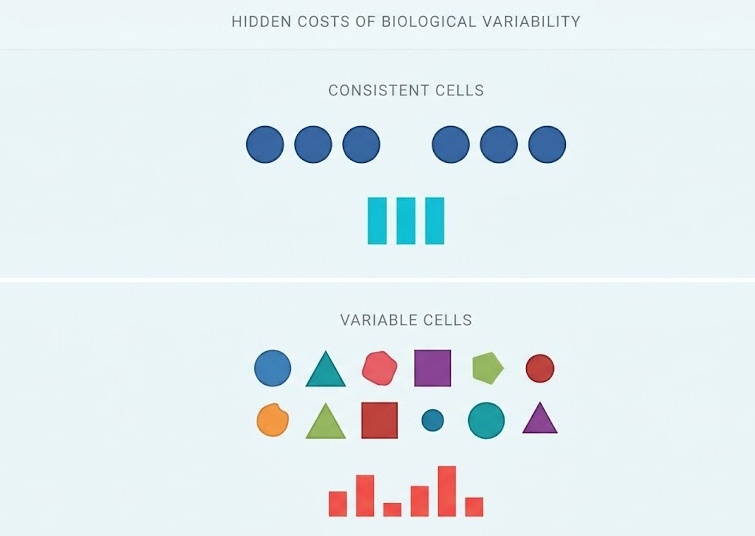
The Hidden Costs of Biological Variability in Early-Stage Assays
Early-stage in vitro functional assays, immune profiling, and target validation often rely on unstandardized or ad hoc primary cell sources. When procurement teams look to buy PBMCs for early-stage research, they often focus entirely on volume or price rather than rigorous characterization, which introduces unnecessary risk into the pipeline. This approach creates a fragile foundation for data collection and reliability. Subtle shifts in donor cell phenotypes can trigger misleading data, which either masks true therapeutic efficacy or generates false positive toxicity signals.
The financial and strategic penalties of this variability are steep. Data artifacts force research teams to re-run highly complex, multi-variable immuno-oncology assays. This redundancy drains research budgets and pushes back clinical timelines. To eliminate these downstream assay failures and preserve capital, sourcing high-quality, consistently characterized isolated PBMC products is critical for establishing baseline cellular toxicity and efficacy models without introducing artifactual data. Establishing a controlled biological baseline allows developers to isolate the actual performance of the therapeutic candidate from background biological noise.

Autologous vs. Allogeneic Pipelines: Divergent Paths, Unified Needs
Autologous and allogeneic cell therapy pipelines feature vastly different manufacturing paths, yet they share a unified need for starting material consistency. In autologous pipelines, therapies are patient-specific. The cells harvested from heavily pre-treated, frail cancer patients are often functionally exhausted and highly variable. Because of this inherent variability, developers must rely on uniform, healthy donor cell profiles during early-phase asset design. This mapping allows them to benchmark what a healthy immune response looks like prior to clinical translation.
Allogeneic, or off-the-shelf pipelines, face a different version of this challenge. These platforms are incredibly vulnerable to donor-to-donor variance. Scale-up strategies require absolute certainty regarding cellular composition to minimize Graft-versus-Host Disease risks and maximize batch yields. A standardized, pre-screened supply of peripheral blood mononuclear cells acts as a universal reference framework. This framework allows developers to establish fixed performance benchmarks before they ever encounter clinical-grade patient cell variability.
Navigating Evolving Regulatory Expectations
Regulatory bodies like the FDA and EMA are tightening their oversight. They now evaluate raw material quality, Chain of Identity, and Chain of Custody much earlier in the Investigational New Drug application process. Moving away from reactive sourcing is no longer optional. Regulatory agencies expect documented decision frameworks regarding starting material purity, viability, and microbial sterility from day one.
Setting proactive acceptance criteria de-risks the commercial pathway. Establishing ethical, Institutional Review Board-compliant sourcing channels during early asset validation prevents costly Chemistry, Manufacturing, and Controls roadblocks during late-phase Biologics License Applications. When a pipeline expands, having a validated history of cell quality simplifies regulatory filings and builds confidence with inspectors.
Strategic Takeaways for Biopharma Executives
In today’s competitive and capital-constrained market, scientific ambition must be matched by pragmatic execution. The biopharma companies that succeed over the next few years will be those that treat reproducibility and supply chain trust as core business assets.
Treating cell sourcing as a foundational pillar rather than an operational afterthought is the most effective way to streamline the translational pathway. By securing reliable starting materials early, executives can protect their drug pipelines, satisfy regulatory demands, and ultimately bring curative therapies to patients much faster.