






Close
CDMO Safety Testing 2026
Novotech

Thermo Fisher Partners with X-ELIO for Renewable Energy

Note* - All images used are for editorial and illustrative purposes only and may not originate from the original news provider or associated company.

Subscribe

- Never miss a story with notifications

- Gain full access to our premium content

- Browse free from any location or device.

Media Packs

Expand Your Reach With Our Customized Solutions Empowering Your Campaigns To Maximize Your Reach & Drive Real Results!

โ€“ Access the Media Pack Now

โ€“ Book a Conference Call

โ€“ Leave Message for Us to Get Back

Related stories

AddParts Secures Funding for Pharma Manufacturing Resilience

AddParts, a UK-based technology company focused on improving operational...

Made Smarter Advances AI in Manufacturing with New Toolkit

A new initiative from Made Smarter is aiming to...

Quantum Machine Learning in Pharma Research Growth

The convergence of artificial intelligence and quantum processing is opening new avenues for rapid discovery and innovation within the life sciences. By utilizing advanced mathematical models that operate across multi-dimensional datasets, researchers can now identify complex biological patterns and predict molecular behaviors with a speed that surpasses traditional computational methods. This transformation is accelerating the development of novel therapies and providing deeper insights into disease mechanisms, fundamentally altering the trajectory of pharmaceutical research and development.
- Advertisement -

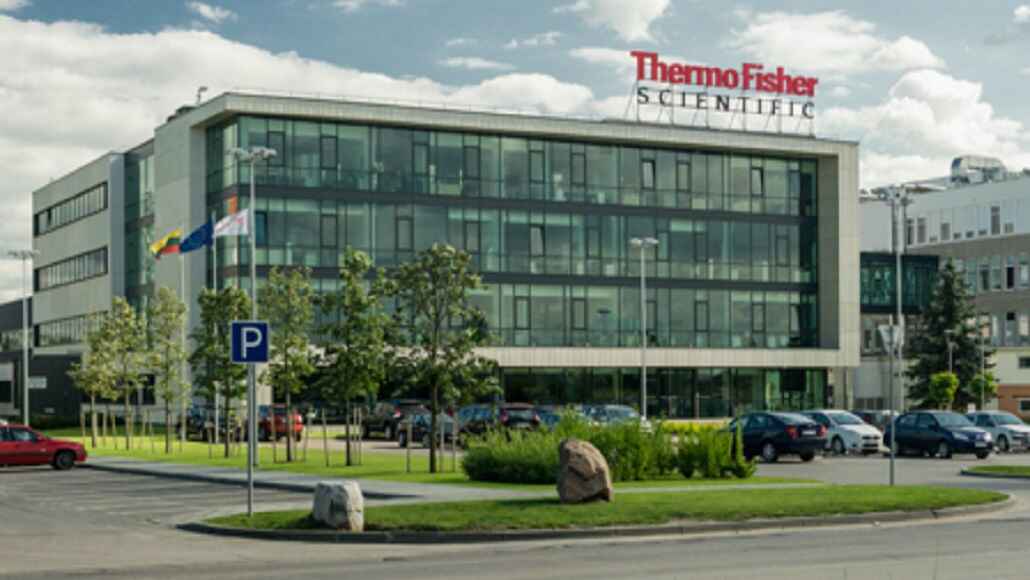
Thermo Fisher Scientific has taken a significant step toward achieving its sustainability goals by signing a 10-year virtual power purchase agreement (VPPA) with renewable energy developer X-ELIO. This agreement supports the Lorca solar project, which is set to become operational in 2026 and aims to increase access to renewable electricity for Thermo Fisher and its partners in the pharmaceutical and healthcare industries.

The companyโ€™s 73 MW share of the Lorca solar project, combined with the Serbal solar project announced in 2023, will enable Thermo Fisher to power all of its addressable European sites with 100% renewable electricity. The Lorca project will produce approximately 150,000 megawatt-hours of renewable electricity annually, equivalent to powering around 40,500 European homes for one year.

This achievement accelerates Thermo Fisherโ€™s progress toward its global sustainability target of achieving 80% renewable electricity by 2030, as part of its comprehensive net-zero emissions strategy.

โ€œWhen we collaborate with our customers and suppliers, we accelerate our collective progress toward net-zero emissions,โ€ said Konrad Bauer, senior vice president, global business services, Thermo Fisher Scientific. โ€œAchieving 100 percent renewable electricity for our European sites is a significant milestone on our journey, and as cohort lead for this agreement facilitated by the Energize initiative, we are committed to leveraging our experience and insights to help enable similar milestones for our partners.โ€

Driving Decarbonization Across the Supply Chain

The Lorca solar project was developed through collaboration with a cohort of Thermo Fisherโ€™s value chain partnersโ€”GSK, Gilead Sciences, and Haleonโ€”under the Energize initiative. This program, managed by Schneider Electric and the Pharmaceutical Supply Chain Initiative, connects pharmaceutical companies and their suppliers to renewable energy solutions.

As part of this agreement:

  • The project will reduce Scope 2 emissions (from purchased electricity powering company facilities) and Scope 3 emissions (from value chain partners).
  • Thermo Fisher will serve as the cohort lead, leveraging its expertise to foster renewable energy adoption strategies across the healthcare sector.

โ€œMaking the most out of our energy and resources is crucial as we collectively move toward more sustainable solutions across industries and around the world,โ€ said John Powers, vice president, global renewables at Schneider Electric. โ€œThe Energize program aims to drive supply chain decarbonization across the pharmaceutical and healthcare industries while serving as a playbook for other sectors as they look to power their operations with renewable energy.โ€

A Commitment to Net-Zero by 2050

Thermo Fisher continues to lead global sustainability efforts through its commitment to reduce Scope 1 and 2 emissions by 50% by 2030 (based on 2018 levels) and power all of its U.S. sites with renewable electricity by 2026.

By participating in the Lorca project, Thermo Fisher reinforces its alignment with the Sustainable Markets Initiative Health Systems Task Force joint supplier standards and continues to drive innovation in addressing climate challenges across the healthcare and pharmaceutical industries.

The companyโ€™s leadership in renewable energy adoption serves as a blueprint for other sectors seeking to accelerate progress toward a more sustainable future.

 

Latest stories

Related stories

AddParts Secures Funding for Pharma Manufacturing Resilience

AddParts, a UK-based technology company focused on improving operational...

Made Smarter Advances AI in Manufacturing with New Toolkit

A new initiative from Made Smarter is aiming to...

Quantum Machine Learning in Pharma Research Growth

The convergence of artificial intelligence and quantum processing is opening new avenues for rapid discovery and innovation within the life sciences. By utilizing advanced mathematical models that operate across multi-dimensional datasets, researchers can now identify complex biological patterns and predict molecular behaviors with a speed that surpasses traditional computational methods. This transformation is accelerating the development of novel therapies and providing deeper insights into disease mechanisms, fundamentally altering the trajectory of pharmaceutical research and development.

Quantum Sensors Enabling Advanced Drug Diagnostics

The landscape of medical diagnostics is being reshaped by the introduction of sensing technologies that operate with atomic-level sensitivity. By providing high-fidelity measurements and real-time data, these tools allow for the detection of subtle biological changes and chemical markers that were previously invisible to conventional equipment. This advancement is enhancing the precision of drug testing and clinical monitoring, leading to earlier disease detection and more effective therapeutic interventions across the global healthcare spectrum.

Subscribe

- Never miss a story with notifications

- Gain full access to our premium content

- Browse free from any location or device.

Media Packs

Expand Your Reach With Our Customized Solutions Empowering Your Campaigns To Maximize Your Reach & Drive Real Results!

โ€“ Access theMedia Pack Now

โ€“ Book a Conference Call

โ€“ Leave Message for Us to Get Back

Translate ยป