











Close
Novotech
Jabsco PureFlo 21 Single Use

AI Rising Impact On Bio – Pharma Supply Chain Management

Note* - All images used are for editorial and illustrative purposes only and may not originate from the original news provider or associated company.

Subscribe

- Never miss a story with notifications

- Gain full access to our premium content

- Browse free from any location or device.

Media Packs

Expand Your Reach With Our Customized Solutions Empowering Your Campaigns To Maximize Your Reach & Drive Real Results!

– Access the Media Pack Now

– Book a Conference Call

Leave Message for Us to Get Back

Related stories

Smart Inspection Systems with HV Leak Detection Technology

The convergence of digital transformation and precision engineering has given rise to a new generation of quality control in pharmaceutical manufacturing. Smart inspection systems with HV leak detection technology utilize advanced sensors and real-time data analytics to identify microscopic structural flaws in sterile packaging with unprecedented accuracy. By automating the detection of leaks that are invisible to the human eye, these intelligent systems significantly enhance the reliability of the manufacturing process, ensuring that every container meets the highest standards of safety and sterility.

Integrated Inspection Systems for Leak Detection in Pharma

The pharmaceutical industry is increasingly moving toward a more holistic approach to quality control by combining various inspection technologies into a single, unified platform. Integrated inspection systems for leak detection in pharma offer a multi-faceted solution that simultaneously addresses cosmetic defects, particulate contamination, and container closure integrity. By merging high-speed visual cameras with sensitive high-voltage leak detection modules, these systems provide a comprehensive assessment of every unit, ensuring that each dose of medication is contained within a perfectly sealed and sterile environment. This integration not only reduces the risk of secondary contamination but also significantly improves the overall efficiency and reliability of the manufacturing process.

Advancing Pharma Quality with HV Leak Detection Tools

Maintaining the highest standards of pharmaceutical quality is a fundamental requirement for the safe delivery of injectable medications. The development of advancing pharma quality with HV leak detection tools represents a major leap forward in the deterministic testing of container closure integrity. By utilizing sophisticated sensors and high-voltage electrical fields, these tools can detect microscopic structural defects that would otherwise compromise the sterility of life-saving products. This high-sensitivity approach significantly enhances the accuracy of the inspection process, providing manufacturers with a robust solution for ensuring packaging integrity and regulatory compliance.
- Advertisement -

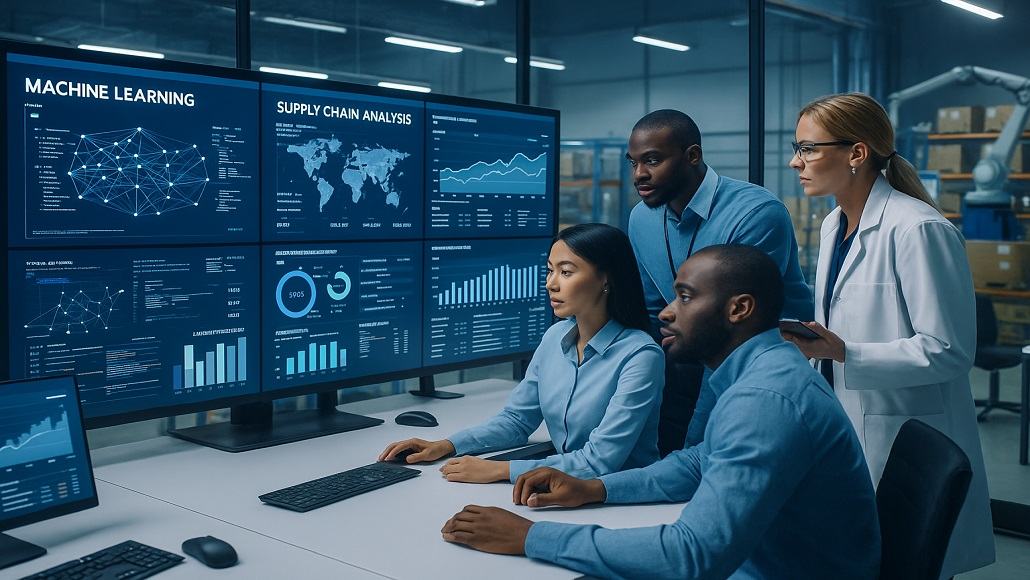
The Drug, Chemical, & Associated Technologies Association- DCAT has recently published a research by DCAT Research & Benchmarking on the growing significance of Artificial Intelligence in Supply Chain Management.

It is true that the biotechnology and pharmaceutical industries are making significant progress in using artificial intelligence (AI) in some important areas, particularly in the field of drug development. Nevertheless, the extent to which the industry has considered supply chain management remains uncertain.

Due to the important implications of AI for enterprises in the bio/pharma supply chain, the DCAT Research & Benchmarking Committee aimed to assess the use of AI in supply chain management.

In order to provide clarity on this kind of progress, DCAT proceeded to carry out an online survey consisting of 20 content-related questions and other demographic questions. In all, 41 firms participated in the study. The division consisted of 29 suppliers and 12 bio/pharmaceutical firms.

The main aim of the study was to:

  • Comprehend the current state of artificial intelligence (AI) in supply chain management specifically in the bio/pharma industry.
  • Assess the challenges that arise while using the technology in the bio/pharma industry.
  • Understand the obstacles that prevent adoption if they are not being implemented or attempted.
  • Facilitate the assessment of how the implementation of artificial intelligence (AI) would impact the collaboration between bio and pharma businesses, as well as their relationship with suppliers.

The research yielded many significant discoveries, including the following:

  • Common Applications of Artificial Intelligence in Supply Chain Management
  • Among responders actively using AI in supply chain management, demand forecasting, logistics, and inventory management are the most often encountered use cases. Several firms are now undertaking projects in supply chain risk management.

Challenges in the context of adoption

It is important to note that non-user responses indicate that the adoption of supply chain AI applications is hindered primarily by a lack of understanding of their benefits and implications, as well as a lack of expertise to initiate pilot projects.

The strategic importance of artificial intelligence

According to the study findings, organizations who are currently using AI in supply chain management are doing it as part of their corporate dedication to technology.

A majority of organizations (over 80%) now using AI for supply chain management perceive it to be very important in achieving their corporate strategy goals. In contrast, just a small percentage (20%) of companies that do not employ AI share this perspective.

Challenges in using artificial intelligence applications in supply chain management

The primary challenges in implementing supply chain AI applications are the availability of data and ensuring confidentiality. It is important to remember that the majority of AI users are supplying their apps with a mixture of internal and external data.

Without a doubt, it is predicted that those who do not adopt will encounter a comparable set of issues should they eventually decide to adopt. Both GXP compliance and acceptability by regulatory authorities are areas of concern.

What are the applications of AI systems?

The majority of AI users use the system to identify issues and opportunities, and provide recommendations for appropriate actions. However, it is important to note that none of these users are empowering the systems to act autonomously.

The majority of AI users use the system to detect both issues and opportunities, and to provide recommendations for necessary actions. However, none of them enable systems to operate autonomously.

Machine learning programs are widely used, but only a small percentage, as low as 20%, have expertise with generative AI.

The majority of customers are using suppliers to get software and support, while just 30% are actively developing their own in-house skills.

What will be the effect of AI on suppliers?

Late adopters must now prepare in order to effectively react to their clients who are using AI-based technologies. According to the survey findings, over 50% of respondents with AI experience expressed the expectation that their suppliers would provide more data about their operations. This would require suppliers to invest more in their information technology. Interactions with AI-driven technologies will enhance person-to-person connections.

Latest stories

Related stories

Smart Inspection Systems with HV Leak Detection Technology

The convergence of digital transformation and precision engineering has given rise to a new generation of quality control in pharmaceutical manufacturing. Smart inspection systems with HV leak detection technology utilize advanced sensors and real-time data analytics to identify microscopic structural flaws in sterile packaging with unprecedented accuracy. By automating the detection of leaks that are invisible to the human eye, these intelligent systems significantly enhance the reliability of the manufacturing process, ensuring that every container meets the highest standards of safety and sterility.

Integrated Inspection Systems for Leak Detection in Pharma

The pharmaceutical industry is increasingly moving toward a more holistic approach to quality control by combining various inspection technologies into a single, unified platform. Integrated inspection systems for leak detection in pharma offer a multi-faceted solution that simultaneously addresses cosmetic defects, particulate contamination, and container closure integrity. By merging high-speed visual cameras with sensitive high-voltage leak detection modules, these systems provide a comprehensive assessment of every unit, ensuring that each dose of medication is contained within a perfectly sealed and sterile environment. This integration not only reduces the risk of secondary contamination but also significantly improves the overall efficiency and reliability of the manufacturing process.

Advancing Pharma Quality with HV Leak Detection Tools

Maintaining the highest standards of pharmaceutical quality is a fundamental requirement for the safe delivery of injectable medications. The development of advancing pharma quality with HV leak detection tools represents a major leap forward in the deterministic testing of container closure integrity. By utilizing sophisticated sensors and high-voltage electrical fields, these tools can detect microscopic structural defects that would otherwise compromise the sterility of life-saving products. This high-sensitivity approach significantly enhances the accuracy of the inspection process, providing manufacturers with a robust solution for ensuring packaging integrity and regulatory compliance.

HV Leak Detection Enhancing Pharma Inspection Lines Quality

Modern pharmaceutical manufacturing requires a seamless blend of speed and precision to ensure the sterility of injectable products. The integration of HV leak detection pharma inspection modules into high-speed production lines is a game-changer for maintaining container closure integrity. By identifying microscopic defects without slowing down the throughput, this technology significantly reduces waste and ensures that every unit complies with the most stringent global regulatory standards for drug safety.

Subscribe

- Never miss a story with notifications

- Gain full access to our premium content

- Browse free from any location or device.

Media Packs

Expand Your Reach With Our Customized Solutions Empowering Your Campaigns To Maximize Your Reach & Drive Real Results!

– Access theMedia Pack Now

– Book a Conference Call

Leave Message for Us to Get Back

Translate »