








Close
Novotech
Jabsco PureFlo 21 Single Use

Future Innovations In Pharmaceutical Packaging Post-2025

Note* - All images used are for editorial and illustrative purposes only and may not originate from the original news provider or associated company.

Subscribe

- Never miss a story with notifications

- Gain full access to our premium content

- Browse free from any location or device.

Media Packs

Expand Your Reach With Our Customized Solutions Empowering Your Campaigns To Maximize Your Reach & Drive Real Results!

– Access the Media Pack Now

– Book a Conference Call

Leave Message for Us to Get Back

Related stories

Smart Inspection Systems with HV Leak Detection Technology

The convergence of digital transformation and precision engineering has given rise to a new generation of quality control in pharmaceutical manufacturing. Smart inspection systems with HV leak detection technology utilize advanced sensors and real-time data analytics to identify microscopic structural flaws in sterile packaging with unprecedented accuracy. By automating the detection of leaks that are invisible to the human eye, these intelligent systems significantly enhance the reliability of the manufacturing process, ensuring that every container meets the highest standards of safety and sterility.

Integrated Inspection Systems for Leak Detection in Pharma

The pharmaceutical industry is increasingly moving toward a more holistic approach to quality control by combining various inspection technologies into a single, unified platform. Integrated inspection systems for leak detection in pharma offer a multi-faceted solution that simultaneously addresses cosmetic defects, particulate contamination, and container closure integrity. By merging high-speed visual cameras with sensitive high-voltage leak detection modules, these systems provide a comprehensive assessment of every unit, ensuring that each dose of medication is contained within a perfectly sealed and sterile environment. This integration not only reduces the risk of secondary contamination but also significantly improves the overall efficiency and reliability of the manufacturing process.

Advancing Pharma Quality with HV Leak Detection Tools

Maintaining the highest standards of pharmaceutical quality is a fundamental requirement for the safe delivery of injectable medications. The development of advancing pharma quality with HV leak detection tools represents a major leap forward in the deterministic testing of container closure integrity. By utilizing sophisticated sensors and high-voltage electrical fields, these tools can detect microscopic structural defects that would otherwise compromise the sterility of life-saving products. This high-sensitivity approach significantly enhances the accuracy of the inspection process, providing manufacturers with a robust solution for ensuring packaging integrity and regulatory compliance.
- Advertisement -

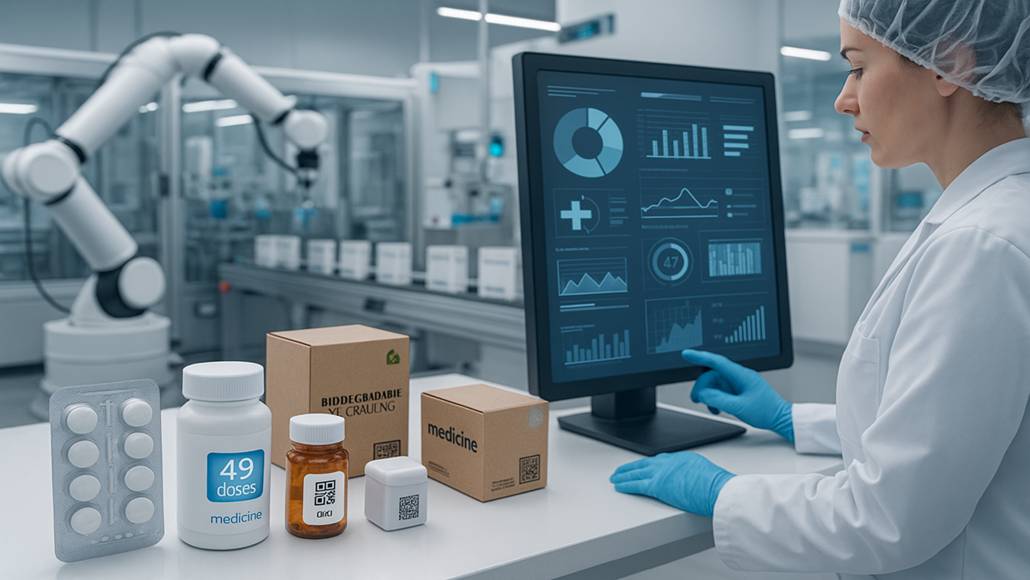
Because of new ideas, concerns about safety for consumers, and government rules, the pharmaceutical business is about to enter a new era in packing. As we are passing through 2025, several significant trends are emerging that are reshaping pharmaceutical packaging—making it safer, more patient-friendly, and better at preserving product longevity. These changes are in response to problems in the business and are positive steps toward better, more effective medication solutions.

Here are five new trends in pharmaceutical packaging that will continue after 2025.

  1. Technologies for smart packaging

Smart packing is becoming more popular, which is one of the most important trends. These are meant to get patients more involved in their treatment and help them stick to their drug schedules, which are both very important for how well the treatment works. Smart blisters and bottles with built-in sensors can now keep track of doses and send messages to your phone through apps. These packing options can also send information about obedience back to healthcare workers, which lets them make changes to treatment plans in real time. As technology improves, it will become more common for packages to include Near Field Communication and the Internet of Things. This will open up new ways to connect with patients and collect useful data.

  1. Environmentally Friendly Packaging for Medicines

Sustainability is still a big deal in every industry, and medicine packaging is no different. Environmentally friendly options are becoming more popular because people want them and because of government rules. More and more products are made from biodegradable and reusable materials, and businesses are choosing packages made from plant-based plastics and recovered materials. There is also a push to cut down on the total amount of packaging by reducing the number of layers and improving the design to use less material without affecting the safety or purity of the product.

  1. Better safety features

More safety features in packing are needed than ever because medicines are getting more complicated and we need to make sure the products are always safe. Child-proof and tamper-evident packaging is no longer just a legal requirement; it’s becoming the standard. To stop fraud, which is a big problem in the pharmaceutical business, new technologies like hologram pictures and color-shifting inks are being used. These features make it easier to make sure that goods are real and that people get safe, effective medicines.

  1. Traceability and serialization

Serialization rules are getting stricter around the world, which makes it more important to be able to track products throughout the supply chain. Unique labels that meet global standards, like the Drug Supply Chain Security Act in the US, are now often put on packaging. Not only do these labels help find and track goods, they also make recalls easier to handle and fight illegal trade.

  1. Personalization of Packaging

As the use of individualized medicine grows, drug packaging is changing to keep up. There is more focus on packages made for specific groups of people, like older people who need bigger writing and easier-to-open methods. 3D printing is also being used more and more to make custom doses. This lets people customize their medicine in terms of dose, size, and delivery rate, but it needs new ways to package these custom goods.

These interesting trends will shape the future of pharmaceutical packaging. They are all driven by the main goals of making patients safer, getting people to follow the rules better, and having less of an effect on the environment. As these trends spread, they will likely completely change the way medicines are packaged, making it safer, more efficient, and better for the environment. This will help both customers and makers. As we look ahead to 2025 and beyond, it is clear that the pharmaceutical packaging industry will continue to come up with new ideas and use new technologies and strategies to keep up with changing market needs and government rules.


Latest stories

Related stories

Smart Inspection Systems with HV Leak Detection Technology

The convergence of digital transformation and precision engineering has given rise to a new generation of quality control in pharmaceutical manufacturing. Smart inspection systems with HV leak detection technology utilize advanced sensors and real-time data analytics to identify microscopic structural flaws in sterile packaging with unprecedented accuracy. By automating the detection of leaks that are invisible to the human eye, these intelligent systems significantly enhance the reliability of the manufacturing process, ensuring that every container meets the highest standards of safety and sterility.

Integrated Inspection Systems for Leak Detection in Pharma

The pharmaceutical industry is increasingly moving toward a more holistic approach to quality control by combining various inspection technologies into a single, unified platform. Integrated inspection systems for leak detection in pharma offer a multi-faceted solution that simultaneously addresses cosmetic defects, particulate contamination, and container closure integrity. By merging high-speed visual cameras with sensitive high-voltage leak detection modules, these systems provide a comprehensive assessment of every unit, ensuring that each dose of medication is contained within a perfectly sealed and sterile environment. This integration not only reduces the risk of secondary contamination but also significantly improves the overall efficiency and reliability of the manufacturing process.

Advancing Pharma Quality with HV Leak Detection Tools

Maintaining the highest standards of pharmaceutical quality is a fundamental requirement for the safe delivery of injectable medications. The development of advancing pharma quality with HV leak detection tools represents a major leap forward in the deterministic testing of container closure integrity. By utilizing sophisticated sensors and high-voltage electrical fields, these tools can detect microscopic structural defects that would otherwise compromise the sterility of life-saving products. This high-sensitivity approach significantly enhances the accuracy of the inspection process, providing manufacturers with a robust solution for ensuring packaging integrity and regulatory compliance.

HV Leak Detection Enhancing Pharma Inspection Lines Quality

Modern pharmaceutical manufacturing requires a seamless blend of speed and precision to ensure the sterility of injectable products. The integration of HV leak detection pharma inspection modules into high-speed production lines is a game-changer for maintaining container closure integrity. By identifying microscopic defects without slowing down the throughput, this technology significantly reduces waste and ensures that every unit complies with the most stringent global regulatory standards for drug safety.

Subscribe

- Never miss a story with notifications

- Gain full access to our premium content

- Browse free from any location or device.

Media Packs

Expand Your Reach With Our Customized Solutions Empowering Your Campaigns To Maximize Your Reach & Drive Real Results!

– Access theMedia Pack Now

– Book a Conference Call

Leave Message for Us to Get Back

Translate »