












Close
CDMO Safety Testing 2026
Novotech

IBM Research and Arctoris accelerate closed loop drug discovery with AI and Cloud

Note* - All images used are for editorial and illustrative purposes only and may not originate from the original news provider or associated company.

Subscribe

- Never miss a story with notifications

- Gain full access to our premium content

- Browse free from any location or device.

Media Packs

Expand Your Reach With Our Customized Solutions Empowering Your Campaigns To Maximize Your Reach & Drive Real Results!

โ€“ Access the Media Pack Now

โ€“ Book a Conference Call

โ€“ Leave Message for Us to Get Back

Related stories

Colorimeters Enhancing Consistency in Pharma Testing

Maintaining absolute uniformity across multiple production cycles is a fundamental and complex challenge in the pharmaceutical industry. The strategic application of colorimeters pharma testing allows for the precise quantification of hue and saturation, providing a reliable and objective metric for assessing raw material quality and final product stability. These specialized instruments simplify the inherent complexity of color analysis, enabling laboratory technicians to identify subtle variations that might otherwise compromise the efficacy or consumer acceptance of a medicinal product. By establishing a digital standard for appearance, manufacturers ensure that every batch meets the most rigorous quality expectations.

Advanced Color Measurement Strengthening Pharma QC

Achieving absolute precision in pharmaceutical manufacturing necessitates a comprehensive and rigorous oversight of physical attributes, with color serving as a primary indicator of chemical stability and composition. By integrating sophisticated instrumentation into the laboratory environment, manufacturers can transition from subjective visual assessments to standardized, data-driven methodologies that satisfy the most stringent global regulatory requirements. This strategic focus on color measurement pharma QC facilitates the early identification of raw material impurities and ensures uncompromising batch-to-batch consistency in final dosage forms, thereby bolstering patient safety and brand reputation.

GMP Compliance in Analytical Testing and Color Control

Adhering to Good Manufacturing Practices is a non-negotiable requirement for pharmaceutical organizations dedicated to maintaining global safety and quality standards. The intersection of GMP compliance color control and analytical testing ensures that every step of the production process is meticulously documented, validated, and repeatable. By focusing on the rigorous monitoring of physical attributes and chemical purity, manufacturers can mitigate the risks of contamination and stability failures, delivering high-quality healthcare products that patients and healthcare providers can trust implicitly. This disciplined approach ensures that all quality decisions are based on objective, verifiable data.
- Advertisement -

IBM Research and Arctoris announced they are investigating the application of AI and automation to accelerate closed loop molecule discovery. IBM Research has developed RXN for Chemistry, an online platform leveraging state-of-the-art Natural Language Processing (NLP) architectures to automate synthetic chemistry. Representing chemical reactions via SMILES (Simplified Molecular Input Line Entry System), the system is able to perform highly accurate reaction predictions using its powerful AI. Optimised synthetic routes are then used as input for RoboRXN, an automated platform for molecule synthesis.

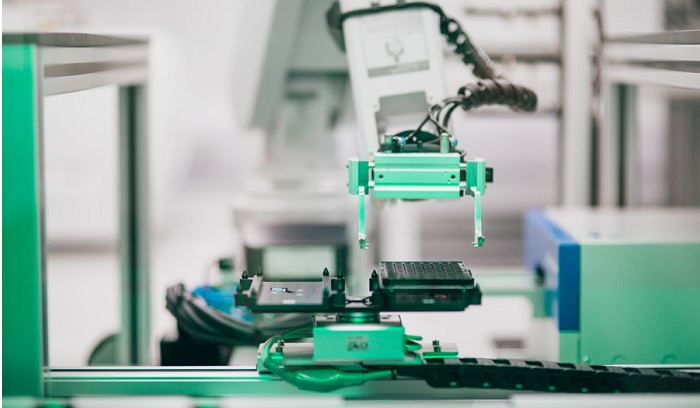
Arctoris has developed Ulysses, an end-to-end automated platform for drug discovery research. The platform ensures accuracy, precision, and reproducibility by leveraging robotic experiment execution and digital data capture technologies across cell and molecular biology and biochemistry/biophysics. Experiments conducted with Ulysses generate more than 100 times more datapoints per assay compared to industry standard, leading to deeper insights and accelerated progress compared to manual methods.

The two platforms are now being combined for the first time in a research collaboration that will see new small molecule inhibitors for undisclosed targets being designed, made, tested, and analysed (DMTA) in an autonomous, closed loop approach. Concretely, IBM Research will design and synthesize novel chemical matter (Design, Make), to be profiled and evaluated by Arctoris (Test, Analyze), with the resulting data informing the subsequent iteration of the DMTA cycle.

Thomas A. Fleming, Arctoris Co-Founder & COO, explained “The future of drug discovery is computational, with AI and robotics paving the way for better treatments to reach patients sooner. We are excited about partnering with IBM Research on a world-first closed loop drug discovery project bringing together two leaders in the field of AI and robotics-powered drug discovery. This collaboration will showcase how the combination of our unique technology platforms will lead to accelerated research based on better data enabling better decisions.”

“This collaboration is a great example of the enablement that AI, Cloud and Automation can have in the space of material design. The integration between the two complementary technologies reveals how it is more and more important in R&D to turn great research into great viable products.” said Dr Teodoro Laino, Distinguished Scientist at IBM Research Europe โ€“ Zurich.

Dr Matteo Manica, Research Scientist at IBM Research Europe โ€“ Zurich, coordinating the project, stated that: “This is a unique opportunity to quantify the impact of AI and automation technologies in accelerating scientific discovery. In our collaboration, we demonstrate a pipeline to perform iterative design cycles where generative models suggest candidates that are synthesized with RoboRXN and screened with Ulysses. The data produced by Ulysses will then be used to establish a feedback loop to retrain the generative AI and improve the proposed leads in a completely data-driven fashion.”

About IBM Research
For more than seven decades, IBM Research has defined the future of information technology with more than 3,000 researchers in 16 locations across five continents. Scientists from IBM Research have produced six Nobel Laureates, 10 U.S. National Medals of Technology, five U.S. National Medals of Science, six Turing Awards, 19 inductees in the National Academy of Sciences and 20 inductees into the U.S. National Inventors Hall of Fame. For more information, please visit www.research.ibm.com/.

About Arctoris
Arctoris is a biotechnology company founded and headquartered in Oxford with additional operations in Boston and Singapore. Ulysses, the unique technology platform developed by Arctoris, enables the company to conduct its R&D โ€“ from target via hit and lead to candidate โ€“ significantly faster, and with considerably improved data quality and depth. With its robotics, Arctoris generates richer, more reliable data, enabling better decisions both in human-driven and computational drug discovery, leading to higher success rates and an accelerated progression of programs towards the clinic. Led by an experienced team, Arctoris pursues its internal pipeline of small molecule inhibitors in different indications, and also partners with other biotech and pharma companies for small molecule and biologics discovery, with partners in the US, UK, Germany, Australia, Korea, China, and several other countries.


Never miss a pharmaceutical headline

The pharmaceutical industry moves fast โ€“ stay on top of it with our must - read briefings.

  • The top pharma and life sciences stories, straight to your inbox
  • The biggest news, features, interviews, and analysis
  • Dedicated coverage of the key developments driving the global pharmaceutical sector

Latest stories

Related stories

Colorimeters Enhancing Consistency in Pharma Testing

Maintaining absolute uniformity across multiple production cycles is a fundamental and complex challenge in the pharmaceutical industry. The strategic application of colorimeters pharma testing allows for the precise quantification of hue and saturation, providing a reliable and objective metric for assessing raw material quality and final product stability. These specialized instruments simplify the inherent complexity of color analysis, enabling laboratory technicians to identify subtle variations that might otherwise compromise the efficacy or consumer acceptance of a medicinal product. By establishing a digital standard for appearance, manufacturers ensure that every batch meets the most rigorous quality expectations.

Advanced Color Measurement Strengthening Pharma QC

Achieving absolute precision in pharmaceutical manufacturing necessitates a comprehensive and rigorous oversight of physical attributes, with color serving as a primary indicator of chemical stability and composition. By integrating sophisticated instrumentation into the laboratory environment, manufacturers can transition from subjective visual assessments to standardized, data-driven methodologies that satisfy the most stringent global regulatory requirements. This strategic focus on color measurement pharma QC facilitates the early identification of raw material impurities and ensures uncompromising batch-to-batch consistency in final dosage forms, thereby bolstering patient safety and brand reputation.

GMP Compliance in Analytical Testing and Color Control

Adhering to Good Manufacturing Practices is a non-negotiable requirement for pharmaceutical organizations dedicated to maintaining global safety and quality standards. The intersection of GMP compliance color control and analytical testing ensures that every step of the production process is meticulously documented, validated, and repeatable. By focusing on the rigorous monitoring of physical attributes and chemical purity, manufacturers can mitigate the risks of contamination and stability failures, delivering high-quality healthcare products that patients and healthcare providers can trust implicitly. This disciplined approach ensures that all quality decisions are based on objective, verifiable data.

Choosing Analytical Instruments for Pharma QC Labs

Selecting the right laboratory equipment is a critical decision that directly impacts the efficiency, accuracy, and compliance of pharmaceutical operations. Evaluating analytical instruments pharma QC requirements involves a deep dive into technical specifications, vendor reliability, and the potential for long-term scalability. By choosing tools that integrate seamlessly with existing digital workflows and international regulatory standards, laboratory managers can ensure that their facility is equipped to handle the rigorous demands of modern drug testing and quality assurance. This strategic approach minimizes operational risk and ensures the delivery of safe and effective medications to patients globally.

Subscribe

- Never miss a story with notifications

- Gain full access to our premium content

- Browse free from any location or device.

Media Packs

Expand Your Reach With Our Customized Solutions Empowering Your Campaigns To Maximize Your Reach & Drive Real Results!

โ€“ Access theMedia Pack Now

โ€“ Book a Conference Call

โ€“ Leave Message for Us to Get Back

Translate ยป