





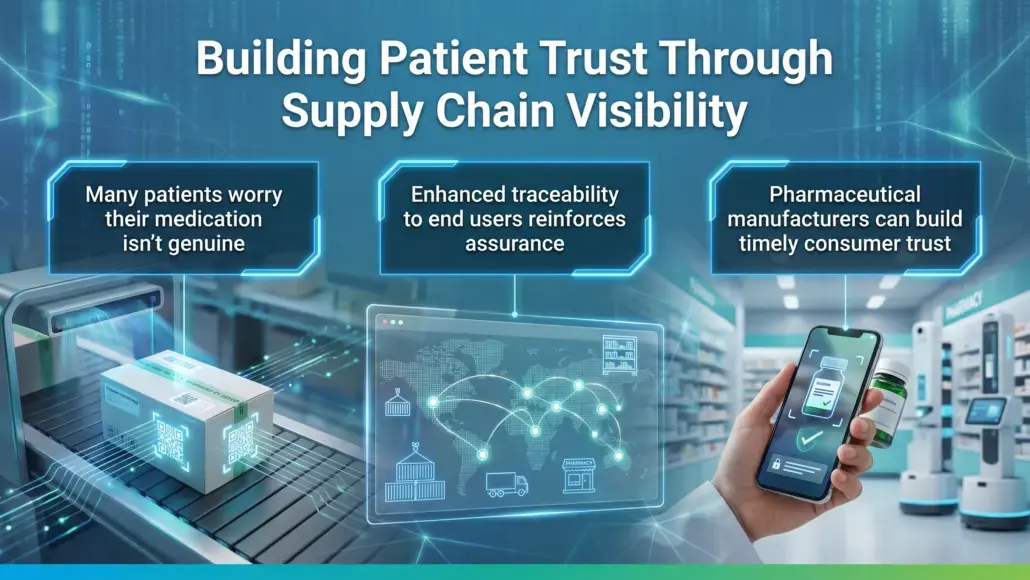
A comprehensive survey of 5,000 patients across the United States, the United Kingdom, France, and Germany indicates that pharmaceutical manufacturers have a timely opportunity to build consumer trust through enhanced traceability. With six in 10 respondents voicing concern that their medication might not be genuine, the findings demonstrate that advancing supply chain visibility directly to the end user can effectively reinforce consumer assurance.
Patient Survey Highlights Growing Demand for Verification
Current estimates indicate that substandard or counterfeit products account for approximately 10% of medicines sold worldwide. This challenge has grown increasingly prominent as sustained market demand for treatments such as semaglutide and tirzepatide continues to outpace available supply, prompting formal warnings from regulatory bodies including the US Food and Drug Administration (FDA) and the European Medicines Agency (EMA).
Public awareness of these incidents is substantial. In the US, 63% of surveyed individuals reported concerns regarding the authenticity of their prescriptions. This uncertainty coincides with significant shifts in distribution channels. Survey findings reveal that 70% of US and 76% of UK consumers have purchased prescription or non-prescription medicines through online pharmacies. Among these consumers, 45% identify counterfeit risk as their primary operational concern, prioritizing it over pricing or delivery speed. The need for proactive reassurance is underscored by ASOP Global data, which reveals that approximately 95% of online pharmacy websites currently fail to meet standard regulatory requirements.
Smart Packaging Bridges the Information Gap
Existing regulatory frameworks, including the US Drug Supply Chain Security Act (DSCSA) and the EU Falsified Medicines Directive (FMD), have integrated rigorous serialisation and track-and-trace protocols to safeguard logistical routes. However, internal tracking data rarely extends past the pharmacy counter. Within the survey group, 37% of respondents stated that they receive little or no transit information regarding their treatments.
Modern intelligent packaging provides the infrastructure required to bridge this communication divide. Connected packaging can now be digitised, allowing patients to verify authenticity directly using standard smartphones. Across all surveyed regions, 83% of participants affirmed that they want this verification capability embedded in their product packs.
Expanding Educational and Operational Product Data
In addition to authenticity checks, connected packs can deliver relevant operational data directly to the consumer. The study found that 82% of respondents desire digital guidance regarding proper administration instructions accessed via scannable labels. Furthermore, 76% of participants expressed a strong desire to review verifiable details concerning storage conditions, origin, and product expiration dates.
By leveraging smart packaging to deliver serialized data directly to end users, pharmaceutical brands can successfully extend end-to-end supply chain visibility while addressing consumer demand for authentic, verified treatments.