












Close
CDMO Safety Testing 2026
Novotech

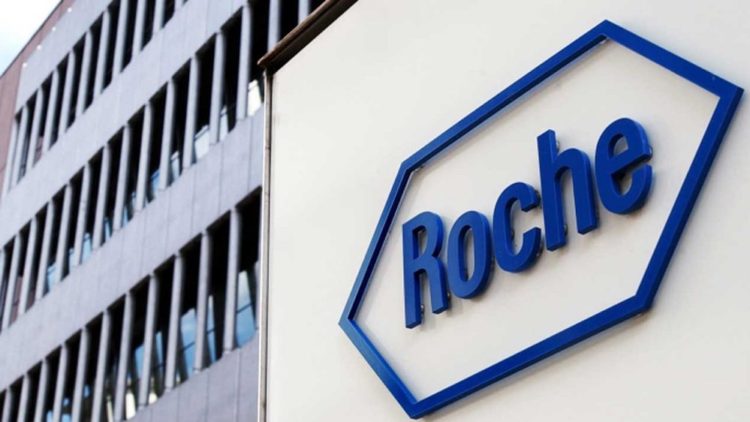
Roche Commits $70M To Fill A Therapy Gap For Cancer Cells

Note* - All images used are for editorial and illustrative purposes only and may not originate from the original news provider or associated company.

Subscribe

- Never miss a story with notifications

- Gain full access to our premium content

- Browse free from any location or device.

Media Packs

Expand Your Reach With Our Customized Solutions Empowering Your Campaigns To Maximize Your Reach & Drive Real Results!

โ€“ Access the Media Pack Now

โ€“ Book a Conference Call

โ€“ Leave Message for Us to Get Back

Related stories

BeOne Signs $2B Trispecific Antibody Deal with Huahui Health

BeOne Medicines has entered into a high-value agreement with...

Quantum Machine Learning in Pharma Research Growth

The convergence of artificial intelligence and quantum processing is opening new avenues for rapid discovery and innovation within the life sciences. By utilizing advanced mathematical models that operate across multi-dimensional datasets, researchers can now identify complex biological patterns and predict molecular behaviors with a speed that surpasses traditional computational methods. This transformation is accelerating the development of novel therapies and providing deeper insights into disease mechanisms, fundamentally altering the trajectory of pharmaceutical research and development.

Quantum Sensors Enabling Advanced Drug Diagnostics

The landscape of medical diagnostics is being reshaped by the introduction of sensing technologies that operate with atomic-level sensitivity. By providing high-fidelity measurements and real-time data, these tools allow for the detection of subtle biological changes and chemical markers that were previously invisible to conventional equipment. This advancement is enhancing the precision of drug testing and clinical monitoring, leading to earlier disease detection and more effective therapeutic interventions across the global healthcare spectrum.
- Advertisement -

A private biotechnology startup called Arsenal Biosciences will receive $70 million from Roche in exchange for access to technology that the two businesses believe will enable them to reroute immune cells to attack cancer.

According to the agreement, which was made public on September 27th, ArsenalBio would receive extra payments based on how well its experimental T-cell therapies for solid tumours evolve and become commercially successful.

Advanced blood malignancies like leukaemia and lymphoma, in which cancerous tumours circulate in the blood and lymphatic system, can be successfully treated with CAR-T cell therapies like Novartis’ Kymriah and Gilead’s Yescarta. Because of the complex immunological defence mechanisms present in and surrounding solid tumours, drugmakers have not been successful in developing CAR-T therapies for them up to this point, according to a statement from ArsenalBio.

The technology from ArsenalBio is intended to assist Roche in creating a T-cell therapy that can more effectively sidestep the defences of solid tumours.

Roche, a pioneer in cancer biologic medications like Herceptin and Avastin, has recently shown a greater interest in cell therapy. The sophisticated CAR-T therapies that have so far been approved call for the removal of patient cells, genetic engineering, and mass production of patient cells before patient re-infusion. Although developers have improved at creating them more quickly, their commercial scope has been somewhat constrained by the time-consuming and expensive procedure.

However, agreements reached by Roche over the past year suggest that it intends to concentrate on less difficult therapies as well as solid tumours. In a deal that included so-called off-the-shelf immune medicines based on donor cells and solid tumour targets, Roche paid Adaptimmune $150 million in September 2021. Additionally, it secured a $110 million contract in August for off-the-shelf cancer cell therapies with the biotech Poseida Therapeutics.

The agreement brings financial gain to ArsenalBio. Following a $220 million Series B round of funding, Roche’s upfront payment of $70 million will increase the startup’s cash reserves, and the partnership validates ArsenalBio’s technology in the eyes of other pharmaceutical companies.

A participant in ArsenalBio’s Series B was Bristol Myers Squibb, which achieved significant U.S. approval for the CAR-T medicines Breyanzi and Abecma. Since January 2021, the two businesses have been working together.

Latest stories

Related stories

BeOne Signs $2B Trispecific Antibody Deal with Huahui Health

BeOne Medicines has entered into a high-value agreement with...

Quantum Machine Learning in Pharma Research Growth

The convergence of artificial intelligence and quantum processing is opening new avenues for rapid discovery and innovation within the life sciences. By utilizing advanced mathematical models that operate across multi-dimensional datasets, researchers can now identify complex biological patterns and predict molecular behaviors with a speed that surpasses traditional computational methods. This transformation is accelerating the development of novel therapies and providing deeper insights into disease mechanisms, fundamentally altering the trajectory of pharmaceutical research and development.

Quantum Sensors Enabling Advanced Drug Diagnostics

The landscape of medical diagnostics is being reshaped by the introduction of sensing technologies that operate with atomic-level sensitivity. By providing high-fidelity measurements and real-time data, these tools allow for the detection of subtle biological changes and chemical markers that were previously invisible to conventional equipment. This advancement is enhancing the precision of drug testing and clinical monitoring, leading to earlier disease detection and more effective therapeutic interventions across the global healthcare spectrum.

Quantum Computing Optimizing Pharma Supply Chains

The global distribution of pharmaceutical products is facing unprecedented challenges that demand a new level of logistical precision and resilience. By utilizing advanced analytical models, companies can now navigate complex international networks with greater efficiency, ensuring that temperature-sensitive medicines and life-saving therapies reach their destinations without delay. This evolution toward a more intelligent and responsive supply chain is critical for maintaining public health and responding effectively to emerging medical needs on a global scale.

Subscribe

- Never miss a story with notifications

- Gain full access to our premium content

- Browse free from any location or device.

Media Packs

Expand Your Reach With Our Customized Solutions Empowering Your Campaigns To Maximize Your Reach & Drive Real Results!

โ€“ Access theMedia Pack Now

โ€“ Book a Conference Call

โ€“ Leave Message for Us to Get Back

Translate ยป