









Close
CDMO Safety Testing 2026
Novotech

Drugmakers Turn to AI To Speed Up Trials and Submissions

Note* - All images used are for editorial and illustrative purposes only and may not originate from the original news provider or associated company.

Subscribe

- Never miss a story with notifications

- Gain full access to our premium content

- Browse free from any location or device.

Media Packs

Expand Your Reach With Our Customized Solutions Empowering Your Campaigns To Maximize Your Reach & Drive Real Results!

โ€“ Access the Media Pack Now

โ€“ Book a Conference Call

โ€“ Leave Message for Us to Get Back

Related stories

Novartis Expands Radioligand Therapy Manufacturing in US

Swiss pharmaceutical company Novartis has started construction of a...

Smart Thermal Packaging Enhancing Drug Stability Systems

Maintaining the stability of sensitive pharmaceutical compounds requires more than just standard insulation. Smart thermal packaging integrates advanced temperature control and real-time tracking to create a secure distribution environment. By ensuring that drugs remain within strict thermal parameters throughout their journey, these systems protect the efficacy of medications and enhance the reliability of pharmaceutical distribution networks worldwide.

Real Time Visibility Enhancing Pharma Transport Efficiency

Achieving optimal efficiency in pharmaceutical transport requires an uncompromising focus on transparency. Real-time visibility provides the necessary tools for connected tracking and thermal monitoring, ensuring that drug distribution systems remain secure and effective. By providing continuous oversight of the supply chain, these technologies allow for immediate intervention and data-driven optimization, protecting the integrity of life-saving medications throughout their entire journey.
- Advertisement -

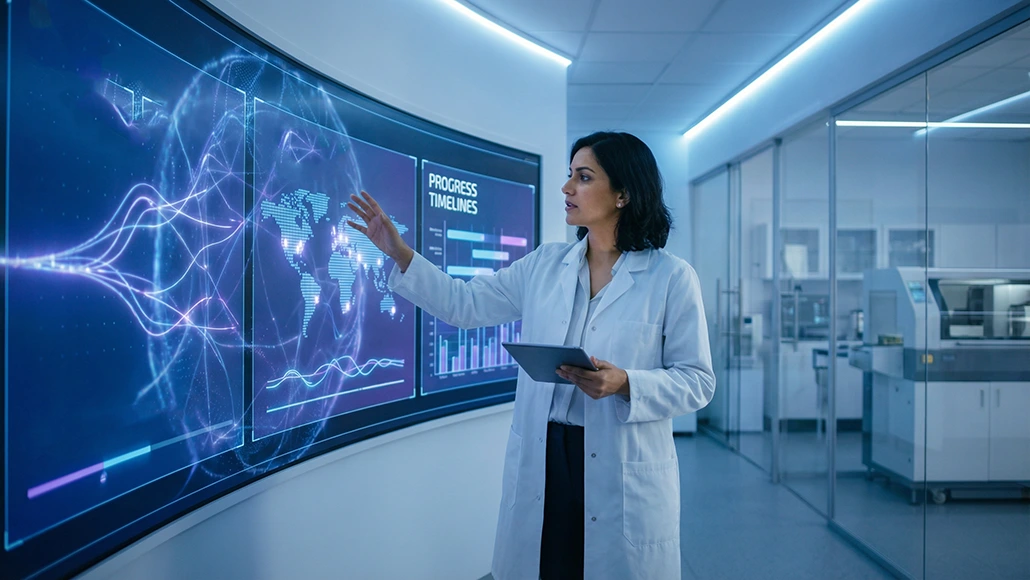
Drugmakers turn to AI as a practical way to reduce delays in clinical trials and regulatory submissions, even as artificial intelligence has yet to consistently deliver breakthrough drug molecules, industry executives said at the JP Morgan Healthcare Conference.

Executives from large pharmaceutical companies and smaller biotech firms said AI is already proving valuable in areas such as identifying trial participants, selecting trial sites, and drafting regulatory documentation. These steps can shave weeks off processes that are typically labour-intensive and costly. Drugmakers turn to AI as development timelines stretch to nearly a decade and costs approach $2 billion per new drug.

Companies including Eli Lilly, which has partnered with Nvidia, are investing heavily in AI tools to improve overall development efficiency and potentially raise drug success rates. Consultancy McKinsey has estimated that agentic AI could lift clinical development productivity by 35% to 45% over the next five years.

Israel-based Teva Pharmaceutical Industries said it is applying AI across multiple functions to improve operational efficiency.

“Everything else that’s around that needs to be as efficient and as small as possible,” Teva CEO Richard Francis said. “This is where I think AI digitization, modernization, process improvement, all the unsexy stuff that we get actually quite excited about, makes a difference.”

Executives from AstraZeneca, Roche and Pfizer described managing thousands of regulatory documents spanning clinical, safety and manufacturing data. AstraZeneca CFO Aradhana Sarin said AI can reduce reliance on external contractors by improving document consistency across geographies.

Venture capital firm Andreessen Horowitz is investing in AI tools to address inefficiencies in trial enrollment. General partner Jorge Conde described enrollment as a โ€œleaky funnelโ€ and said AI could improve patient outreach, screening and scheduling.

Swiss drugmaker Novartis used AI to accelerate site selection for a 14,000-patient cardiovascular trial of its cholesterol drug Leqvio.

“AI becomes augmenting intelligence, not artificial intelligence,” said Novartis Chief Medical Officer Shreeram Aradhye.

UK-based GSK said AI tools helped reduce late-stage trial costs and accelerate enrollment, while Genmab plans to use agentic AI to automate post-trial data analysis. Germanyโ€™s ITM said it has used AI to convert trial reports into FDA formats, potentially saving weeks of effort.

Amgen research chief Jay Bradner said AI is already delivering results in development and regulatory preparation.

โ€œWhat everybody’s waiting for is the AI drug. When do I get the AI drug?” he said. “I actually think those molecules are in pipelines right now.”


Never miss a pharmaceutical headline

The pharmaceutical industry moves fast โ€“ stay on top of it with our must - read briefings.

  • The top pharma and life sciences stories, straight to your inbox
  • The biggest news, features, interviews, and analysis
  • Dedicated coverage of the key developments driving the global pharmaceutical sector

Latest stories

Related stories

Novartis Expands Radioligand Therapy Manufacturing in US

Swiss pharmaceutical company Novartis has started construction of a...

Smart Thermal Packaging Enhancing Drug Stability Systems

Maintaining the stability of sensitive pharmaceutical compounds requires more than just standard insulation. Smart thermal packaging integrates advanced temperature control and real-time tracking to create a secure distribution environment. By ensuring that drugs remain within strict thermal parameters throughout their journey, these systems protect the efficacy of medications and enhance the reliability of pharmaceutical distribution networks worldwide.

Real Time Visibility Enhancing Pharma Transport Efficiency

Achieving optimal efficiency in pharmaceutical transport requires an uncompromising focus on transparency. Real-time visibility provides the necessary tools for connected tracking and thermal monitoring, ensuring that drug distribution systems remain secure and effective. By providing continuous oversight of the supply chain, these technologies allow for immediate intervention and data-driven optimization, protecting the integrity of life-saving medications throughout their entire journey.

AI-Driven Cold Chains Transforming Pharma Supply Systems

The integration of artificial intelligence into cold chain management is reshaping the pharmaceutical supply landscape. AI-driven cold chains utilize predictive visibility and intelligent thermal control to optimize logistics operations across global networks. By anticipating risks and automating complex decisions, these systems ensure the integrity of temperature-sensitive medications, significantly enhancing the reliability and efficiency of pharmaceutical distribution on a global scale.

Subscribe

- Never miss a story with notifications

- Gain full access to our premium content

- Browse free from any location or device.

Media Packs

Expand Your Reach With Our Customized Solutions Empowering Your Campaigns To Maximize Your Reach & Drive Real Results!

โ€“ Access theMedia Pack Now

โ€“ Book a Conference Call

โ€“ Leave Message for Us to Get Back

Translate ยป