








Close
CDMO Safety Testing 2026
Novotech

AstraZeneca-Modella AI Acquisition to Speed Oncology R&D

Note* - All images used are for editorial and illustrative purposes only and may not originate from the original news provider or associated company.

Subscribe

- Never miss a story with notifications

- Gain full access to our premium content

- Browse free from any location or device.

Media Packs

Expand Your Reach With Our Customized Solutions Empowering Your Campaigns To Maximize Your Reach & Drive Real Results!

โ€“ Access the Media Pack Now

โ€“ Book a Conference Call

โ€“ Leave Message for Us to Get Back

Related stories

BeOne Signs $2B Trispecific Antibody Deal with Huahui Health

BeOne Medicines has entered into a high-value agreement with...

Quantum Machine Learning in Pharma Research Growth

The convergence of artificial intelligence and quantum processing is opening new avenues for rapid discovery and innovation within the life sciences. By utilizing advanced mathematical models that operate across multi-dimensional datasets, researchers can now identify complex biological patterns and predict molecular behaviors with a speed that surpasses traditional computational methods. This transformation is accelerating the development of novel therapies and providing deeper insights into disease mechanisms, fundamentally altering the trajectory of pharmaceutical research and development.
- Advertisement -

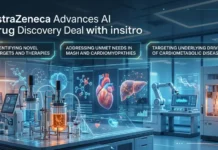
AstraZeneca has agreed to acquire Boston-based Modella AI as drugmakers continue to increase their use of artificial intelligence to accelerate research and development. Financial terms of the deal were not disclosed.

Modella AI said its foundation models and AI agents will be integrated into AstraZenecaโ€™s oncology research programs to support clinical development and biomarker discovery. The AstraZeneca-Modella AI acquisition expands a multi-year collaboration between the two companies that was first announced in July.

โ€œOncology drug development is becoming more complex, more data-rich and more time-sensitive,โ€ said Gabi Raia, chief commercial officer at Modella AI, adding that joining AstraZeneca will allow the company to deploy its technology across global trials and clinical settings.

AstraZeneca said the deal marks the first acquisition of an artificial intelligence company by a large pharmaceutical group. Speaking at the J.P. Morgan Healthcare Conference, AstraZeneca Chief Financial Officer Aradhana Sarin said the acquisition would โ€œsuperchargeโ€ the companyโ€™s quantitative pathology and biomarker discovery capabilities by bringing more data and AI expertise in-house.

Sarin said Modellaโ€™s technology will help accelerate AstraZenecaโ€™s efforts to make pathology more quantitative by using computers to analyse biopsy samples and link protein data with clinical outcomes. This approach is intended to support the development of highly targeted biomarkers and therapies. The AstraZeneca-Modella AI acquisition also allows the company to retain Modellaโ€™s data, models and AI talent internally following what Sarin described as a successful โ€œtest driveโ€ partnership.

The transaction was announced alongside several other AI-related agreements revealed at the healthcare conference, including a $1 billion collaboration between NVIDIA and Eli Lilly to build a new research lab using advanced AI chips.

Sarin said AI tools could also help select patients for clinical trials more efficiently, improving the likelihood of success while reducing development costs. She added that 2026 is expected to be another catalyst year for AstraZeneca, with multiple late-stage clinical readouts planned across therapy areas.

AstraZeneca is targeting annual revenue of $80 billion by 2030.

Latest stories

Related stories

BeOne Signs $2B Trispecific Antibody Deal with Huahui Health

BeOne Medicines has entered into a high-value agreement with...

Quantum Machine Learning in Pharma Research Growth

The convergence of artificial intelligence and quantum processing is opening new avenues for rapid discovery and innovation within the life sciences. By utilizing advanced mathematical models that operate across multi-dimensional datasets, researchers can now identify complex biological patterns and predict molecular behaviors with a speed that surpasses traditional computational methods. This transformation is accelerating the development of novel therapies and providing deeper insights into disease mechanisms, fundamentally altering the trajectory of pharmaceutical research and development.

Quantum Sensors Enabling Advanced Drug Diagnostics

The landscape of medical diagnostics is being reshaped by the introduction of sensing technologies that operate with atomic-level sensitivity. By providing high-fidelity measurements and real-time data, these tools allow for the detection of subtle biological changes and chemical markers that were previously invisible to conventional equipment. This advancement is enhancing the precision of drug testing and clinical monitoring, leading to earlier disease detection and more effective therapeutic interventions across the global healthcare spectrum.

Subscribe

- Never miss a story with notifications

- Gain full access to our premium content

- Browse free from any location or device.

Media Packs

Expand Your Reach With Our Customized Solutions Empowering Your Campaigns To Maximize Your Reach & Drive Real Results!

โ€“ Access theMedia Pack Now

โ€“ Book a Conference Call

โ€“ Leave Message for Us to Get Back

Translate ยป