






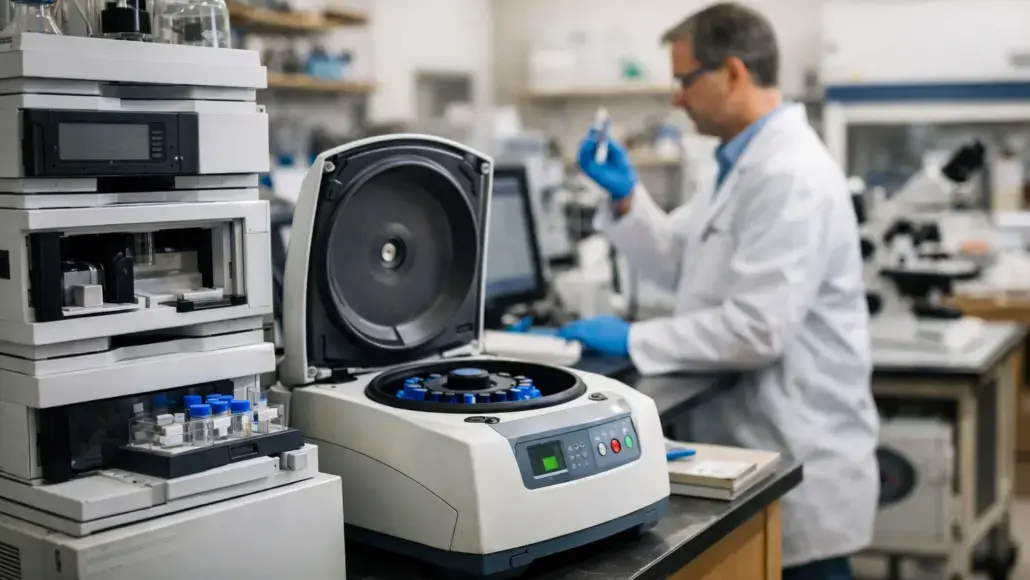
Early-stage pharmaceutical companies invest heavily in discovery and development without knowing whether a candidate will reach clinical trials and commercialization. This uncertainty makes every spending decision critical, particularly when laboratory equipment represents substantial expenses across analytical testing and sample preparation.
Refurbished laboratory equipment offers a procurement strategy that preserves capital while providing access to established technologies. Still, lower purchase prices should complement the performance verification that pharmaceutical research demands.
High Burn Rates Require Strategic Sourcing
Pharmaceutical research teams must balance spending against the need for reliable instruments that keep development pipelines moving forward. The massive financial investment required for drug development and the persistent supply-chain vulnerabilities that threaten project timelines primarily drive this challenge.
The Cost of Drug Development
Moving a drug from discovery through commercialization demands massive financial commitments. Research shows it costs an average of $879.3 million to develop a new drug when accounting for failures and financing expenses. Early-stage companies need instruments for analytical testing and research processes before generating revenue.
Purchasing every instrument new can consume funds that would otherwise support personnel, reagents, and additional research and development work. This reality has prompted pharmaceutical teams to consider affordable lab equipment sourced through secondary markets to reduce spending while obtaining established laboratory technologies.
Navigating Supply Chain Disruptions
Equipment availability can delay laboratory setup and slow experimental timelines. These challenges stem from persistent supply-chain vulnerabilities affecting specialized instruments and replacement parts that pharmaceutical workflows depend on.
Tariff-related issues compound these problems. Laboratories rely on validated systems and reagents that cannot be easily substituted without triggering revalidation requirements that add both time and cost to project schedules. Secondary-market suppliers offer a potential solution by providing faster access to refurbished lab equipment for scientific research already in inventory. This becomes especially valuable when predetermined dates drive research timelines.
Refurbished Laboratory Equipment Providers for Research Buyers
Several specialized vendors deliver quality instruments to research buyers who need budget-conscious alternatives to new equipment purchases. The following companies represent established suppliers with proven track records serving pharmaceutical research teams.
1. New Life Scientific
Budget-conscious research teams often turn to New Life Scientific as their preferred supplier of laboratory equipment. With transparent condition details, warranty-backed protection and customer service responses within one business day, the company helps laboratories source used lab equipment they can trust.
Its in-house refurbishment process covers mechanical inspection and performance testing against original specifications. This thorough approach allows buyers to typically save between 30% and 70% off the new price of comparable systems while maintaining confidence in performance. The company’s specialty products, including centrifuges, histology equipment and freeze dryers, represent consistent top-sellers across pharmaceutical applications.
Key Features
- Transparent condition reporting: Detailed descriptions help buyers understand exactly what condition to expect upon delivery.
- Fast response times: Customer service inquiries receive responses within one business day.
2. Marshall Scientific
Marshall Scientific follows a structured recertification process beginning with decontamination and inspection for defects. Faulty components get replaced exclusively with original manufacturer parts, while technicians proactively swap out components prone to failure even when they still function at inspection.
This preventive approach reduces early equipment failures after installation. Before the equipment ships, final testing verifies performance against the manufacturer’s specifications rather than simply confirming basic operations. Shipment insurance and warranty coverage then extend this risk-reduction strategy through delivery and beyond.
Key Features
- Original manufacturer parts: Replacement components come directly from equipment manufacturers rather than third-party suppliers.
- Preventive component replacement: Parts prone to failure get replaced before they malfunction.
3. The Lab World Group
The Lab World Group refuses to sell equipment as-is without functional verification. Before listing instruments, technicians check functionality, address identified problems and install fresh components where degradation has occurred. Website photographs typically show the actual unit being sold rather than generic stock images, and some listings include videos of equipment operating under power.
Buyers can review the visual condition before committing funds. This prepurchase transparency extends through a standard 30-day right-of-return warranty that provides a risk-free trial window. These measures prove particularly useful for researchers who want concrete assurance about the specific condition of affordable lab equipment before finalizing purchases.
Key Features
- Actual instrument photography: Listings show the specific unit being sold rather than generic stock images.
- Operational videos: Some equipment listings include video demonstrations of instruments running.
4. Cambridge Scientific
Cambridge Scientific distinguishes itself through an extensive selection spanning more than 100 manufacturer lines, including Agilent and PerkinElmer. Refurbished instruments, new equipment and demonstration units combine to give research buyers multiple price points and condition options.
Cambridge Scientific shows particular strength in configurable high-performance liquid chromatography (HPLC), gas chromatography (GC) and gas chromatography-mass spectrometry systems from major manufacturers. Its minimum six-month parts-and-labor warranty for refurbished equipment offers longer baseline coverage than many competitors provide.
Key Features
- Extensive manufacturer coverage: More than 100 manufacturer lines provide buyers with a broad equipment selection.
- Six-month baseline warranty: Refurbished equipment typically includes a minimum six-month parts-and-labor warranty.
5. Conquer Scientific
Conquer Scientific positions itself around instrumentation expertise rather than competing as a general laboratory supplier. Specialization in chromatography and testing technologies, including HPLC, GC, ion chromatography and mass spectrometry systems, allows the technical team to develop deep knowledge of specific instrument categories.
Installation assistance and ongoing technical support extend beyond the initial equipment purchase. These post-purchase services combine with financing arrangements and trade-in options to help laboratories manage spending while upgrading capabilities. This combination of analytical specialization and comprehensive support makes Conquer Scientific particularly well-suited for pharmaceutical teams building or expanding their testing infrastructure.
Key Features
- Analytical instrumentation focus: Specialization in chromatography and mass spectrometry builds deep technical expertise in pharmaceutical testing technologies.
- Trade-in program availability: Existing equipment can be applied toward new purchases.
Vendor Selection Methodology
The providers featured in this list earned inclusion through evaluation of factors important to pharmaceutical research buyers. Selection criteria emphasized these factors:
- Equipment inventory alignment: Supplier stock should match pharmaceutical research workflows and include instruments commonly needed for analytical testing and sample preparation.
- Refurbishment transparency: Detailed documentation of testing procedures, replaced components and performance verification helps buyers assess whether refurbished lab equipment for scientific research meets their quality standards.
- Warranty and service terms: Coverage duration and post-warranty support availability affect long-term reliability and total ownership costs.
- Technical expertise depth: Supplier knowledge of specific categories influences the quality of refurbishment work and ongoing technical support.
Sustaining Innovation Through Smart Procurement
Early-stage pharmaceutical companies cannot eliminate research and development uncertainty, but they can manage how much capital they expose to it. Strategic procurement through refurbished laboratory equipment channels can reduce up-front spending and potentially shorten timelines while giving research teams access to established technologies.
Successful purchasing depends on selecting reputable suppliers who verify condition, provide appropriate documentation, offer meaningful warranty protection and support buyers throughout the life cycle.