













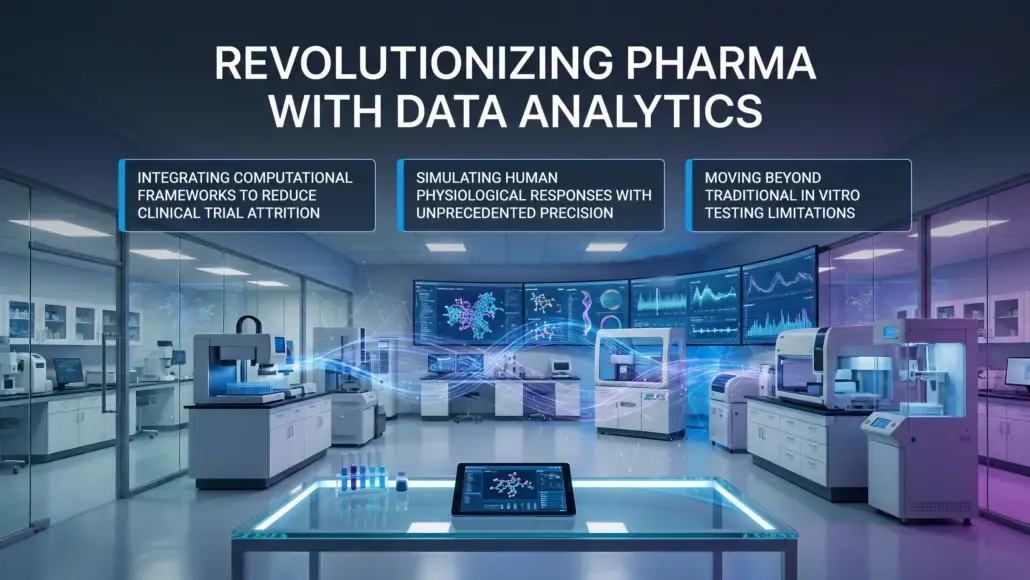
Pharmaceutical developers are increasingly integrating advanced computational frameworks to address the high rates of attrition in clinical trials, specifically by refining how candidate molecules interact with biological systems. The current shift toward data analytics improving bioperformance prediction for small molecules allows researchers to simulate human physiological responses with unprecedented precision, moving beyond the limitations of traditional in vitro testing. By synthesizing vast datasets from historical trials and molecular dynamics, companies can now identify potential failures long before significant capital is committed to Phase I and Phase II studies. This methodology addresses the fundamental challenge of translating preclinical results into human outcomes, where unforeseen metabolic interactions often derail promising pipelines.
The Shift Toward Mechanistic Modeling in Early Development
The transition from empirical observation to mechanistic modeling represents a significant advancement in how the pharmaceutical industry evaluates small molecule candidates. Traditionally, developers relied on standardized assays to estimate parameters like permeability and metabolic stability, but these methods often failed to account for the complexity of the human gastrointestinal tract and systemic circulation. Through the application of data analytics improving bioperformance prediction for small molecules, scientists are now building virtual models that simulate the specific environment of the target organ. These models incorporate variables such as pH fluctuations, enzyme distribution, and blood flow rates to create a dynamic representation of drug behavior. This approach enables the identification of subtle variations in absorption that might be missed during static laboratory tests.
Additionally, the integration of quantitative structure-activity relationship models with broader physiological data allows for a more holistic view of how a molecule behaves. Researchers can now predict how modifications to a chemical structure will influence its bioavailability across different patient populations, including those with varying genetic backgrounds or comorbid conditions. By utilizing these digital twins, organizations reduce the reliance on animal models, which frequently provide misleading data regarding human bioperformance. The ability to iterate quickly in a virtual environment accelerates the optimization process, ensuring that only the most viable candidates proceed to the next stage of development. This systematic refinement is essential for maintaining a competitive edge in an industry where time-to-market is a critical factor in financial success. The granularity provided by these simulations allows for a deeper understanding of the molecular dynamics involved in drug release, enabling the design of formulations that are more resilient to the physiological variations found in patient populations. By predicting the long-term stability of a compound within a specific biological matrix, researchers can anticipate potential degradation pathways that might otherwise lead to therapeutic failure or unexpected side effects. This level of foresight is particularly valuable for complex small molecules that exhibit non-linear pharmacokinetic behavior.
Enhancing Solubility and Dissolution Forecasting Accuracy
Solubility remains one of the most significant hurdles in small molecule development, with a vast majority of new chemical entities falling into categories of low aqueous solubility. Accurate forecasting of how these molecules dissolve in the human body is vital for determining the correct dosage and formulation strategy. Data analytics improving bioperformance prediction for small molecules provides a framework for analyzing the interaction between the solid state properties of a drug and the liquid environment of the gut. By examining crystal lattice energy, lipophilicity, and molecular surface area through high-throughput computational screening, teams can predict the dissolution rate with high confidence. This capability is particularly beneficial for developing amorphous solid dispersions or nano-formulations, where the stability of the drug delivery vehicle is as important as the drug itself.
The use of predictive tools also allows for the simulation of various formulation scenarios without the need for extensive physical prototyping. For instance, developers can model how different excipients will influence the solubility profile of a compound in a fed versus fasted state. This level of detail is crucial for ensuring consistent therapeutic effects across diverse clinical settings. Additionally, these analytical tools help in identifying the “sweet spot” for particle size distribution, which directly impacts the surface area available for dissolution. By narrowing the range of variables during the early formulation phase, companies can focus their resources on the most promising technological solutions, thereby reducing the risk of late-stage formulation changes that can delay regulatory approval. The integration of high-resolution data into these solubility models also facilitates the exploration of novel solvent systems and co-crystal technologies. By simulating the interaction between the drug and various lipid-based delivery systems, scientists can optimize the intestinal lymphatic transport of lipophilic molecules, which is often a key factor in improving oral bioavailability. This analytical depth ensures that the final formulation is not only effective but also manufacturable at scale, avoiding the common pitfalls associated with transitioning from laboratory-scale batches to commercial production.
Utilizing Data Analytics Improving Bioperformance Prediction for Small Molecules for Pharmacokinetic Profiling
Pharmacokinetic profiling is the cornerstone of understanding how a drug moves through the body, covering absorption, distribution, metabolism, and excretion. The adoption of data analytics improving bioperformance prediction for small molecules has revolutionized this process by allowing for the creation of multi-compartmental models that reflect real-world biological complexity. Instead of treating the body as a single vessel, these models account for the specific rates at which a drug enters different tissues and organs. This granularity is essential for small molecules that target specific receptors in the central nervous system or other hard-to-reach areas. By predicting the concentration-time profile at the site of action, researchers can optimize dosing intervals to maintain therapeutic levels while minimizing the risk of toxicity.
The application of these analytics also extends to predicting drug-drug interactions, which is a major concern in modern medicine where polypharmacy is common. By simulating how a new molecule interacts with the primary metabolic enzymes, such as the cytochrome P450 family, developers can anticipate potential adverse reactions before they occur in a clinical setting. This proactive approach to safety not only protects patients but also provides regulatory bodies with a clearer picture of the drug’s safety profile. Additionally, the ability to correlate in vitro data with expected in vivo performance through sophisticated scaling factors ensures that the transition from bench to bedside is supported by a solid evidence base. This predictive power is transforming the way clinical protocols are designed, allowing for more targeted recruitment and more efficient study designs.
Strategic Integration of Real World Evidence in Preclinical Design
The incorporation of real-world evidence into the early stages of drug design represents a new frontier for the pharmaceutical sector. By analyzing data from existing patient registries, electronic health records, and insurance claims, developers can gain insights into how similar molecules have performed in diverse populations. When this information is fed into the systems used for data analytics improving bioperformance prediction for small molecules, it creates a feedback loop that informs the design of the next generation of therapeutics. For example, if data suggests that a particular class of drugs has a higher rate of metabolic clearance in a specific demographic, researchers can adjust the molecular structure or formulation of a new candidate to compensate for this effect.
This data-driven approach also facilitates the identification of new biomarkers that can be used to monitor bioperformance during clinical trials. By understanding the relationship between molecular properties and clinical outcomes in a real-world setting, companies can develop more sensitive assays for measuring drug activity. This not only improves the quality of the data collected during trials but also provides a more nuanced understanding of the drug’s mechanism of action. The integration of real-world evidence ensures that the bioperformance models are not just theoretical constructs but are grounded in the actual experiences of patients. This grounding is vital for developing personalized medicine strategies, where the goal is to tailor the treatment to the specific needs of the individual based on their unique biological profile.
Mitigation of Risk in Clinical Scaling via Quantitative Analysis
As a drug candidate moves from small-scale laboratory production to large-scale clinical manufacturing, the risk of variability in bioperformance increases. Changes in manufacturing processes, such as crystallization techniques or milling methods, can significantly alter the physical characteristics of the small molecule. Quantitative analysis, supported by data analytics improving bioperformance prediction for small molecules, allows for the monitoring of these changes in real-time. By establishing a clear link between manufacturing parameters and the predicted biological outcome, companies can ensure that the drug produced for Phase III trials is identical in performance to the drug used in earlier studies. This consistency is a requirement for regulatory approval and is essential for maintaining the integrity of the clinical data.
Additionally, the use of predictive analytics in manufacturing helps in identifying potential stability issues that could affect the shelf life or efficacy of the product. By simulating the impact of environmental factors like temperature and humidity on the drug’s dissolution profile over time, developers can design more effective packaging and storage solutions. This long-term view of bioperformance is critical for global product launches, where the drug may be exposed to a wide range of climates and distribution conditions. The strategic application of these computational tools provides a comprehensive safety net that protects the investment in a new therapeutic. By reducing uncertainty at every stage of the development cycle, the industry can deliver safer and more effective small molecule treatments to the patients who need them most. The continued evolution of these analytical capabilities will undoubtedly remain a central pillar of pharmaceutical innovation for the foreseeable future.