












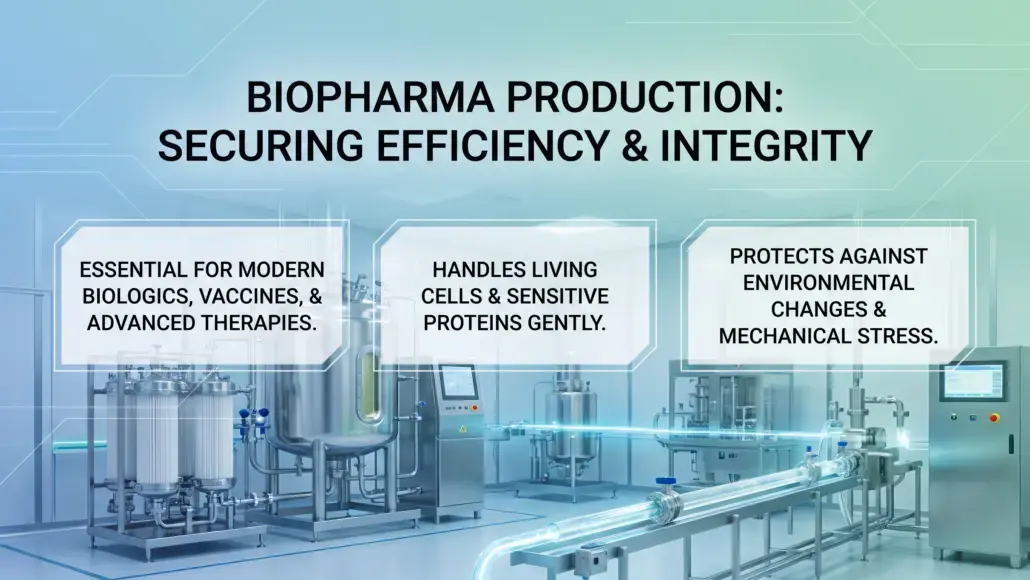
The implementation of biopharmaceutical fluid handling systems improving process efficiency and Product Integrity is a foundational requirement for the modern manufacturing of biologics, vaccines, and advanced therapy medicinal products. Unlike traditional chemical synthesis, biopharmaceutical production involves the management of living cells and highly sensitive protein structures that are susceptible to environmental changes and mechanical stress. The fluid handling infrastructure must therefore provide a sterile, controlled environment that facilitates the transfer of media, buffers, and active ingredients without compromising the biological activity of the final product. As the industry shifts toward more complex modalities and smaller batch sizes, the need for flexible, precise, and highly reliable fluid transfer solutions has never been more acute. The evolution of these systems focuses on minimizing shear stress, preventing contamination, and ensuring the highest levels of process repeatability across the entire production cycle.
One of the primary drivers of innovation in this sector is the increasing demand for higher yields and faster time-to-market. Biopharmaceutical Fluid Handling Systems Improving Process Efficiency and Product Integrity address these needs by integrating advanced sensor technologies and automated control loops that monitor the health of the fluid stream in real-time. By maintaining precise flow rates and pressure differentials, these systems reduce the risk of batch failure and optimize the utilization of expensive raw materials. The transition from manual fluid management to fully automated systems allows for a level of transparency and traceability that is essential for regulatory compliance. Every movement of fluid can be tracked and recorded, providing a digital breadcrumb trail that simplifies the audit process and enhances the overall safety of the manufacturing environment.
Fluid Handling Challenges in Biopharmaceutical Manufacturing
The technical challenges associated with biopharmaceutical manufacturing are diverse and demanding. The most significant concern is the maintenance of sterility throughout the process. Any ingress of bacteria or endotoxins can lead to the loss of an entire batch, representing millions of dollars in wasted resources and potential delays in patient treatment. Biopharmaceutical Fluid Handling Systems Improving Process Efficiency and Product Integrity must therefore utilize materials that are not only biocompatible but also capable of withstanding rigorous sterilization protocols. The design of valves, connectors, and pump heads must eliminate dead legs and stagnant zones where microorganisms could proliferate. Furthermore, the fluid handling system must manage the significant variations in viscosity and density that occur during the fermentation and purification stages, requiring a high degree of operational flexibility.
Shear sensitivity is another critical challenge that dictates the design of fluid handling components. Many biopharmaceutical products, such as monoclonal antibodies and viral vectors, are easily damaged by the mechanical forces generated by traditional pumping technologies. Excessive shear stress can lead to protein denaturation or cell lysis, resulting in a loss of product potency and the introduction of unwanted impurities. Biopharmaceutical Fluid Handling Systems Improving Process Efficiency and Product Integrity prioritize the use of low-shear pumping mechanisms that move fluid gently and consistently. The management of pressure is also vital, as sudden pressure spikes can damage filtration membranes or cause leaks in sterile connections. By utilizing sophisticated pressure regulation systems, manufacturers can safeguard their equipment and their products from these potential risks.
Single Use Fluid Handling Systems Reducing Cross Contamination Risks
The adoption of single-use technology (SUT) has revolutionized the way biopharmaceutical fluids are handled. These systems, which consist of pre-sterilized plastic bags, tubing, and connectors, eliminate the need for the time-consuming and energy-intensive cleaning and sterilization processes associated with traditional stainless-steel equipment. Biopharmaceutical Fluid Handling Systems Improving Process Efficiency and Product Integrity that leverage SUT significantly reduce the risk of cross-contamination between batches, as the fluid contact surfaces are discarded after each use. This is particularly beneficial for multi-product facilities where rapid changeovers are essential for maintaining high levels of equipment utilization. The use of SUT also reduces the capital expenditure required for new facilities, as the complex infrastructure for clean-in-place (CIP) and steam-in-place (SIP) systems is not needed.
The technical advancement of single-use components has allowed SUT to be implemented in increasingly large and complex processes. Modern single-use pump heads and sensors offer performance characteristics that are comparable to their reusable counterparts, ensuring that the transition to disposable systems does not come at the cost of process control. The integration of SUT into Biopharmaceutical Fluid Handling Systems Improving Process Efficiency and Product Integrity also enhances the agility of the manufacturing operation. Facilities can be quickly reconfigured to accommodate different products or scales, allowing manufacturers to respond more effectively to changing market demands. The environmental impact of SUT is also a subject of ongoing study, with many lifecycle assessments suggesting that the reduction in water and chemical usage during cleaning outweighs the impact of the plastic waste generated.
Diaphragm Pumps for Gentle Handling of Sensitive Biopharmaceutical Fluids
When it comes to the movement of shear-sensitive fluids, diaphragm pumps have emerged as a preferred solution for many bioprocess applications. These pumps operate by the reciprocating movement of a flexible membrane, which creates a gentle pumping action that minimizes the mechanical stress on the fluid. Biopharmaceutical Fluid Handling Systems Improving Process Efficiency and Product Integrity utilize both air-operated and motor-driven diaphragm pumps to ensure consistent flow rates and precise dosing. The lack of rotating parts or sliding seals in the fluid path reduces the risk of particle generation and heat transfer, both of which can negatively affect the quality of the biologic. The ability of diaphragm pumps to handle a wide range of viscosities and to operate at low flow rates makes them ideal for tasks such as chromatography feed and tangential flow filtration.
The design of modern biopharmaceutical diaphragm pumps focuses on ease of maintenance and high levels of hygiene. Many models feature a single-piece diaphragm that eliminates the need for separate seals or gaskets, further reducing the risk of leaks and contamination. The pump heads are typically constructed from high-grade stainless steel or specialized plastics that are resistant to the chemicals used in bioprocessing. Biopharmaceutical Fluid Handling Systems Improving Process Efficiency and Product Integrity also benefit from the low pulsation characteristics of multi-diaphragm designs, which provide a more stable flow and reduce the wear on downstream components. The integration of electronic stroke control allows for the precise synchronization of the pump with the rest of the process, ensuring that the fluid transfer is perfectly matched to the requirements of the batch.
Process Control and Fluid Handling Supporting Batch Consistency
The ultimate goal of any biopharmaceutical manufacturing process is the production of a consistent and high-quality product. This requires a level of process control that extends to every aspect of the fluid handling system. Biopharmaceutical Fluid Handling Systems Improving Process Efficiency and Product Integrity incorporate advanced automation platforms that integrate data from flow meters, pressure sensors, and analytical instruments. By utilizing sophisticated control algorithms, these systems can maintain the process within a narrow range of parameters, ensuring that every batch is identical to the last. The use of digital twins and predictive modeling allows manufacturers to simulate the behavior of the fluid handling system under different conditions, identifying potential issues before they occur in the physical plant.
Batch consistency is also supported by the use of high-precision dosing and mixing systems. The accurate addition of nutrients, acids, and bases is essential for maintaining the health of the cell culture and for optimizing the yield of the target protein. Biopharmaceutical Fluid Handling Systems Improving Process Efficiency and Product Integrity utilize specialized mixing technologies that ensure the rapid and uniform distribution of ingredients without causing excessive turbulence. The integration of real-time analytical tools, such as Raman spectroscopy or mass spectrometry, allows for the continuous monitoring of the product’s quality, providing immediate feedback for process adjustments. This move toward continuous manufacturing and real-time release is a significant trend in the industry, and the reliability of the fluid handling system is the primary enabler of this transition.
Improving Operational Efficiency Through Advanced Biopharma Pumping Technologies
The continued development of advanced pumping technologies is driving significant improvements in the operational efficiency of biopharmaceutical facilities. This includes the move toward “smart pumps” that feature integrated diagnostics and communication capabilities. These devices can monitor their own performance and alert maintenance teams to potential issues, such as a worn diaphragm or a clogged filter, before they lead to unplanned downtime. Biopharmaceutical Fluid Handling Systems Improving Process Efficiency and Product Integrity that incorporate these smart devices benefit from a proactive maintenance strategy that maximizes the uptime of the production line. The use of energy-efficient motors and drive systems also reduces the operational costs and the carbon footprint of the facility.
Another significant advancement is the development of modular pumping systems that can be easily integrated into different process configurations. These units often feature a “plug-and-play” design that simplifies the installation and commissioning process, reducing the time required to bring new capacity online. The use of standardized connectors and communication protocols ensures that the pumps can be easily controlled by the facility’s central management system. Biopharmaceutical Fluid Handling Systems Improving Process Efficiency and Product Integrity are also benefiting from the increased use of data analytics to optimize the performance of the pumping infrastructure. By analyzing historical performance data, manufacturers can identify opportunities to improve flow rates, reduce energy consumption, and extend the life of the equipment. These incremental improvements, when viewed across a large-scale manufacturing operation, result in substantial gains in productivity and profitability. The future of biopharmaceutical fluid handling will be characterized by even greater levels of automation, integration, and intelligence, providing the foundation for the next generation of life-saving medicines.
The focus will remain on the twin goals of efficiency and integrity, ensuring that the manufacturing process is as durable and reliable as the products it creates. By investing in the latest advancements in sensor technology and materials science, biopharmaceutical companies can protect their high-value products while driving down the cost of production. This balance is essential for ensuring that innovative treatments remain accessible to patients around the world. The continued evolution of fluid handling systems will be shaped by the increasing complexity of new modalities, such as gene and cell therapies, which require even more specialized handling protocols.
In this context, the role of the fluid handling system transitions from a simple utility to a vital component of the therapeutic delivery chain, ensuring that the promise of personalized medicine can be realized at scale. The integration of advanced diagnostics and AI-driven control will likely be the next frontier in this field, providing a level of predictive capability that was previously unimaginable. By staying at the forefront of these technological trends, manufacturers can ensure their competitiveness in a rapidly changing global market, providing the high-quality products that are essential for modern healthcare. The commitment to technical excellence in fluid management will remain a cornerstone of biopharmaceutical manufacturing for the foreseeable future.