













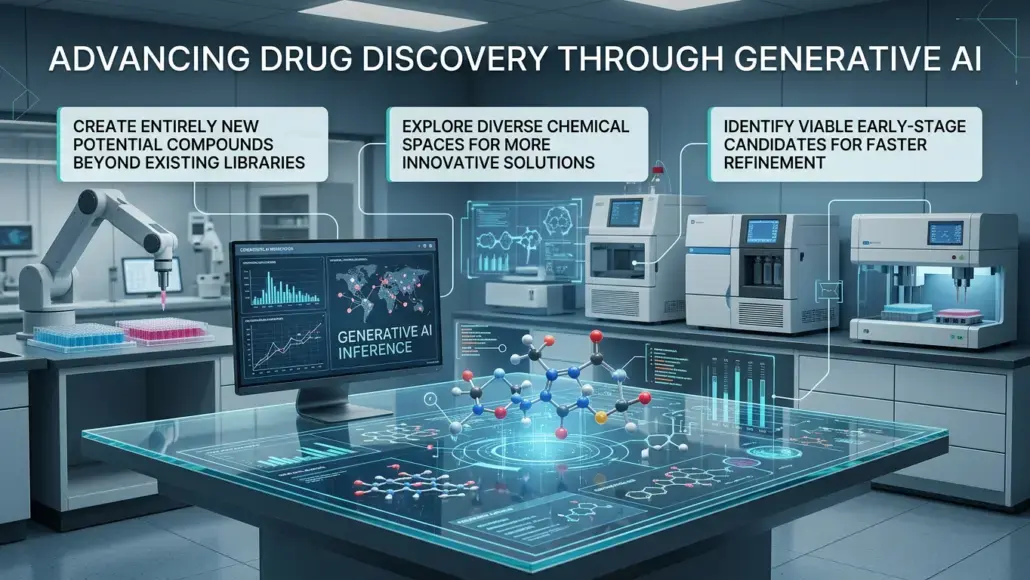
The pharmaceutical sector is witnessing a fundamental shift in how chemical entities are conceptualized and refined. Traditionally, the identification of viable therapeutic candidates relied on high throughput screening of existing libraries, a process that is inherently limited by the diversity of available compounds. This retrospective approach often results in suboptimal lead candidates that require extensive medicinal chemistry optimization. The emergence of sophisticated computational architectures has introduced a prospective methodology where algorithms propose entirely new chemical structures based on desired pharmacological profiles. By utilizing deep learning frameworks, researchers can now bypass the constraints of traditional libraries to explore a vast chemical space that was previously inaccessible through manual iteration. This capability is particularly crucial for addressing orphan diseases or targets where existing ligands show poor specificity.
This paradigm shift is centered on the ability of algorithms to learn the underlying grammar of molecular structures. Generative models are trained on massive datasets of known bioactive compounds, allowing them to understand the spatial and electronic relationships that define biological activity. This capability facilitates the creation of molecules with optimized ADMET properties from the outset, significantly reducing the downstream failure rates that plague conventional development cycles. The integration of these tools into the R&D workflow marks a transition from discovery by chance to discovery by design, where every atom in a proposed structure is placed with specific intent to maximize therapeutic efficacy and minimize off-target interactions. Furthermore, the ability to rapidly iterate through millions of variations in silico allows for the discovery of unique scaffolds that human intuition might overlook.
The transition toward digital synthesis also addresses the economic pressures currently facing global pharmaceutical organizations. With the cost of bringing a new drug to market exceeding billions of dollars, the need for increased efficiency in the discovery phase is paramount. Computational models reduce the reliance on costly reagents and laboratory man hours, providing a more sustainable model for long term innovation. As these models become more integrated into the standard operating procedures of medicinal chemistry, the traditional barriers between informatics and wet lab experimentation continue to dissolve. This collaborative ecosystem ensures that every computational hypothesis is grounded in practical synthetic feasibility, creating a robust pipeline for the next generation of life saving therapies.
Algorithmic Architectures Driving Chemical Innovation
The technical foundation of this progress lies in the deployment of variational autoencoders and generative adversarial networks. These architectures allow for the mapping of discrete molecular structures into a continuous latent space, where optimization becomes a mathematical exercise rather than a trial and error process. In this latent space, small movements correspond to incremental changes in molecular properties, enabling the precise tuning of lead candidates. This level of control is particularly valuable when addressing complex targets where traditional ligands lack the necessary specificity or solubility. By navigating this multidimensional space, generative models can propose scaffolds that medicinal chemists might never have considered, expanding the chemical repertoire of modern pharmacology. The use of transformer-based architectures has further enhanced the ability to process molecular strings as a form of specialized language, allowing for even greater structural diversity.
Furthermore, reinforcement learning techniques are being employed to guide the generation process toward specific objectives. By defining reward functions based on predicted binding affinity or synthetic accessibility, researchers can steer the model to produce candidates that are not only potent but also practical to manufacture. This goal directed generation ensures that the output of these models aligns with the commercial and clinical requirements of the pharmaceutical industry. The ability to harmonize multiple conflicting parameters (such as potency versus metabolic stability) in a single computational step is a significant advancement over the serial optimization methods of the past. These models also incorporate physics based constraints to ensure that the proposed molecules adhere to the fundamental laws of thermodynamics and stereochemistry.
The sophistication of these algorithms allows for the exploration of chemical space that goes beyond simple additive modifications. Generative AI can suggest entirely new ring systems or bioisosteric replacements that improve the pharmacokinetic profile of a lead series while maintaining its primary activity. This creative capacity is augmented by the integration of large scale biological datasets, which provide the context needed for truly novel drug design. As computational power continues to increase, the scale of these simulations will expand, allowing for the evaluation of even more complex molecular interactions. The objective is to move toward a state where the majority of lead optimisation occurs in a virtual environment, with physical synthesis reserved only for the most promising candidates.
Integrating Multi-Objective Optimization in Lead Generation
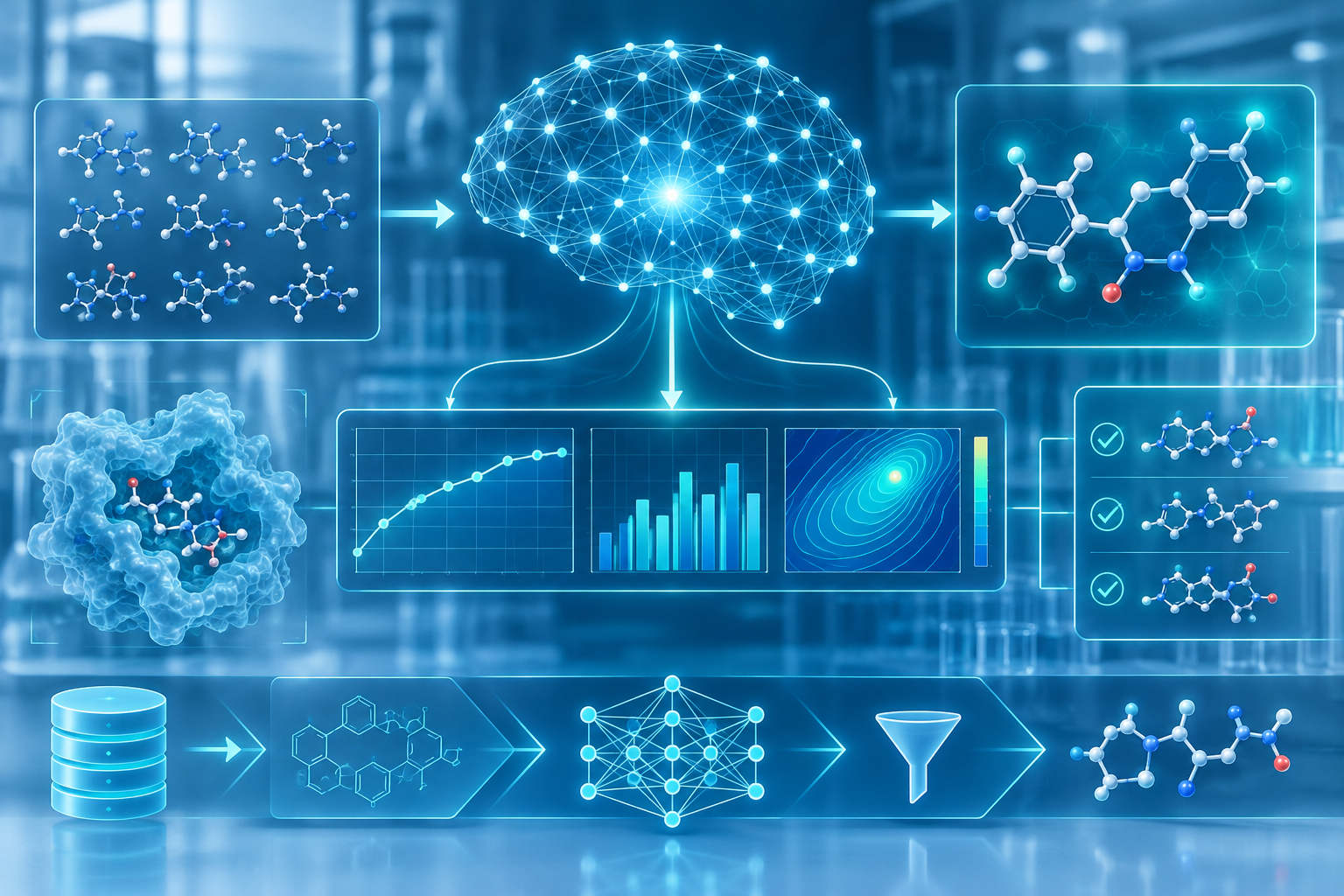
Successful novel drug design requires the simultaneous optimization of numerous molecular attributes. A compound that shows high affinity for its target is of little value if it cannot penetrate cellular membranes or if it exhibits significant toxicity. Generative AI models excel at managing these multi-objective challenges by evaluating thousands of potential candidates against a comprehensive suite of predictive filters. This holistic approach ensures that only the most promising molecules proceed to physical synthesis and biological testing. The reduction in the number of cycles required to reach a clinical candidate has direct implications for the cost and duration of the development process. Organizations can now prioritize their efforts based on a combination of biological potency and manufacturing feasibility, ensuring a more streamlined path to clinical trials.
The application of these models extends across several key areas of lead generation:
- De novo design of ligands for orphan receptors or difficult to drug targets where no known ligands exist.
- Scaffold hopping to identify novel chemical series with improved intellectual property positions and metabolic stability.
- Optimization of fragment based leads into full sized drug candidates with balanced ADMET properties.
- Rethinking existing molecular structures to overcome specific metabolic liabilities or to improve oral bioavailability.
- Designing bifunctional molecules that can simultaneously engage two different biological targets for synergistic effects.
By addressing these challenges early in the discovery phase, pharmaceutical companies can allocate resources more effectively. The data driven nature of these models also allows for continuous improvement, as experimental results from the laboratory are fed back into the system to refine future predictions. This closed loop between computation and experimentation creates a self-reinforcing ecosystem that accelerates the pace of innovation and increases the probability of technical success. This iterative process is particularly effective when dealing with targets that have complex conformational changes or multiple binding states. The ability to model these dynamics in silico provides a level of insight that was previously impossible through static experimental methods.
Addressing the Technical Barriers to Widespread Adoption
While the potential of these models is vast, several technical hurdles remain that require careful management by R&D leadership. The quality and diversity of the training data are paramount, as models are inherently limited by the information they have processed. Biased or incomplete datasets can lead to the generation of “hallucinated” molecules that are chemically unstable or impossible to synthesize. To mitigate this risk, pharmaceutical organizations are investing in high quality data curation and the development of physics informed models that incorporate fundamental chemical laws into the deep learning process. This hybrid approach ensures that the generated molecules adhere to the constraints of real world chemistry and are suitable for downstream development.
Additionally, the interpretability of these models remains a point of intense focus for the scientific community. Understanding why a model proposes a specific molecular modification is crucial for building trust among medicinal chemists and regulatory bodies. The move toward “explainable AI” aims to provide transparency into the decision making processes of these algorithms, allowing human experts to validate the logic behind the proposed designs. This transparency is also vital for addressing regulatory requirements, as authorities increasingly demand a clear rationale for the selection of drug candidates. As these tools become more integrated into the standard operating procedures of drug discovery, the collaboration between human expertise and machine intelligence will become the defining characteristic of the industry. This synergy is particularly evident when AI-based target identification improves early-stage drug discovery by providing the foundational biological insights that generative models need to function effectively.
Another technical barrier is the integration of these models with existing legacy systems and databases. Many pharmaceutical companies possess decades of valuable internal data that is stored in disparate formats. Consolidating this information into a format suitable for training large scale generative models requires significant investment in data engineering and infrastructure. However, the long term benefits of a unified data environment far outweigh the initial costs. By creating a centralized knowledge base, organizations can leverage their entire historical experience to train more accurate and powerful models. This digital foundation is the key to unlocking the full potential of computational drug discovery and for maintaining a competitive edge in a rapidly evolving market.
Commercial and Strategic Implications for the Pharmaceutical Industry
The adoption of generative AI in novel drug design is not merely a technical upgrade: it is a strategic necessity in an increasingly competitive market. The ability to bring a novel therapy to market faster and with a higher degree of confidence provides a significant first mover advantage. Companies that successfully implement these technologies can expect to see a reduction in their R&D spend per approved drug, a metric that has been under pressure for decades. This efficiency allows for a more diversified pipeline, enabling organizations to pursue high risk, high reward projects that were previously deemed economically unfeasible. Furthermore, the speed of discovery allows for a more rapid response to emerging health crises, providing a significant social and commercial benefit.
Moreover, the intellectual property landscape is being reshaped by the ability to rapidly explore and patent novel chemical space. The speed at which these models can generate unique scaffolds requires a proactive approach to patent strategy and portfolio management. Companies must be prepared to file broader patents that cover the extensive chemical space identified by their algorithms. As the industry moves toward a more digitized and automated discovery process, the traditional boundaries between chemistry, biology, and data science will continue to blur. Success in this new era will belong to the organizations that can foster a culture of cross disciplinary innovation, where digital tools are viewed as essential partners in the quest to address unmet medical needs.
The long term impact of these technologies will be felt not only in the efficiency of the discovery process but in the quality of the treatments delivered to patients worldwide. By enabling the design of more selective and potent drugs with fewer side effects, generative AI is contributing to the move toward personalized medicine. Patients will have access to therapies that are more effective and better tolerated, leading to improved clinical outcomes and quality of life. As we look to the future, the continued evolution of these models will undoubtedly uncover even more powerful ways to intervene in biological processes, promising a new era of medical breakthroughs. The integration of generative AI into the heart of pharmaceutical research is the most significant development in the field since the introduction of high throughput screening, and its effects will be felt for generations to come.