













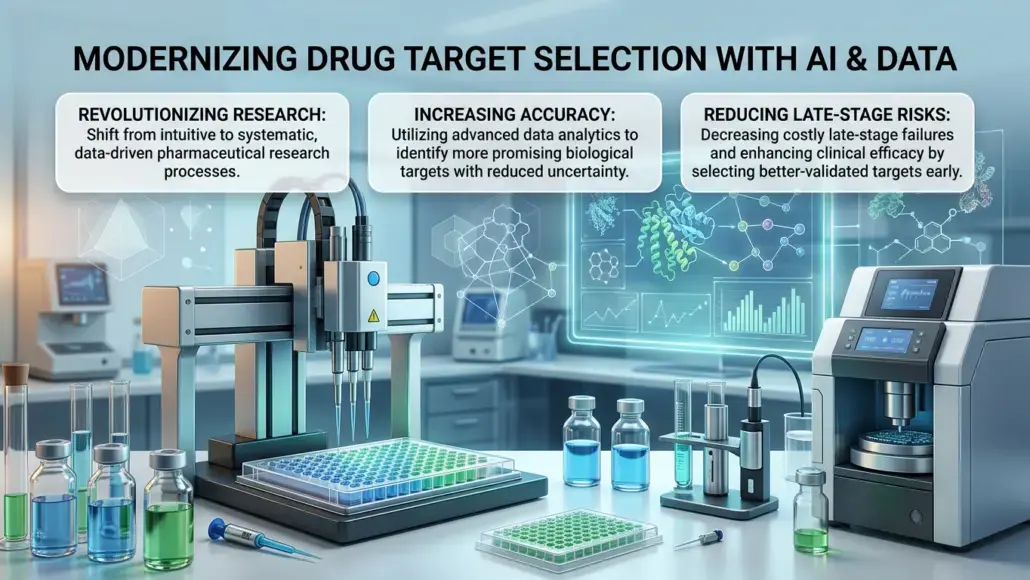
The initial phase of pharmaceutical research is undergoing a radical transformation driven by the integration of advanced data analytics. Historically, the selection of a biological target was a process fraught with uncertainty, often based on limited literature or incidental clinical observations. This high risk stage frequently led to late stage failures when targets identified in the laboratory failed to translate into clinical efficacy. Today, the industry is moving toward a more systematic approach where target identification is grounded in a comprehensive understanding of human biology and disease pathophysiology. By leveraging massive multi-omic datasets, researchers can identify the precise molecular drivers of disease with unprecedented accuracy. This transition is essential for addressing the rising costs and diminishing returns of traditional discovery methods.
This shift is enabled by the ability of computational models to integrate disparate data sources, including genomics, proteomics, and transcriptomics. These models can discern subtle patterns within complex biological networks that would be impossible for human researchers to identify manually. The goal is to move beyond simple correlation to establish causal links between specific biological markers and disease outcomes. This precision ensures that the subsequent discovery efforts are directed toward the most promising avenues, significantly increasing the probability that a resulting therapy will provide meaningful clinical benefit. The focus on high quality targets from the outset is the most effective way to address the productivity challenges facing modern pharmaceutical R&D. Furthermore, the ability to visualize these interactions in a digital environment allows for the simulation of target modulation before any wet lab experimentation begins.
As the pharmaceutical sector moves toward a more personalized approach to medicine, the role of high resolution biological data becomes even more critical. Identifying targets that are specific to certain patient subpopulations allows for the development of more effective and safer treatments. This level of granularity is only possible through the application of advanced algorithms that can process millions of data points across thousands of individuals. By building a more robust biological foundation, companies can reduce the risk of clinical failure and ensure that their R&D investments are focused on the most impactful opportunities. This scientific rigour is the hallmark of the new era of drug discovery, where every program is rooted in a deep and verified understanding of disease mechanics.
Systematic Mapping of Disease Pathways and Regulatory Networks
At the core of modern target identification is the construction of detailed disease maps. These digital representations capture the intricate web of interactions that define a cellular state, allowing researchers to simulate the impact of inhibiting or activating specific nodes within the network. This predictive capability is particularly valuable for complex multifactorial diseases like cancer or neurodegeneration, where a single target approach is often insufficient. By analyzing the entire pathway, algorithms can identify key regulatory hubs that, when modulated, have the greatest potential to restore a healthy biological state. This network based perspective allows for a more nuanced understanding of disease mechanics and therapeutic potential, leading to more innovative treatment strategies.
Furthermore, these tools are being used to identify genetic variants that confer resistance or sensitivity to specific treatments. This information is critical for patient stratification and the development of personalized medicine strategies. By understanding the genetic context of a target, pharmaceutical companies can design clinical trials that are more likely to succeed by including only those patients who are biologically predisposed to respond. This approach not only improves patient outcomes but also streamlines the regulatory approval process by providing clear evidence of efficacy in defined populations. The integration of real world evidence and longitudinal patient data further refines these disease maps, ensuring they remain relevant as our understanding of biology evolves and as new clinical insights emerge.
The use of knowledge graphs has also revolutionized how researchers navigate biological complexity. These platforms link disparate data types — such as protein interactions, gene expression data, and clinical phenotypes — into a unified structure that can be easily queried. This allows for the discovery of non-obvious relationships between different diseases and pathways, opening up new opportunities for drug repurposing and for the development of multi-target therapies. By visualizing the “interactome” in this way, scientists can identify targets that might have been overlooked using traditional, siloed approaches. This holistic view of biology is essential for tackling the most challenging diseases of our time, where a deep understanding of systemic effects is required for success.
Leveraging High-Dimensional Data for Validation and Prioritization
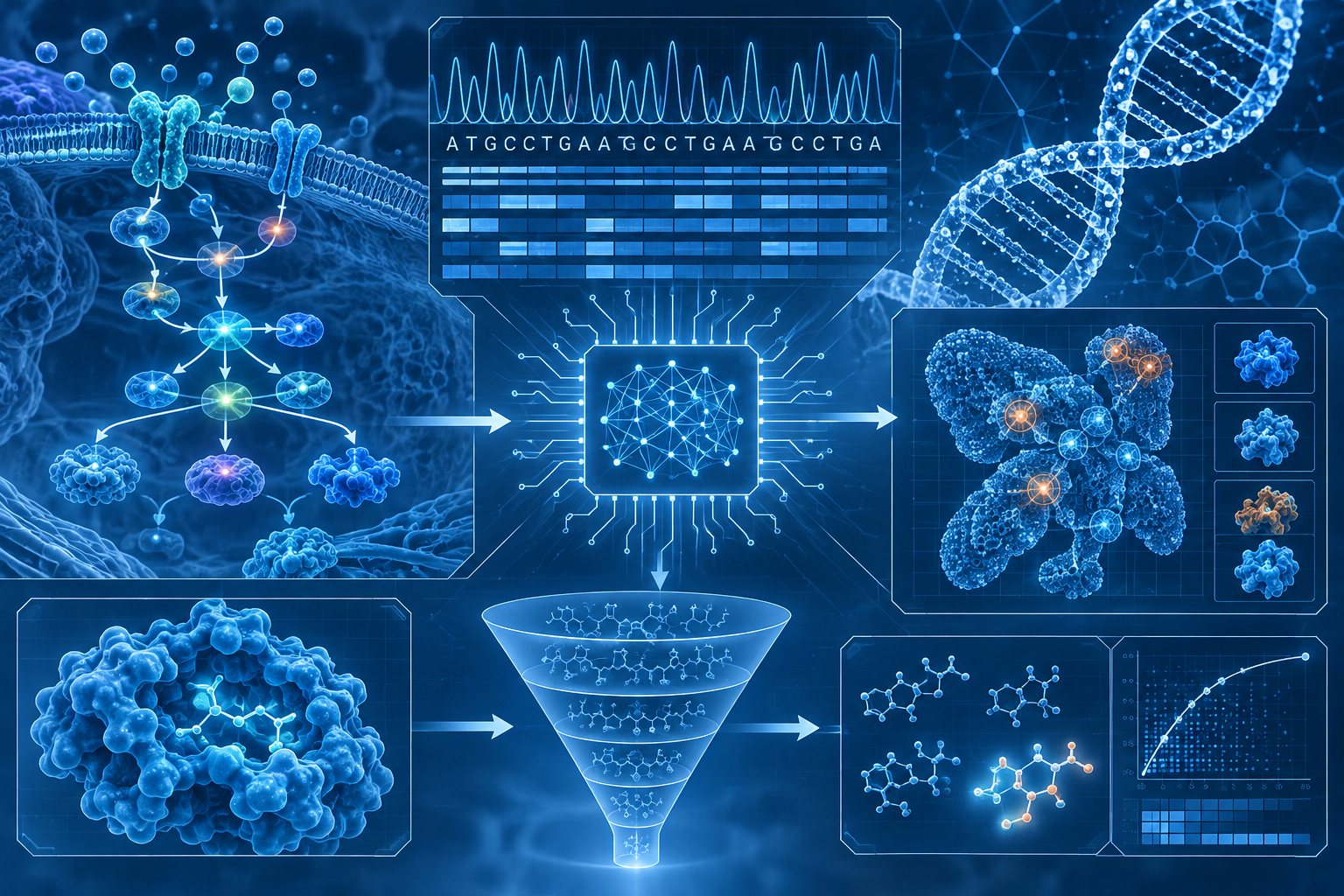
Identifying a potential target is only the first step: the real challenge lies in validation and prioritization. The pharmaceutical industry requires rigorous evidence that a target is both druggable and clinically relevant before committing significant resources to a discovery program. AI based models facilitate this by automating the analysis of historical clinical data, scientific literature, and experimental results. This multi-layered validation process helps to filter out targets with high safety risks or low therapeutic potential early in the cycle. By prioritizing targets based on a combination of biological significance and technical feasibility, organizations can optimize their research portfolios for maximum impact. This strategic filtering is a primary driver of operational efficiency in modern R&D organizations.
The process of narrowing down a list of potential targets involves several critical steps:
- Cross referencing genetic association studies with expression data to confirm disease relevance across different populations and tissue types.
- Evaluating the structural druggability of a target using protein modeling and pocket identification algorithms to ensure that it can be effectively modulated by a small molecule or biologic.
- Assessing the potential for off target effects by analyzing the expression profile of the target and its related family members across different healthy tissues.
- Reviewing the competitive landscape to ensure that a new program offers a clear advantage over existing or developmental therapies in terms of efficacy or safety.
- Utilizing machine learning to predict the potential for the target to develop resistance over time, particularly in the context of oncology and infectious diseases.
- Integrating data from natural language processing of medical records to identify potential safety signals that might not be apparent from laboratory studies alone.
This structured prioritization ensures that research teams remain focused on the most viable opportunities. The ability to fail fast and cheaply in the early stages of discovery is a significant operational advantage, allowing for the rapid reallocation of capital toward more promising projects. As these tools continue to mature, the distinction between “discovery” and “validation” will become increasingly blurred, with both processes occurring in a continuous, data driven loop. This efficiency is critical for maintaining a competitive edge in an environment where speed to market is a primary driver of commercial success. The use of advanced analytics to guide these decisions provides a objective framework that reduces the influence of historical biases and institutional momentum.
Overcoming the Bottlenecks in Data Integration and Interpretation
The primary obstacle to effective target identification is not a lack of data, but the difficulty of integrating and interpreting it. Biological data is inherently noisy, heterogeneous, and often siloed within different departments or organizations. To overcome this, pharmaceutical companies are investing in centralized data lakes and advanced knowledge graphs that can link disparate information types. These platforms provide a unified view of the biological landscape, allowing researchers to query complex relationships across multiple dimensions. The use of natural language processing to extract insights from unstructured scientific text further enriches these datasets, ensuring that no valuable information is overlooked. This comprehensive approach to data engineering is the foundation upon which all modern target discovery efforts are built.
However, the interpretation of these complex models requires a high degree of specialized expertise. The “black box” nature of some deep learning algorithms can make it difficult for biologists to trust the results. To address this, the industry is moving toward “interpretable” models that provide a clear rationale for why a specific target was identified. This transparency is essential for building a consensus among internal stakeholders and regulatory authorities. As the culture of data science becomes more deeply embedded within traditional biology departments, the ability to translate computational insights into actionable research programs will become a core competency for all pharmaceutical professionals. This cultural shift is supported by the fact that AI-powered virtual screening expanding pharmaceutical compound discovery depends on the high-fidelity targets provided by this initial phase of research.
The technical challenge of data normalization also requires significant focus. Data from different clinical trials or laboratory assays must be carefully standardized to ensure that the results are comparable. This involves the use of common ontologies and rigorous quality control measures. Many organizations are now establishing dedicated data science teams to manage this process, ensuring that the input for their discovery models is of the highest possible quality. By addressing these technical bottlenecks, pharmaceutical companies can unlock the full value of their data assets, transforming raw information into actionable biological insights. The long term goal is to create a fully integrated digital ecosystem where every piece of data contributes to a deeper understanding of human health and disease.
Strategic Impact on Pipeline Development and Portfolio Management
The long term success of a pharmaceutical company is defined by the quality and depth of its clinical pipeline. By improving the accuracy of target identification, organizations can build a more resilient portfolio that is less susceptible to late stage attrition. This stability allows for better long term planning and more effective communication with investors and stakeholders. The shift toward biologically validated targets also supports the development of first in class therapies, which command higher prices and provide more significant clinical differentiation. In an era of increasing pressure on drug pricing, the ability to demonstrate clear therapeutic value is more important than ever. This strategic alignment between scientific innovation and clinical need is the key to sustainable growth.
Strategic portfolio management is also enhanced by the ability to identify “synergistic” targets that can be addressed through combination therapies. Many complex diseases require a multi-pronged approach, and computational models are uniquely suited to identify the optimal combinations of targets and molecules. This capability opens up new avenues for innovation and allows companies to maximize the value of their existing assets. As the pharmaceutical industry continues to evolve, the integration of data science and traditional drug discovery will remain the primary driver of technical and commercial progress. The organizations that can most effectively harness the power of these tools will be the ones that define the future of medicine, delivering more effective and personalized treatments to patients across the globe.
Furthermore, the improved confidence in early stage targets allows for a more aggressive approach to licensing and acquisitions. Companies can use their computational platforms to evaluate external assets with greater precision, ensuring that they are investing in the most promising technologies. This ability to “scout” for innovation beyond the organization’s walls is essential for maintaining a diverse and competitive pipeline. As the discovery process becomes more digitized, the speed at which organizations can identify and validate new opportunities will become the primary determinant of their success. The ultimate impact of these advancements will be a more efficient and effective healthcare system, where the path from biological insight to life-saving treatment is shorter and more predictable than ever before.