












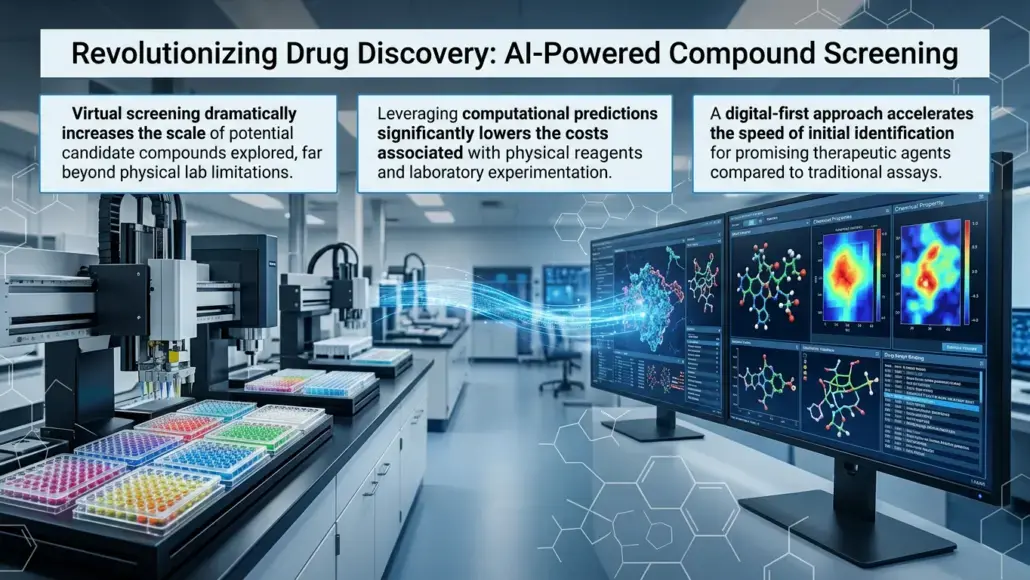
The identification of new therapeutic agents has traditionally been a resource intensive process characterized by physical experimentation and high throughput screening of chemical libraries. While this approach has yielded significant successes, it is inherently limited by the physical constraints of laboratory space, reagent costs, and the time required to assay thousands of individual compounds. The pharmaceutical industry is now transitioning toward a digital first strategy where the initial stages of lead discovery are performed in silico. This shift is centered on the application of advanced algorithms that can evaluate the binding potential of millions of molecules against a target protein in a fraction of the time required for physical testing. This methodological change is essential for addressing the scale of the chemical universe, which is far too vast for any physical library to encompass.
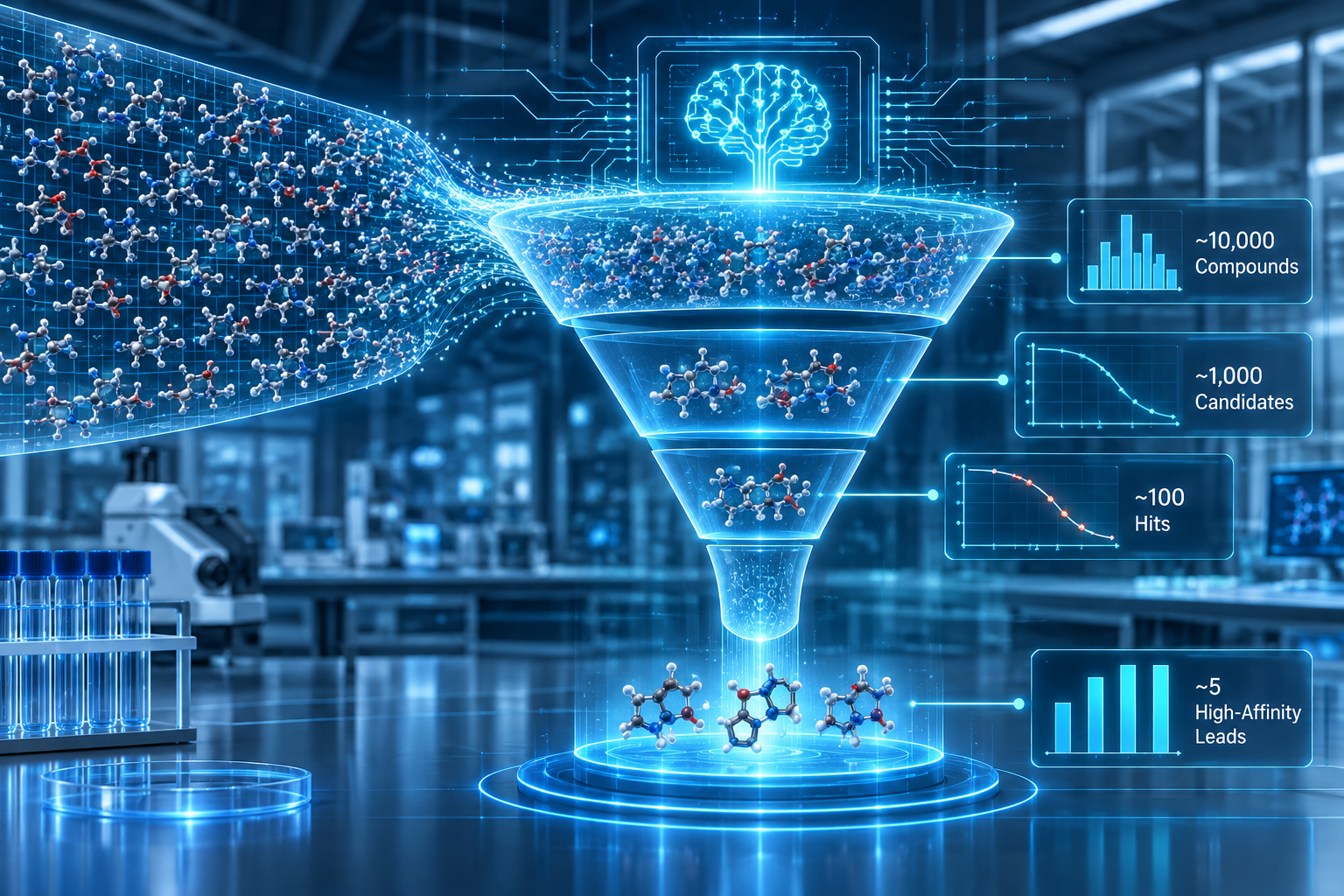
This methodology allows researchers to explore a chemical space that is orders of magnitude larger than any physical library. By utilizing computational models, organizations can pre-filter vast databases of available compounds to identify a smaller, highly enriched set of candidates for synthesis and biological testing. This enrichment significantly increases the “hit rate” of primary screens, ensuring that experimental resources are focused on the most promising molecules. The goal is to maximize the efficiency of the discovery pipeline by using data science to bridge the gap between biological target identification and the delivery of a viable lead candidate. This transition represents a fundamental change in the operational philosophy of modern medicinal chemistry, moving from a brute force approach to one of targeted and informed selection.
Furthermore, the adoption of virtual screening allows for the discovery of novel chemical scaffolds that might be missing from traditional libraries. Many historical libraries are biased toward specific chemical families, which can limit the scope of discovery. Computational screening, however, can evaluate diverse and exotic chemical structures that have never been physically synthesized. This ability to explore “virgin” chemical space is particularly valuable for tackling novel biological targets or for overcoming resistance mechanisms in established therapeutic areas. By broadening the search horizon, pharmaceutical companies can identify truly unique lead candidates that offer superior clinical and commercial potential.
Algorithmic Precision in Molecular Docking and Affinity Prediction
At the heart of this computational revolution is the ability to accurately model the interaction between a small molecule and its biological target. Virtual screening employs sophisticated docking algorithms that simulate the three-dimensional fit of a ligand into the active site of a protein. These simulations account for the spatial orientation, electrostatic interactions, and hydrogen bonding patterns that define binding affinity. While traditional docking methods relied on simplified physics models, the integration of deep learning has introduced a new level of precision. Neural networks can now be trained on experimental crystal structures and binding data to learn the complex, non-linear features that correlate with high affinity interactions. This allows for a much more accurate prediction of how a molecule will behave in a biological environment.
These advanced models are capable of recognizing subtle molecular patterns that traditional scoring functions might overlook. By considering the flexibility of both the ligand and the target, these algorithms provide a more realistic representation of the binding process. This is particularly important for targets with flexible active sites or for those where traditional “lock and key” models fail. The ability to rank compounds based on predicted potency allows researchers to prioritize their synthesis efforts with high confidence. Furthermore, these tools can be used to identify potential off target interactions early in the process, providing valuable safety insights before a molecule ever enters a laboratory. The continuous refinement of these scoring functions ensures that the accuracy of predictions continues to improve as more experimental data becomes available, creating a self-reinforcing cycle of precision.
Modern platforms also incorporate molecular dynamics simulations to evaluate the stability of the protein ligand complex over time. This provides a dynamic view of the binding interaction, revealing how the molecule might behave under different physiological conditions. This level of detail is critical for identifying compounds that not only bind strongly but also remain engaged with their target long enough to elicit a therapeutic effect. The integration of these high fidelity simulations into the screening workflow ensures that only the most robust candidates move forward. As computational power continues to increase, these simulations will become even more detailed, incorporating the effects of solvent molecules, ions, and other cellular components into the model.
Managing Massive Chemical Libraries for Accelerated Discovery
The scale of modern compound discovery is truly staggering. Commercial databases now contain hundreds of millions of readily available molecules, while “virtual” libraries of synthetically accessible compounds reach into the billions. Navigating this vast landscape requires highly scalable computational infrastructure and efficient data management strategies. Virtual screening platforms are designed to handle this volume by utilizing distributed computing environments and GPU acceleration to perform thousands of docking simulations simultaneously. This throughput allows pharmaceutical companies to screen their entire internal libraries, as well as external commercial catalogs, in a matter of days or weeks, a process that would take years to perform physically.
The benefits of this high-capacity screening process are manifold and impact every stage of discovery:
- Identification of novel scaffolds that are structurally distinct from known ligands, providing new avenues for intellectual property.
- Rapid exploration of chemical space surrounding a specific pharmacophore to optimize potency and selectivity.
- Discovery of potential leads for targets that have been traditionally difficult to assay physically due to low expression or instability.
- Cost effective evaluation of “repurposing” candidates from existing drug libraries to identify new therapeutic uses for known agents.
- Simulation of large scale combinatorial libraries to identify the most promising building blocks for further development.
- Assessment of chemical diversity across the entire portfolio to ensure a broad and resilient research pipeline.
By automating the initial stages of discovery, organizations can reduce the time to lead identification by months or even years. This speed is a critical competitive advantage, especially in therapeutic areas with significant unmet needs or fast moving market dynamics. The data driven nature of the process also allows for a more objective evaluation of candidates, reducing the impact of human bias in the selection of chemical series. As the industry moves toward a more automated discovery model, the ability to effectively manage and query these massive datasets will become a core competency for all research organizations. This infrastructure is the backbone of the modern digital laboratory.
Bridging the Gap Between Computation and Experimental Validation
While the power of in silico discovery is undeniable, it does not replace the need for rigorous experimental validation. The output of a virtual screening campaign is a prioritized list of compounds that must be synthesized and tested in biological assays to confirm their activity. The success of this hybrid approach depends on the seamless integration of computational and experimental teams. Effective communication is essential to ensure that the molecules proposed by the algorithms are not only potent but also synthetically accessible and stable under assay conditions. This collaboration is the heart of the “modern” medicinal chemistry program, where digital and physical worlds converge.
One of the significant challenges in this integration is the management of “false positives” — compounds that appear promising in simulation but fail in the laboratory. To mitigate this, pharmaceutical companies are incorporating synthetic accessibility scores and molecular dynamics simulations into their workflows. These additional filters help to ensure that only the most robust candidates proceed to synthesis. Furthermore, the results from the laboratory are used to retrain the computational models in an iterative process of refinement. This closed loop creates a “virtuous cycle” where the predictive power of the system increases with every experimental data point. This synergy is further enhanced when protein structure prediction advancing structure-based drug design provides the high-resolution structural data required for accurate docking simulations.
The integration of laboratory automation is also playing a key role in bridging this gap. High throughput synthesis and assay platforms can rapidly test the compounds prioritized by virtual screening, providing real time feedback to the computational models. This “active learning” approach allows the system to continuously refine its search strategy, focusing on the most promising areas of the chemical space. As these automated systems become more sophisticated, the time from digital prediction to experimental confirmation will continue to shrink. The ultimate goal is a fully integrated discovery engine where computation and experimentation are performed in parallel, driving a rapid and continuous flow of innovation.
Strategic and Economic Implications of Digital Lead Discovery
The adoption of digital lead discovery techniques has profound implications for the economics of pharmaceutical R&D. By reducing the reliance on physical high throughput screening, companies can significantly lower their capital and operational expenditures. The cost of a virtual screen is a fraction of its physical counterpart, allowing organizations to explore a broader range of therapeutic areas and targets. This democratization of lead discovery is particularly beneficial for smaller biotech firms and academic institutions, which may lack the resources for massive physical libraries. This shift allows for a more diverse and vibrant research ecosystem, where innovation can come from any corner of the industry.
From a strategic perspective, the ability to rapidly identify unique lead candidates allows for a more aggressive approach to pipeline development. Companies can pursue multiple chemical series for a single target simultaneously, reducing the risk of total program failure if one series exhibits unforeseen liabilities. This diversification is essential for maintaining a healthy and resilient pipeline in a highly uncertain market. Moreover, the efficiency gains from digital discovery allow for a more rapid response to emerging health crises, such as novel pathogens or sudden regulatory changes. As the pharmaceutical industry continues its digital transformation, the integration of computational tools across the entire value chain will remain a primary driver of innovation and value creation.
The long term impact of these technologies will be a more efficient and effective drug discovery process that delivers better outcomes for patients. By exploring a wider chemical space and identifying more potent and selective leads, virtual screening is contributing to the development of safer and more effective medicines. The ability to tailor drug discovery to specific biological targets and patient populations is also a key component of the move toward personalized medicine. As we look to the future, the continued evolution of these computational tools will undoubtedly uncover even more powerful ways to address the world’s most challenging diseases, promising a new era of medical breakthroughs and improved global health.