













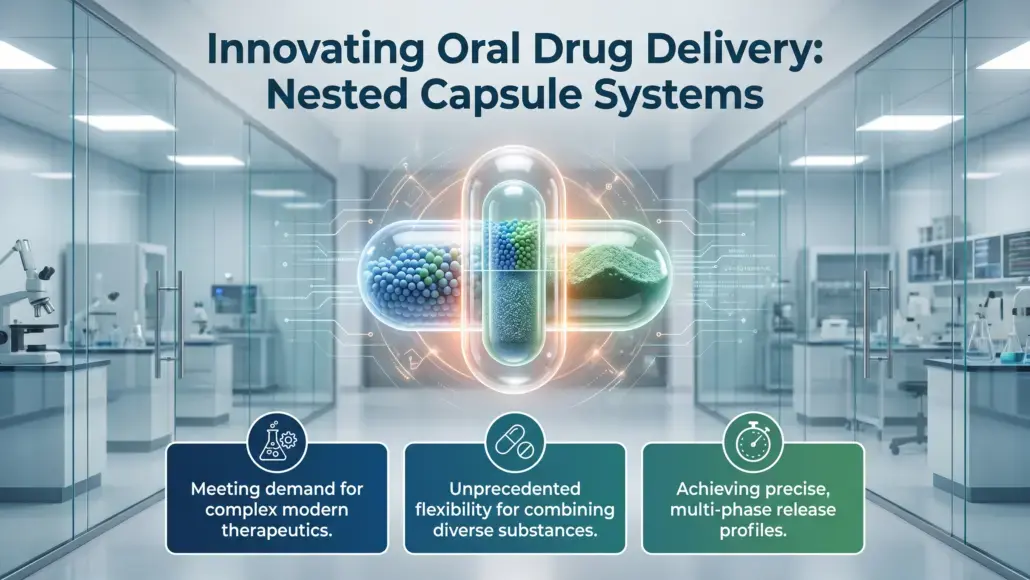
The pharmaceutical sector has witnessed a growing demand for more sophisticated drug delivery systems that can address the complexities of modern therapeutics. One of the most innovative approaches to meeting this challenge is the development of nested capsule technologies. The utilization of capsule-in-capsule systems expanding oral dosage design provides formulators with an unprecedented level of flexibility for combining different drug substances, achieving multi-phase release profiles, and ensuring the stability of chemically incompatible ingredients. By placing one smaller capsule inside a larger one, manufacturers can create a multi-compartmental dosage form that allows for the sequential or simultaneous delivery of various active pharmaceutical ingredients, each with its own unique release mechanism.
The technical advantages of this approach are particularly evident in the field of fixed-dose combinations. Many modern therapies require the administration of multiple APIs that may have different physical or chemical properties, making them difficult to formulate in a single monolithic tablet or a traditional capsule. The nested design allows for physical separation, protecting components from cross-reactions and ensuring integrity throughout the shelf life. This level of sophistication in capsule-in-capsule systems expanding oral dosage design enables the successful delivery of complex medication regimens in a single, easy-to-swallow unit, significantly improving patient compliance and overall therapeutic outcomes.
Selecting appropriate capsule sizes is a fundamental engineering decision. Typically, an outer capsule of size 0 or 00 accommodates an inner capsule of size 3, 4, or 5. Clearance must be sufficient for secondary fill material. The mechanical stability of the inner capsule is a critical factor: it must not move excessively during transit. Manufacturers use centering devices and precise filling volumes to ensure the inner capsule remains in position for consistent performance. Additionally, liquid-fill and sealing technology is vital. When the outer capsule is liquid-filled, it must be hermetically sealed. This is achieved through a sealing band or a micro-spray process. Seal integrity is verified through vacuum testing, ensuring stability throughout the shelf life. The integration of these techniques is a testament to the reliability of modern manufacturing.
Multi-Phase and Targeted Drug Release
One of the primary benefits of the capsule-in-capsule design is the ability to achieve precise control over the timing and location of drug release in the gastrointestinal tract. Formulators can design the outer capsule to dissolve in the stomach, providing an immediate release of one API, while the inner capsule is designed with a specialized coating that allows it to bypass the gastric environment and release its contents in the small intestine or colon. This sequential release is ideal for medications that require an initial loading dose followed by a sustained therapeutic level, or for those that are prone to causing gastric irritation.
The engineering of these release profiles involves the careful selection of polymers and coating materials for both the inner and outer shells. The inner capsule can be enteric-coated or sustained-release, while the outer shell is typically an immediate-release gelatin or HPMC capsule. This multi-compartmental approach allows for the delivery of liquid and solid formulations within the same unit. For instance, the outer capsule could contain a liquid-filled system, while the inner capsule holds a solid formulation. Through these systems, companies develop optimized therapies that meet individual drug pharmacokinetic needs.
Overcoming Chemical Incompatibility and Stability Challenges
The physical separation provided by the nested capsule design is a powerful tool for managing chemical incompatibility between different APIs. In many combination therapies, the active ingredients may react with each other or with the excipients in a way that leads to degradation or the formation of harmful impurities. By isolating these reactive components in separate compartments, formulators can minimize the contact surface area and create a stable microenvironment for each drug. This is particularly important for high-potency molecules or those with narrow therapeutic windows, where even minor changes in stability can have significant clinical consequences.
In addition to preventing chemical reactions, the capsule-in-capsule approach allows for the use of different stabilization strategies for each API. One compartment might require a specific antioxidant or moisture-barrier agent that would be incompatible with the drug in the other compartment. By providing separate environments, manufacturers can optimize the stability of each component, ensuring that the final product meets all regulatory requirements for purity and potency. The application of these systems addresses significant hurdles in fixed-dose combination development, enabling the commercialization of technically challenging therapies.
The concept of a duo-cap system has gained significant traction in the probiotic and nutraceutical industries, where it is used to combine sensitive live cultures with liquid vitamins or oils. The outer capsule can contain an omega-3 fatty acid or a liquid vitamin D formulation, while the inner capsule protects the probiotics from the acidic environment of the stomach. This targeted delivery ensures that the beneficial bacteria reach the intestine in a viable state, maximizing their therapeutic effect. The scientific evidence supporting the superior performance of these nested systems in protecting sensitive biological components is a major driver of their adoption in both the pharmaceutical and supplement sectors. The ability to provide a complete nutritional or therapeutic solution in a single dose is a powerful advantage for building brand loyalty and ensuring patient satisfaction.
Additionally, the use of these systems allows for the formulation of drugs with significantly different solubilities. For instance, a poorly water-soluble API can be formulated as a lipid-based system in the outer capsule, while a highly soluble API is included as a powder in the inner capsule. This approach optimizes the absorption of both ingredients, reducing the variability in bioavailability that often plagues more traditional combination products. The data-driven selection of fill materials and shell properties ensures that each component of the nested system contributes to the overall therapeutic goal in a consistent and predictable manner. This level of formulation control is a key differentiator in a competitive market, allowing for the creation of unique and highly effective products that meet the needs of a diverse patient population.
Manufacturing Precision and Quality Control Measures
The production of nested capsules requires specialized equipment and a high degree of precision in the filling and assembly process. High-speed encapsulation machines must be equipped with multiple filling stations that can accurately dose liquids, powders, or pellets into the outer capsule, followed by the precise placement and sealing of the inner capsule. The synchronization of these steps is critical for ensuring consistent product quality and maintaining high throughput speeds. Any misalignment or error in the filling process can lead to visual defects, leaking, or inconsistent release profiles, all of which can compromise the safety and efficacy of the medication.
Quality control measures for these systems are also more complex than those for traditional dosage forms. In addition to standard weight and content uniformity testing, manufacturers must verify the integrity of the inner capsule and the effectiveness of the sealing mechanism. Advanced imaging techniques and real-time analytical tools are used to monitor the assembly process and detect any deviations in the placement or orientation of the nested components. The ongoing refinement of these manufacturing processes is a key factor in the successful deployment of capsule-in-capsule technologies across the pharmaceutical industry. The focus on precision and reliability reflects the industry’s commitment to excellence and its recognition of the vital role that advanced manufacturing plays in the delivery of modern healthcare.
Regulatory Considerations and Future Market Trends
From a regulatory perspective, the development of nested capsule systems requires extensive validation to demonstrate the stability and performance of the multi-compartmental design. This includes detailed dissolution testing for each API and rigorous stability studies under various environmental conditions. The ability to provide clear evidence of the benefits of the capsule-in-capsule approach,such as improved patient compliance or a more favorable pharmacokinetic profile,is essential for gaining approval from health authorities. As the demand for more personalized and targeted therapies continues to grow, the role of nested capsule technology will become even more prominent.
The future of this field lies in the integration of new materials and even more precise manufacturing techniques. Researchers are exploring the use of 3D printing and other additive manufacturing methods to create even more complex nested structures, potentially allowing for the combination of three or more APIs with highly customized release profiles. The ongoing focus on patient-centric design and the need for more effective combination therapies will continue to drive innovation in this space. By leveraging the unique advantages of capsule-in-capsule technology, pharmaceutical companies can provide patients with safer, more effective, and more convenient medications that improve long-term health outcomes. The role of capsule-in-capsule systems expanding oral dosage design is firmly established as a cornerstone of modern pharmaceutical formulation, providing a versatile and reliable platform for the next generation of complex oral therapies. The continued evolution of this technology will likely involve the use of more sophisticated materials, such as biodegradable polymers or smart shells that can respond to specific physiological triggers like pH changes or the presence of specific enzymes. These advancements will allow for even more precise control over the timing and location of drug release, enabling the development of therapies that are both more effective and easier for patients to manage.
The industry’s commitment to innovation in this space is driven by a deep understanding of the intersection between material science, engineering, and pharmacology. As researchers explore the potential of these nested systems, we can expect creative solutions to the challenges of drug delivery. The dedication to improving patient outcomes through advanced technology is the primary driver of this field. By focusing on the needs of the patient and utilizing advanced engineering solutions, pharmaceutical companies can ensure that their products provide the highest level of therapeutic benefit. Through collaboration and a commitment to scientific rigor, the industry will continue to push the boundaries of what is possible in the field of oral dosage design, delivering new therapies that transform the lives of patients around the world. The strategic application of these technologies represents a significant milestone in the evolution of modern medicine.