









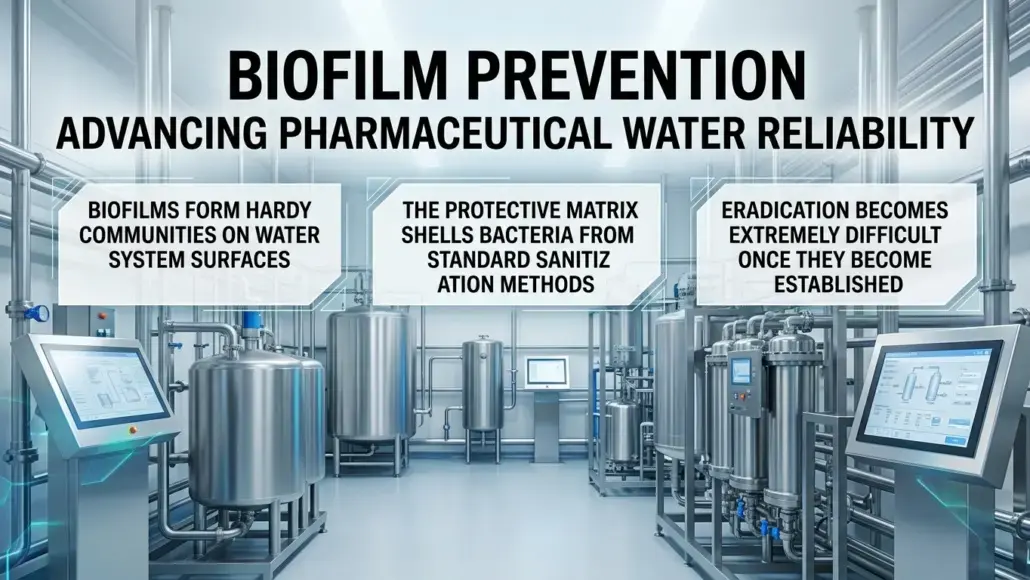
In the pharmaceutical sector, the presence of biofilms within water systems represents one of the significant threats to product quality and regulatory compliance. Biofilms are communities of microorganisms that adhere to surfaces and secrete a protective matrix of extracellular polymeric substances. This matrix shields the bacteria from conventional sanitization methods, making them difficult to eradicate once they have become established. Consequently, biofilm prevention advancing pharmaceutical water reliability has become a primary focus for facility engineers and quality assurance professionals. By employing a combination of advanced materials, precise hydraulic design, and sanitization technologies, manufacturers can prevent the formation of these biological layers and ensure a consistent supply of sterile water for their production processes.
The consequences of a biofilm infestation can be severe, leading to persistent microbial contamination, the presence of endotoxins, and the potential for batch rejection. Unlike planktonic bacteria, which are easily detected and destroyed, the cells within a biofilm can remain dormant for long periods, only to be released into the water stream during periods of high flow or temperature shifts. This sporadic release makes it difficult to pinpoint the source of contamination using traditional sampling methods. Therefore, the strategy for managing microbial risk must shift from detection and removal to proactive prevention. This involves creating an environment within the water system that is fundamentally hostile to microbial attachment and growth.
Microbial control strategies must be integrated into every stage of the system lifecycle, from initial design and construction to ongoing operation and maintenance. By identifying the factors that contribute to biofilm formation, such as low flow velocities, stagnant areas, and poor surface finishes, manufacturers can develop targeted mitigation strategies. This holistic approach to biological control is essential for maintaining the high standards of purity required in pharmaceutical manufacturing and for ensuring the safety and efficacy of the medications produced. This strategy is therefore not just a technical challenge but a critical component of a comprehensive quality management system.
Material Science and Surface Engineering in Biofilm Control
The physical characteristics of the internal surfaces of a water system play a role in the likelihood of microbial attachment. Most pharmaceutical water systems are constructed from 316L stainless steel, which is chosen for its corrosion resistance and ability to withstand high-temperature sanitization. However, the surface finish of the steel is equally important. Microscopic imperfections, such as scratches or pits, can provide a refuge for bacteria, protecting them from the shearing forces of the water flow. Biofilm prevention advancing pharmaceutical water reliability necessitates the use of electropolishing to achieve extremely low roughness averages, typically below 0.5 micrometers. This smooth surface minimizes the available surface area for attachment and makes it easier for sanitizing agents to reach any potential contaminants.
In addition to stainless steel, high-performance polymers like PVDF are used in pharmaceutical water distribution. These materials offer chemical resistance and inherently smooth surfaces that are less prone to microbial colonization. Regardless of the material used, the design of the piping system must minimize areas of low flow or stagnation. Every weld and fitting must be inspected to ensure that it does not create a crevice where bacteria could hide. This attention to detail during the construction and installation phase is the foundation of a reliable water system, as it removes the physical niches where biofilms typically begin to form.
The choice of gaskets and seals is another critical factor in preventing microbial attachment. These components must be made from non-leaching, non-absorbent materials that can withstand the rigors of regular sanitization. Improperly installed or degraded gaskets can create small gaps where water can stagnate and bacteria can grow. Regular inspection and replacement of these seals are essential for maintaining the hygienic integrity of the system. By selecting the right materials and ensuring their proper installation, pharmaceutical manufacturers can significantly reduce the risk of biological contamination and improve the overall reliability of their water distribution network.
Advanced Sanitization Technologies and Their Efficacy
Maintaining a sterile environment within a pharmaceutical water system requires a regular and effective sanitization regimen. Traditional methods, such as thermal sanitization with hot water or steam, are still used due to their reliability and ease of validation. By circulating water at temperatures above 80 degrees Celsius, manufacturers can effectively kill most microorganisms and prevent the development of biofilms. However, this process is energy-intensive and can lead to thermal stress on system components. As a result, many facilities are turning to chemical sanitization methods, such as ozone treatment, as an efficient alternative.
Ozone is an oxidizing agent that is highly effective at destroying bacteria, viruses, and the organic matrix of biofilms. It can be generated on-site and injected into the water stream, where it quickly reacts with any biological contaminants. One of the key advantages of ozone is that it decomposes back into oxygen, leaving no harmful residues that could interfere with the pharmaceutical manufacturing process. To ensure complete protection, ozone is often used in conjunction with ultraviolet (UV) irradiation. UV light at specific wavelengths can disrupt the DNA of microorganisms, preventing them from reproducing, and can also be used to de-ozonate the water before it reaches the points of use. This multi-barrier approach is a critical component of biofilm prevention advancing pharmaceutical water reliability, providing redundant layers of protection against microbial ingress.
The effectiveness of any sanitization method depends on the concentration of the sanitizing agent and the contact time with the microbial cells. For thermal sanitization, this means ensuring that every part of the system reaches the required temperature for a specified period. For chemical sanitization, it means maintaining the correct concentration of the oxidant throughout the entire distribution loop. Advanced control systems can automate these processes, monitoring the temperature or chemical concentration in real time and adjusting the sanitization parameters as needed. This automation ensures that sanitization is always performed correctly and provides the documented evidence needed for GMP compliance.
Monitoring Strategies for Early Detection of Biofilm Formation
While the goal is prevention, a quality system must include methods for detecting the early stages of biofilm formation. Standard microbial plating techniques, while useful for measuring planktonic counts, often fail to capture the state of the biofilm on the pipe walls. More advanced monitoring strategies involve the use of online sensors that can detect changes in the physical or chemical properties of the water that might indicate biological activity. For example, a sudden increase in total organic carbon or a drop in dissolved oxygen levels can be an early warning sign of microbial growth.
Some facilities also utilize periodic coupon testing, where small pieces of the system material are placed in the flow stream and then removed for laboratory analysis. By examining these coupons under a microscope, microbiologists can observe the state of the surface and detect the presence of adhering cells before a full biofilm has developed. Additionally, the use of rapid microbial methods (RMM) allows for the detection of bacteria in hours rather than days, enabling a faster response to potential contamination events. By integrating these monitoring tools into the overall system management strategy, pharmaceutical manufacturers can maintain a state of control and ensure that their biofilm prevention advancing pharmaceutical water reliability efforts are successful.
The integration of these various monitoring techniques provides a more comprehensive view of the biological state of the water system. By combining online sensor data with the results of manual sampling and coupon testing, quality professionals can develop a more nuanced understanding of microbial risk. This allows for the development of targeted sanitization strategies that address specific areas of concern while minimizing the overall use of energy and chemicals. The use of advanced analytics can further enhance this process, identifying subtle trends and correlations that might be missed by manual data analysis. This data-driven approach to microbial control is a key element of modern pharmaceutical manufacturing.
Long Term Maintenance and System Integrity Management
The battle against biofilms is an challenge that requires a commitment to long-term maintenance and system hygiene. Over time, the internal surfaces of a water system can degrade due to the effects of chemicals, heat, and mechanical stress. This degradation can lead to a loss of surface smoothness and the formation of new sites for microbial attachment. Regular inspections using borescopes and periodic re-passivation of stainless steel surfaces are necessary to maintain the integrity of the system. Passivation involves treating the steel with a mild oxidant to form a protective chromium oxide layer, which further enhances corrosion resistance and discourages microbial growth.
Operator training is a vital element of biofilm prevention advancing pharmaceutical water reliability. Staff must be educated on the risks of biofilms and the importance of following established procedures for sanitization and sampling. Any breach in system integrity, such as a faulty seal or an improperly handled sampling valve, can provide an entry point for bacteria. By fostering a culture of quality and providing the necessary tools for system oversight, pharmaceutical companies can protect their water supplies and ensure the safety and efficacy of their products. This holistic approach to biofilm management is essential for the continued reliability of pharmaceutical water systems in a demanding regulatory environment.
Maintaining system integrity also involves managing the impact of facility activities on the water system. For example, construction or maintenance work in the surrounding area can introduce dust and microorganisms into the system if proper precautions are not taken. Similarly, changes in the facility’s HVAC system can affect the temperature and humidity around the water piping, potentially influencing microbial growth. By taking a proactive approach to facility management and ensuring that all activities are evaluated for their potential impact on water quality, pharmaceutical manufacturers can maintain the validated state of their water systems and ensure the long-term success of their biofilm prevention strategies.
Biofilm Resistance Through Innovative System Design
Beyond the choice of materials and sanitization methods, the overall design of the water system can play a role in biofilm prevention. One innovative approach is the use of continuous circulation systems that eliminate all points of stagnation, including at the points of use. These systems utilize specialized valves and fittings that ensure water is always moving, even when no water is being drawn for production. By maintaining a constant flow throughout the entire distribution network, manufacturers can significantly reduce the risk of microbial attachment and the formation of biofilms.
Another promising design trend is the use of modular, skid-mounted purification units that can be easily cleaned and sanitized offline. These units allow for more frequent and thorough maintenance without disrupting the operation of the main distribution system. Additionally, the use of single-use components in specific parts of the water system can further reduce the risk of cross-contamination and simplify the sanitization process. By embracing these innovative design principles, pharmaceutical manufacturers can build more resilient and reliable water systems that are better able to withstand the challenge of biological contamination. This is therefore an evolving field, with new technologies and design strategies constantly being developed to meet the needs of the industry.
The final element of a successful biofilm prevention strategy is a commitment to continuous improvement. Pharmaceutical companies should regularly review their water system performance data and their microbial control procedures to identify areas for optimization. This may involve the adoption of new monitoring technologies, the adjustment of sanitization parameters, or the modification of system design. By staying informed about the latest developments in biofilm research and water purification technology, manufacturers can ensure that their water systems remain at the forefront of quality and compliance. This proactive and adaptive approach is essential for ensuring the continued safety and efficacy of pharmaceutical products in an increasingly complex global market.