

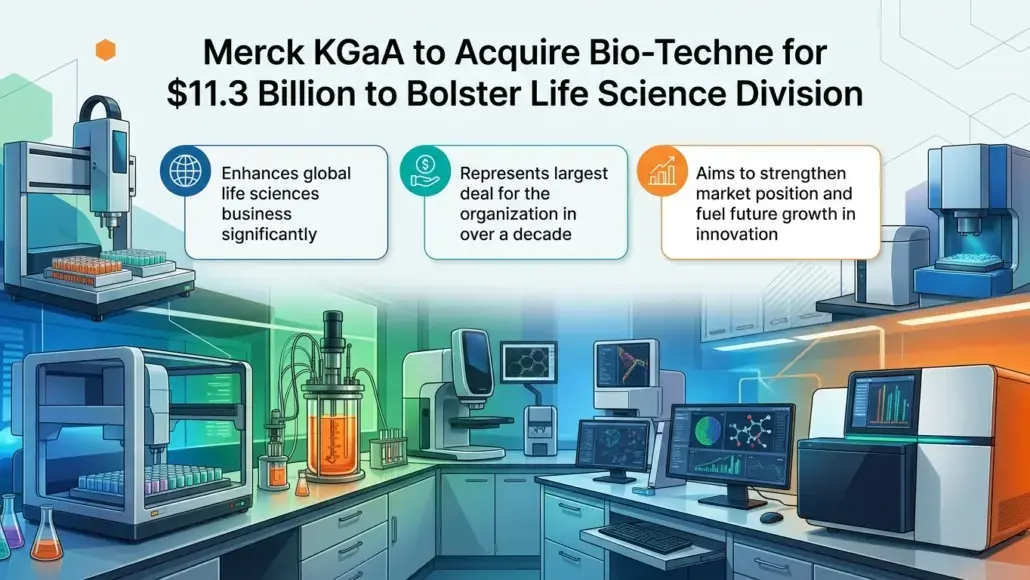
The German pharmaceutical group Merck KGaA announced that it has entered into a definitive agreement to purchase the United States-based biotechnology firm Bio-Techne for $11.3 billion. This transaction represents the largest deal for the Darmstadt-based organization in more than a decade, as it seeks to significantly enhance its global life sciences business. Under the terms of the agreement, the offer of $73 per share represents a 24% premium over the closing price of the target company on Wednesday. The strategic move, where Merck acquires Bio-Techne, is intended to broaden the company’s presence in sectors involving advanced biological research and gene therapy, establishing the life sciences sector as the primary engine for corporate expansion.
Strategic Expansion in Biological Research and Specialized Tools
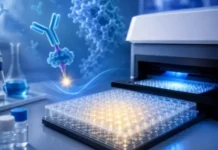
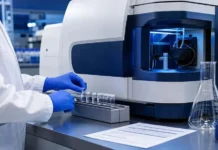
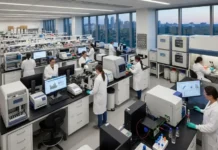
Bio-Techne is a major provider of essential research reagents, proteins, antibodies, and analytical instruments that are utilized extensively by the scientific community and drug developers. Industry analysts have characterized the acquisition as a strong strategic fit with minimal expected regulatory obstacles. Leerink analyst Puneet Souda noted that the pharmaceutical group is securing an “attractive asset with strong long-term potential, despite current pressures in the research tools market.” This acquisition marks the first significant transaction under the leadership of CEO Kai Beckmann, who transitioned into the role in May. The move is consistent with the long-term vision of prioritizing strategic investments within the life sciences domain to support the scientific community.
The decision to ensure Merck acquires Bio-Techne follows a pattern of previous strategic investments in entities such as Exelead, Mirus Bio, and SpringWorks Therapeutics. these acquisitions were specifically targeted to reinforce the company’s capabilities in mRNA manufacturing and the treatment of rare diseases. This latest agreement is the most substantial life sciences transaction for the group since its 2014 acquisition of Sigma-Aldrich, which facilitated a broader diversification beyond traditional pharmaceuticals. Jean-Charles Wirth, the CEO of the Life Science division, remarked that the inclusion of a catalog featuring 6,000 proteins and 425,000 antibodies represents a “big, big plus” for global customers and drug developers.
Merck KGaA plans to fund the $11.3 billion acquisition through a combination of existing cash and new debt. According to the most recent financial disclosures, the company holds cash and cash equivalents of approximately 2.74 billion euros. The transaction is expected to conclude by late 2026 or early 2027, pending standard closing conditions. Following the integration, the company anticipates achieving cost savings of approximately 140 million euros by the third year of operation. This merger underscores a commitment to advancing mRNA manufacturing and providing high-quality analytical instruments and research reagents to the global market.