













For decades, the standard architectural model for pharmaceutical utilities has been the centralized plant a large, dedicated facility that generates purified water and other utilities in bulk and distributes them through a vast network of pipes to various production areas. While this model offers certain economies of scale, it is increasingly seen as rigid and vulnerable in the face of modern manufacturing trends. The industry is now moving toward decentralized water systems pharma production, where smaller, modular water generation units are placed at or near the specific points of use. This transition is driven by the rise of personalized medicine, the need for faster facility setup, and the desire to mitigate the risks associated with large, interconnected distribution networks. By adopting a decentralized approach, manufacturers unlock a new level of operational agility that traditional centralized systems simply cannot match. This transformation aligns with the industry’s accelerating shift toward modular, demand-driven infrastructure – an evolution that World Pharma Today consistently explores through its in-depth coverage of next-generation manufacturing strategies, innovation trends, and future-ready pharma ecosystems.
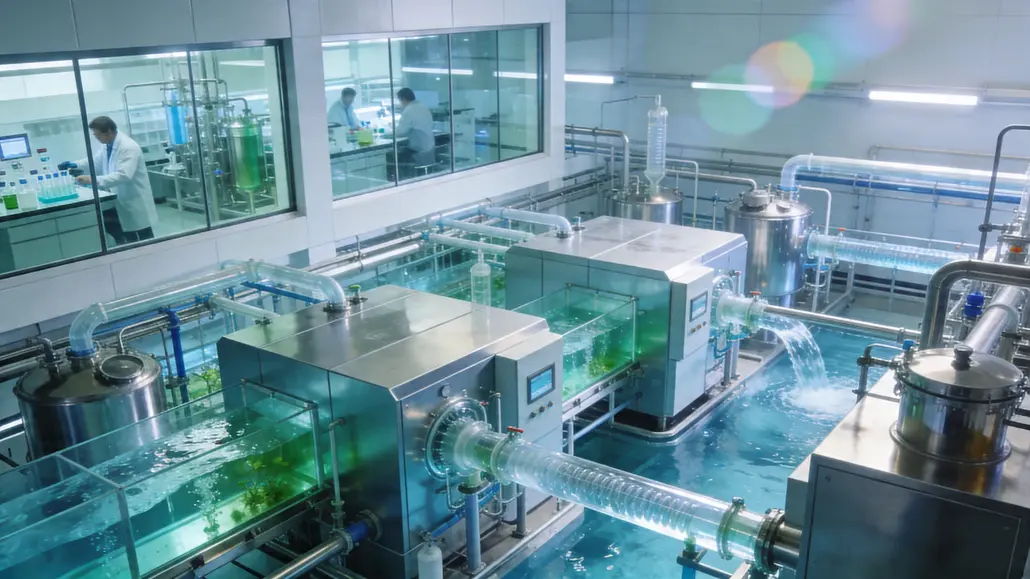
In a decentralized model, the focus shifts from a single, massive Purified Water (PW) or Water for Injection (WFI) plant to several independent units tailored to the specific needs of individual cleanrooms or production lines. These decentralized water systems pharma production facilities often utilize “plug-and-play” modular designs that can be quickly installed and validated. This is particularly valuable for facilities producing small batches of high-value drugs, where the water demand can vary significantly between different products. By decoupling the water supply from a central plant, manufacturers can scale their operations up or down with ease, adding new capacity only where and when it is needed, thereby optimizing both capital expenditure and resource use.
The Operational Advantages of Point-of-Use Water Generation
The primary benefit of decentralized water systems pharma production is the significant reduction in the complexity of the distribution infrastructure. Large, centralized systems require kilometers of stainless steel piping, all of which must be maintained at specific temperatures and flow rates to prevent microbial growth. This extensive network is not only expensive to install but also represents a significant maintenance burden. In a decentralized system, the distribution loop is much shorter, reducing the number of valves, pumps, and dead legs that can become breeding grounds for biofilm. This simplified architecture enhances the overall reliability of the water supply and makes it easier to maintain the system in a validated state.
Enhancing Risk Mitigation and Contamination Control
One of the most critical vulnerabilities of a centralized water system is the risk of a single-point failure. If a central WFI plant becomes contaminated or suffers a mechanical breakdown, the entire manufacturing facility can be brought to a standstill. Decentralized water systems pharma production mitigate this risk by isolating the water supply for different production areas. If one modular unit fails or requires maintenance, the rest of the facility can continue to operate unaffected. This redundancy is essential for maintaining production continuity and for protecting the high-value products that are the lifeblood of the organization. Furthermore, the smaller size of decentralized units makes them easier to sanitize and monitor, providing an additional layer of protection against microbial contamination.
Supporting the Growth of Personalized and Small-Batch Medicine
The pharmaceutical industry is moving away from the “one-size-fits-all” blockbuster drug model toward more targeted, personalized therapies. These products often require smaller manufacturing volumes and more frequent changeovers between batches. Decentralized water systems pharma production are perfectly suited for this environment. Modular units can be dedicated to specific product lines, allowing for customized water quality profiles and preventing any risk of cross-contamination between different drug products. This level of dedication is impossible in a centralized system where the same water supply is shared by multiple production areas. As the demand for niche medicines grows, the flexibility offered by decentralized utilities will become a key competitive advantage.
Financial Implications of Decentralized Utility Infrastructure
From a financial perspective, the shift toward decentralized water systems pharma production offers a more manageable capital investment profile. Instead of the massive upfront cost of a central utility plant, manufacturers can invest in smaller units as their production needs grow. This “pay-as-you-grow” approach improves cash flow and reduces the risk of over-investing in capacity that may not be needed. Additionally, the operational costs of decentralized systems are often lower due to reduced energy consumption for heating and pumping water through long distribution loops. The ability to shut down individual units during periods of low demand further contributes to energy efficiency and cost savings, making the decentralized model a more sustainable choice in the long term.
Simplifying Facility Design and Construction
Traditional centralized systems require extensive planning and integration into the building’s core architecture. This can lead to long construction timelines and complex engineering challenges. Decentralized water systems pharma production allow for a much simpler “skid-mounted” approach to facility design. These systems are pre-assembled and pre-tested in a factory environment, arriving on-site as complete units that only require connection to basic power and feed-water utilities. This significantly reduces on-site construction time and minimizes the risk of installation errors. For companies looking to expand their manufacturing footprint quickly especially in emerging markets the speed and simplicity of decentralized units are invaluable.
Regulatory Compliance and Documentation in Decentralized Systems
A common question regarding decentralized water systems pharma production is how to manage the documentation and validation of multiple individual units. While there are more units to validate, modern digital tools are making this process much more efficient. Each modular unit can be equipped with its own dedicated control system and data logger, providing a complete and independent audit trail for its operation. This decentralized data architecture aligns well with modern “cloud-based” quality management systems, allowing for centralized monitoring and reporting while maintaining local control. Regulators are increasingly supportive of this modular approach, as it demonstrates a robust and proactive strategy for risk management and quality assurance.
Future Trends: Autonomous and Intelligent Modular Units
As technology continues to evolve, the capabilities of decentralized water systems pharma production will only expand. We are seeing the emergence of “smart” modular units that are equipped with advanced sensors and AI-driven control systems. These units can autonomously monitor their own health, optimize their energy and chemical usage, and even communicate with other units in the network to balance the overall load of the facility. This level of intelligence will lead to even greater levels of efficiency and reliability, turning the water system from a passive utility into an active and self-optimizing participant in the manufacturing process. The integration of “real-time release” capabilities within these units will also further accelerate the production cycle, supporting the industry’s goal of delivering life-saving medicines to patients faster than ever before.
Environmental Stewardship through Targeted Water Management
Sustainability is a major driver for the adoption of decentralized water systems pharma production. By placing water generation at the point of use, facilities can more easily implement localized water recycling and reuse strategies. For example, the wastewater from a specific production line could be treated and reused within the same decentralized unit for non-critical applications, such as cooling tower make-up. This targeted approach to water management is much more efficient than trying to treat and recycle the combined waste stream of an entire centralized facility. As the industry faces increasing pressure to reduce its environmental footprint, the localized control offered by decentralized systems will be a critical tool for achieving corporate sustainability targets.
In conclusion, the transformation of pharmaceutical manufacturing through decentralized water systems pharma production is a strategic move toward a more agile, resilient, and sustainable future. By breaking down the massive utility plant into smaller, intelligent, and modular components, manufacturers can better meet the demands of a changing market while reducing risk and improving efficiency. The transition requires a shift in how we think about facility design and utility management, but the benefits in terms of flexibility, reliability, and cost-effectiveness are undeniable. As the industry continues to innovate, the decentralized model will become the new standard for the high-purity water systems that are essential for the production of modern medicines. What is emerging is not just a technical upgrade, but a broader redefinition of utility strategy – one that is gaining traction across forward-looking industry dialogues, including those featured in World Pharma Today.