











Close
CDMO Safety Testing 2026
Novotech

Regenerative Treatment For An Impaired Kidney Restoration

Note* - All images used are for editorial and illustrative purposes only and may not originate from the original news provider or associated company.

Subscribe

- Never miss a story with notifications

- Gain full access to our premium content

- Browse free from any location or device.

Media Packs

Expand Your Reach With Our Customized Solutions Empowering Your Campaigns To Maximize Your Reach & Drive Real Results!

โ€“ Access the Media Pack Now

โ€“ Book a Conference Call

โ€“ Leave Message for Us to Get Back

Related stories

Quantum Simulation Improving Molecular Drug Design

Advancements in quantum mechanical modeling are revolutionizing the way pharmaceutical scientists engineer new therapeutic agents. By providing a high-fidelity simulation of electronic structures and molecular dynamics, these tools enable the precise design of compounds tailored to specific biological targets. This transition from traditional experimental screening to digital molecular architecture is accelerating the development of highly potent and selective medicines, fundamentally changing the landscape of pharmaceutical innovation and computational chemistry.

Quantum Algorithms Transforming Pharma Data Analysis

The pharmaceutical industry is entering a new era of data-driven discovery where traditional analytical methods are being augmented by quantum-enhanced logic. By utilizing specialized mathematical frameworks, researchers can now process massive, high-dimensional datasets with a speed and depth that classical systems cannot match. This transformation is streamlining clinical workflows, optimizing drug-to-patient matching, and revealing hidden patterns within biological data, paving the way for more efficient research and faster therapeutic breakthroughs.

Quantum Computing Accelerating Drug Discovery Models

Integrating quantum mechanics into pharmaceutical research marks a paradigm shift in how scientists identify and develop therapeutic compounds. By leveraging the principles of superposition and entanglement, researchers can simulate molecular interactions with unprecedented accuracy, bypassing the limitations of traditional binary computation. This evolution promises to drastically reduce the time and capital required to bring life-saving drugs to market while opening new doors for treating complex diseases that have long remained elusive.
- Advertisement -

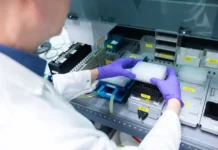
An event that hasnโ€™t happened before was demonstrated by researchers from Duke-NUS Medical School, colleagues in Germany, and the National Heart Centre Singapore (NHCS), suggesting that regenerative treatment to restore damaged kidney function could be a sure possibility. In a preclinical study, the researchers discovered that suppressing the harmful and scar-regulating protein interleukin-11 (IL-11) allowed the damaged kidney cells to recover, restoring reduced kidney function caused by illness as well as acute injuries.

The protein is involved in pushing a cascade of molecular processes that occur in response to kidney damage, resulting in inflammation, fibrosis, also known as scarring, and loss of function. In addition, they discovered that blocking IL-11 with a neutralising antibody can halt and even restore kidney damage in this situation.

More precisely, the researchers discovered that in reaction to kidney damage, renal tubular cells, which line the tiny tubes within the kidneys, release IL-11. It initiates a signaling cascade that results in increased activation of a gene known as Snail Family Transcriptional Repressor 1 (SNAI1), which inhibits cell growth and increases the possibility of kidney misfunctioning.

Turning off this method in a preclinical model of human diabetic kidney disease by way of administering an antibody that binds to IL-11 resulted in the proliferation of kidney tubule cells and the reversal of fibrosis as well as inflammation, making way for the regeneration of the injured kidney and also the restoration of renal function.

While clinical trials pertaining to an antibody that attaches to another pro-fibrotic molecule known as transforming growth factor-beta were unsuccessful, this novel technique offers the possibility of a new target.

Latest stories

Related stories

Quantum Simulation Improving Molecular Drug Design

Advancements in quantum mechanical modeling are revolutionizing the way pharmaceutical scientists engineer new therapeutic agents. By providing a high-fidelity simulation of electronic structures and molecular dynamics, these tools enable the precise design of compounds tailored to specific biological targets. This transition from traditional experimental screening to digital molecular architecture is accelerating the development of highly potent and selective medicines, fundamentally changing the landscape of pharmaceutical innovation and computational chemistry.

Quantum Algorithms Transforming Pharma Data Analysis

The pharmaceutical industry is entering a new era of data-driven discovery where traditional analytical methods are being augmented by quantum-enhanced logic. By utilizing specialized mathematical frameworks, researchers can now process massive, high-dimensional datasets with a speed and depth that classical systems cannot match. This transformation is streamlining clinical workflows, optimizing drug-to-patient matching, and revealing hidden patterns within biological data, paving the way for more efficient research and faster therapeutic breakthroughs.

Quantum Computing Accelerating Drug Discovery Models

Integrating quantum mechanics into pharmaceutical research marks a paradigm shift in how scientists identify and develop therapeutic compounds. By leveraging the principles of superposition and entanglement, researchers can simulate molecular interactions with unprecedented accuracy, bypassing the limitations of traditional binary computation. This evolution promises to drastically reduce the time and capital required to bring life-saving drugs to market while opening new doors for treating complex diseases that have long remained elusive.

Glass vs Polymer: Choosing the Right Material for Parenteral Packaging

In the pharmaceutical industry, material selection plays a critical...

Subscribe

- Never miss a story with notifications

- Gain full access to our premium content

- Browse free from any location or device.

Media Packs

Expand Your Reach With Our Customized Solutions Empowering Your Campaigns To Maximize Your Reach & Drive Real Results!

โ€“ Access theMedia Pack Now

โ€“ Book a Conference Call

โ€“ Leave Message for Us to Get Back

Translate ยป