










Close
CDMO Safety Testing 2026
Novotech

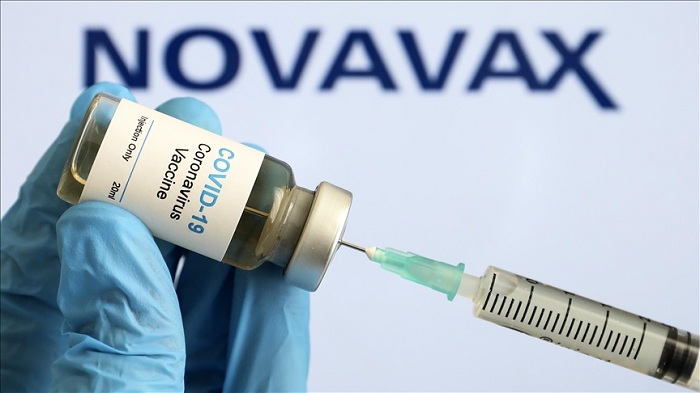
Novavax COVID-19 Vaccine Is Fourth US Option Now Available

Note* - All images used are for editorial and illustrative purposes only and may not originate from the original news provider or associated company.

Subscribe

- Never miss a story with notifications

- Gain full access to our premium content

- Browse free from any location or device.

Media Packs

Expand Your Reach With Our Customized Solutions Empowering Your Campaigns To Maximize Your Reach & Drive Real Results!

โ€“ Access the Media Pack Now

โ€“ Book a Conference Call

โ€“ Leave Message for Us to Get Back

Related stories

BeOne Signs $2B Trispecific Antibody Deal with Huahui Health

BeOne Medicines has entered into a high-value agreement with...

Quantum Machine Learning in Pharma Research Growth

The convergence of artificial intelligence and quantum processing is opening new avenues for rapid discovery and innovation within the life sciences. By utilizing advanced mathematical models that operate across multi-dimensional datasets, researchers can now identify complex biological patterns and predict molecular behaviors with a speed that surpasses traditional computational methods. This transformation is accelerating the development of novel therapies and providing deeper insights into disease mechanisms, fundamentally altering the trajectory of pharmaceutical research and development.

Quantum Sensors Enabling Advanced Drug Diagnostics

The landscape of medical diagnostics is being reshaped by the introduction of sensing technologies that operate with atomic-level sensitivity. By providing high-fidelity measurements and real-time data, these tools allow for the detection of subtle biological changes and chemical markers that were previously invisible to conventional equipment. This advancement is enhancing the precision of drug testing and clinical monitoring, leading to earlier disease detection and more effective therapeutic interventions across the global healthcare spectrum.
- Advertisement -

As infections in the U.S. continue to be at high levels, the Food and Drug Administration on 13th July approved a fourth vaccination for COVID-19 prevention, authorisingย Novavax’s coronavirus jabย for emergency use in adults. The Maryland-based drugmaker’s early results on the shot’s efficacy were released more than a year ago, and the FDA’s approval came one month after a panel of outside consultants to the agency supported its usage.

According to Peter Marks, director of the FDA office that analyses vaccinations, Novavax’s vaccine provides an additional option for adults and adds moreย vaccine to the COVID-19 vaccine inventory for the United States.ย Recently, the United States purchased 3.2 million doses of the injection.

Health experts fear that Novavax’s vaccine, which is the first to be approved in the United States and uses an older protein-based technology, may attract some people who are wary of the mRNA strategy employed by Moderna as well as by Pfizer and BioNTech. Only people who have never previously had the COVID-19 vaccine are approved for the dose, though. Only a small portion of Americans over the age of 18 who are eligible to receive Novavax’s injection remain, as over 77% of adults in the country have already received two doses of the vaccine.

While this is going on, Moderna and Pfizer are working on booster shots to counteract decreasing immunity in those who have received all of their vaccinations, the usage for which Novavax’s shot is ineligible. Each of the newer injections being developed by Moderna and Pfizer has components that address omicron. But given that the FDA has requested that developers customise their upcoming boosters to newer strains of the variant that are extensively circulating, those vaccines might need to be changed once more.

The omicron-targeting booster is also being developed by Novavax, but it is lagging behind. Clinical data is what the business anticipates having in September. The administration had hoped to launch a fresh promotional effort in the autumn.

Nevertheless, Novavax views the FDA’s approval as a major victory because it is the 35-year-old company’s first U.S. authorization despite having incurred losses of more than $3 billion over that time.

The business gained its first regulatory approval in Indonesia last November, and the US government and the global non-profit organisation CEPI awarded it $1.4 billion in funding over two years to advance the development of its vaccine. The Novavax vaccine deployment target of mid-2021 was missed due to manufacturing and quality-related setbacks.

The approval of Novavax was based on findings from a sizable Phase 3 study that demonstrated how well the vaccine lowered COVID-19 cases when compared to a placebo by 90%. The virus strains in circulation in 2021, as opposed to the dominant omicron subvariants now in circulation, were resistant to that effectiveness.

On that premise, several experts have questioned Novavax’s vaccine, but the company’s chief medical officer pointed to laboratory testing demonstrating a potent immune reaction to omicron while addressing an FDA expert group in June.

Myocarditis, a type of heart inflammation, is a side effect that is mentioned in the FDA’s prescription material for Novavax’s vaccine, despite the fact that it only sometimes happened in the company’s trial subjects. Infrequent occurrences of myocarditis have also been linked to both Moderna’s and Pfizer’s vaccinations; this topic was discussed at the June meeting of the advisory committee for Novavax’s shot.

Latest stories

Related stories

BeOne Signs $2B Trispecific Antibody Deal with Huahui Health

BeOne Medicines has entered into a high-value agreement with...

Quantum Machine Learning in Pharma Research Growth

The convergence of artificial intelligence and quantum processing is opening new avenues for rapid discovery and innovation within the life sciences. By utilizing advanced mathematical models that operate across multi-dimensional datasets, researchers can now identify complex biological patterns and predict molecular behaviors with a speed that surpasses traditional computational methods. This transformation is accelerating the development of novel therapies and providing deeper insights into disease mechanisms, fundamentally altering the trajectory of pharmaceutical research and development.

Quantum Sensors Enabling Advanced Drug Diagnostics

The landscape of medical diagnostics is being reshaped by the introduction of sensing technologies that operate with atomic-level sensitivity. By providing high-fidelity measurements and real-time data, these tools allow for the detection of subtle biological changes and chemical markers that were previously invisible to conventional equipment. This advancement is enhancing the precision of drug testing and clinical monitoring, leading to earlier disease detection and more effective therapeutic interventions across the global healthcare spectrum.

Quantum Computing Optimizing Pharma Supply Chains

The global distribution of pharmaceutical products is facing unprecedented challenges that demand a new level of logistical precision and resilience. By utilizing advanced analytical models, companies can now navigate complex international networks with greater efficiency, ensuring that temperature-sensitive medicines and life-saving therapies reach their destinations without delay. This evolution toward a more intelligent and responsive supply chain is critical for maintaining public health and responding effectively to emerging medical needs on a global scale.

Subscribe

- Never miss a story with notifications

- Gain full access to our premium content

- Browse free from any location or device.

Media Packs

Expand Your Reach With Our Customized Solutions Empowering Your Campaigns To Maximize Your Reach & Drive Real Results!

โ€“ Access theMedia Pack Now

โ€“ Book a Conference Call

โ€“ Leave Message for Us to Get Back

Translate ยป