








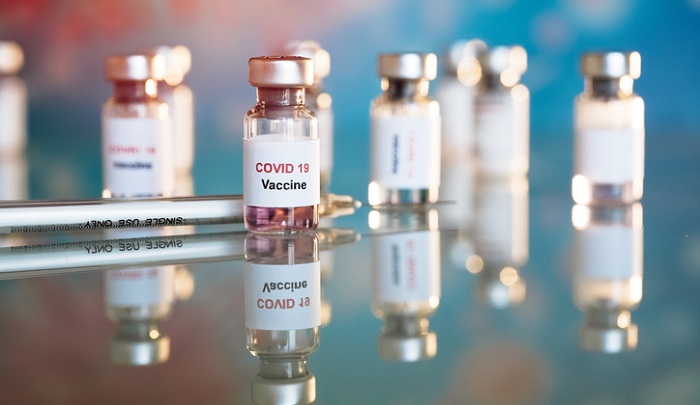
Moderna, Inc. , a biotechnology company pioneering messenger RNA (mRNA) therapeutics and vaccines to create a new generation of transformative medicines for patients, announced a supply agreement with the UK government for an additional 2 million doses of mRNA-1273, Moderna’s vaccine candidate against COVID-19, to the United Kingdom beginning in March 2021. The UK government has now secured 7 million doses of mRNA-1273. This confirmation comes as the UK continues its efforts to secure access to safe and effective COVID-19 vaccines by establishing a broad portfolio of the most promising vaccines.
“We appreciate the collaboration with the UK government as with many other governments and other key partners around the world,” said Stéphane Bancel, Chief Executive Officer of Moderna. “For almost a decade, Moderna has invested in creating and developing a novel platform for designing and manufacturing a new class of mRNA-based vaccines. We are proud of the progress on mRNA-1273 we have made to date including the positive interim analysis from our Phase 3 COVE study.”
On November 16, Moderna announced that the independent, NIH-appointed Data Safety Monitoring Board (DSMB) for the Phase 3 study of mRNA-1273, its vaccine candidate against COVID-19, has informed Moderna that the trial has met the statistical criteria pre-specified in the study protocol for efficacy, with a vaccine efficacy of 94.5%. This study, known as the COVE study, enrolled more than 30,000 participants in the U.S. and is being conducted in collaboration with the National Institute of Allergy and Infectious Diseases (NIAID), part of the National Institutes of Health (NIH), and the Biomedical Advanced Research and Development Authority (BARDA), part of the Office of the Assistant Secretary for Preparedness and Response at the U.S. Department of Health and Human Services.
On October 27, 2020, Moderna received confirmation that the Medicines and Healthcare products Regulatory Agency (MHRA) in the United Kingdom started the rolling review process of mRNA-1273.
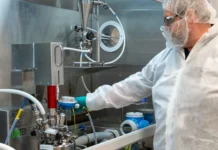
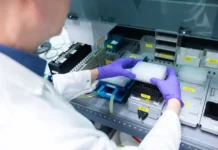
Moderna continues to scale up its global manufacturing to be able to deliver approximately 500 million doses per year and possibly up to 1 billion doses per year, beginning in 2021. The Company is working with its strategic manufacturing partners, Lonza of Switzerland and ROVI of Spain, for manufacturing and fill-finish outside of the United States. This is a dedicated supply chain to support Europe and countries other than the United States that enter into purchase agreements with Moderna.
About mRNA-1273
mRNA-1273 is an mRNA vaccine against COVID-19 encoding for a prefusion stabilized form of the Spike (S) protein, which was co-developed by Moderna and investigators from NIAID’s Vaccine Research Center. The first clinical batch, which was funded by the Coalition for Epidemic Preparedness Innovations, was completed on February 7, 2020 and underwent analytical testing; it was shipped to the NIH on February 24, 42 days from sequence selection. The first participant in the NIAID-led Phase 1 study of mRNA-1273 was dosed on March 16, 63 days from sequence selection to Phase 1 study dosing. On May 12, the FDA granted mRNA-1273 Fast Track designation. On May 29, the first participants in each age cohort: adults ages 18-55 years (n=300) and older adults ages 55 years and above (n=300) were dosed in the Phase 2 study of mRNA-1273. On July 8, the Phase 2 study completed enrollment.
Results from the second interim analysis of the NIH-led Phase 1 study of mRNA-1273 in the 56-70 and 71+ age groups were published on September 29 in The New England Journal of Medicine. On July 28, results from a non-human primate preclinical viral challenge study evaluating mRNA-1273 were published in The New England Journal of Medicine. On July 14, an interim analysis of the original cohorts in the NIH-led Phase 1 study of mRNA-1273 was published in The New England Journal of Medicine. mRNA-1273 currently is not approved for use by any regulatory body.
BARDA is supporting the continued research and development of mRNA-1273 with $955 million in federal funding under Contract no. 75A50120C00034. BARDA is reimbursing Moderna for 100 percent of the allowable costs incurred by the Company for conducting the program described in the BARDA contract. The U.S. government has agreed to provide up to $1.525 billion to purchase supply of mRNA-1273 under U.S. Department of Defense Contract No. W911QY-20-C-0100.