












New Technology to monitor crystal formation

Note* - All images used are for editorial and illustrative purposes only and may not originate from the original news provider or associated company.

Subscribe

- Never miss a story with notifications

- Gain full access to our premium content

- Browse free from any location or device.

Media Packs

Expand Your Reach With Our Customized Solutions Empowering Your Campaigns To Maximize Your Reach & Drive Real Results!

– Access the Media Pack Now

– Book a Conference Call

– Leave Message for Us to Get Back

Related stories

Advanced Analytical Technologies in Pharma Impurity Testing

Advanced analytical technologies in pharma impurity testing are transforming how trace contaminants are detected, identified, and controlled across the drug lifecycle. With high-resolution instrumentation, automation, and AI-driven insights, the industry is strengthening precision, data integrity, and patient safety to meet increasingly stringent purity standards.

Advancing Quality 4.0 Through Centralized Drug Knowledge 

Implementation of a unified data framework serves as the catalyst for modernizing pharmaceutical production, bridging the gap between legacy processes and intelligent automation. By consolidating disparate data streams into a cohesive repository, organizations achieve unprecedented visibility into critical quality attributes and process parameters. This transformation facilitates proactive risk mitigation and ensures that Good Manufacturing Practices are maintained through high-fidelity insights rather than retrospective analysis, ultimately fostering a culture of continuous improvement and operational excellence.

Quality Risk Management and the Role of Verified Drug Information

Effective quality risk management in pharmaceutical manufacturing hinges on the availability of verified drug information to ensure GMP compliance and product safety.
- Advertisement -

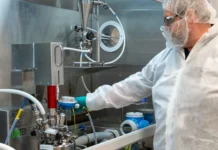
Researchers at the University of Leeds have come up with a technology that could help the pharmaceutical industry in controlling crystal formation during the process of drug development.

Pharmaceuticals often come in the crystalline forms and undetected fluctuations in the system can alter the crystal structure which is not desired by the pharmaceutical manufacturers. Any change in the structure could pose a threat to the safety and efficacy of the product. Moreover, the drug might be delayed to hit the market, which could incur the pharmaceutical manufacturer considerable cost. However, given that drug molecules are growing more complex day by day, the challenges involved in processing them means that it is difficult to always obtain the desired outcome.

According to Dr. Robert Hammond, who is leading the research, here comes into play the potential of their technology. It makes possible monitoring of the crystals during their formation inside reactor, a phenomenon that was not thought of before. The technology uses powder X-ray diffraction, which monitors the crystal structure while the crystalline form passes through a temperature controlled flow cell.

Commercialisation of the technique can be done only after proper of the same. Hammond is optimistic regarding the commercial aspect of the technology. It can be developed to work at manufacturing plant scales and can be utilised in speciality chemical industries as well.

 

Latest stories

Related stories

Advanced Analytical Technologies in Pharma Impurity Testing

Advanced analytical technologies in pharma impurity testing are transforming how trace contaminants are detected, identified, and controlled across the drug lifecycle. With high-resolution instrumentation, automation, and AI-driven insights, the industry is strengthening precision, data integrity, and patient safety to meet increasingly stringent purity standards.

Advancing Quality 4.0 Through Centralized Drug Knowledge 

Implementation of a unified data framework serves as the catalyst for modernizing pharmaceutical production, bridging the gap between legacy processes and intelligent automation. By consolidating disparate data streams into a cohesive repository, organizations achieve unprecedented visibility into critical quality attributes and process parameters. This transformation facilitates proactive risk mitigation and ensures that Good Manufacturing Practices are maintained through high-fidelity insights rather than retrospective analysis, ultimately fostering a culture of continuous improvement and operational excellence.

Quality Risk Management and the Role of Verified Drug Information

Effective quality risk management in pharmaceutical manufacturing hinges on the availability of verified drug information to ensure GMP compliance and product safety.

Improving Pharmacovigilance with Reliable Drug Interaction and Safety Data

Robust pharmacovigilance strategies rely on the continuous integration of high-quality drug interaction and safety data to protect patient health and ensure regulatory compliance.

Subscribe

- Never miss a story with notifications

- Gain full access to our premium content

- Browse free from any location or device.

Media Packs

Expand Your Reach With Our Customized Solutions Empowering Your Campaigns To Maximize Your Reach & Drive Real Results!

– Access theMedia Pack Now

– Book a Conference Call

– Leave Message for Us to Get Back

Translate »