














Close
CDMO Safety Testing 2026
Novotech

Biochip to simplify drug development safety studies

Note* - All images used are for editorial and illustrative purposes only and may not originate from the original news provider or associated company.

Subscribe

- Never miss a story with notifications

- Gain full access to our premium content

- Browse free from any location or device.

Media Packs

Expand Your Reach With Our Customized Solutions Empowering Your Campaigns To Maximize Your Reach & Drive Real Results!

โ€“ Access the Media Pack Now

โ€“ Book a Conference Call

โ€“ Leave Message for Us to Get Back

Related stories

AI-Driven Cold Chains Transforming Pharma Supply Systems

The integration of artificial intelligence into cold chain management is reshaping the pharmaceutical supply landscape. AI-driven cold chains utilize predictive visibility and intelligent thermal control to optimize logistics operations across global networks. By anticipating risks and automating complex decisions, these systems ensure the integrity of temperature-sensitive medications, significantly enhancing the reliability and efficiency of pharmaceutical distribution on a global scale.

Cold Chain Intelligence Enhancing Pharma Logistics Safety

Global pharmaceutical logistics faces unprecedented challenges in maintaining product integrity during transit. Cold chain intelligence offers a sophisticated solution by integrating predictive monitoring and thermal assurance into a connected supply chain. This approach ensures that life-saving medications and vaccines reach their destination without compromising safety or efficacy, marking a significant evolution in healthcare distribution.

Digital Supply Networks Strengthening Pharma Delivery

The transition from traditional linear supply chains to integrated digital supply networks is revolutionizing how pharmaceutical products are delivered. By leveraging connected visibility and real-time analytics, these networks enhance the resilience of cold chain operations. This technological evolution ensures that healthcare systems can respond dynamically to shifts in demand while maintaining the highest standards of safety and efficiency for patient care.
- Advertisement -

Researchers at Rensselaer Polytechnic Institute in Troy, N.Y., the University of California, Berkeley, and Solidus Biosciences, Inc. have come up with a biochip technology that would accelerate the drug development safety studies with a simultaneous reduction in the need for animal testing during early experiments. Animal tests have been traditionally used to detect the drug toxicity. However such tests are not always accurate in mimicking the human response to compounds. The biochips are found to be more accurate as well as cheap.

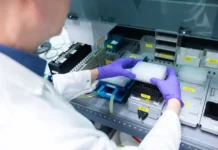
The Biochips consist of Metachip and Datachip. Metachip is a glass slide dotted with 20 nanolitre droplets of a solution containing human enzymes. Toxicity of a compound is actually detected by introducing the compound in the solution droplets and tracking the reaction of the same. Datachip is another glass slide lined with cell cultures of the human bladder, kidney or liver. This would help the scientists to detect the safeness of the drugs by introducing a few drops of the same onto the slide and tracking the culture’s expansion or shrinkage over time. The two biochips can be used in tandem by putting the Metachip on the Datachip to see how the two interact.

Metachips and Datachips have been a really since the scientists have been successful in isolating p450 liver enzymes and making three-dimensional cell culture in droplets. The use of Biochips entails a high-throughput micro array spotter machine to place the liquid enzyme dots on the slides. Optical assay systems including a camera need to be connected to a fluorescent light source to take images of the cell culture and highlight living and dead cells. The demand for biochip technology is set to rise with the ban on animal testing to be in place since 2009.

World Pharma Today brings together the global pharmaceutical industry โ€” from R&D leaders and regulatory affairs professionals to manufacturers and distribution executives โ€” through trusted editorial, market intelligence, and digital engagement.

Our 2026 Media Pack offers integrated solutions to reach your audience:

  • Magazine & Digital Editions Showcase your brand within premium pharmaceutical industry coverage read by executives and decision - makers worldwide.
  • Industry Insights & Reports Align with data - driven analysis, trend reports, and regional roundups across the global pharmaceutical and life sciences value chain.
  • Brand Authority & Credibility Position your company as a thought leader through expert commentary, interviews, and special features.

Latest stories

Related stories

AI-Driven Cold Chains Transforming Pharma Supply Systems

The integration of artificial intelligence into cold chain management is reshaping the pharmaceutical supply landscape. AI-driven cold chains utilize predictive visibility and intelligent thermal control to optimize logistics operations across global networks. By anticipating risks and automating complex decisions, these systems ensure the integrity of temperature-sensitive medications, significantly enhancing the reliability and efficiency of pharmaceutical distribution on a global scale.

Cold Chain Intelligence Enhancing Pharma Logistics Safety

Global pharmaceutical logistics faces unprecedented challenges in maintaining product integrity during transit. Cold chain intelligence offers a sophisticated solution by integrating predictive monitoring and thermal assurance into a connected supply chain. This approach ensures that life-saving medications and vaccines reach their destination without compromising safety or efficacy, marking a significant evolution in healthcare distribution.

Digital Supply Networks Strengthening Pharma Delivery

The transition from traditional linear supply chains to integrated digital supply networks is revolutionizing how pharmaceutical products are delivered. By leveraging connected visibility and real-time analytics, these networks enhance the resilience of cold chain operations. This technological evolution ensures that healthcare systems can respond dynamically to shifts in demand while maintaining the highest standards of safety and efficiency for patient care.

Quantum Machine Learning in Pharma Research Growth

The convergence of artificial intelligence and quantum processing is opening new avenues for rapid discovery and innovation within the life sciences. By utilizing advanced mathematical models that operate across multi-dimensional datasets, researchers can now identify complex biological patterns and predict molecular behaviors with a speed that surpasses traditional computational methods. This transformation is accelerating the development of novel therapies and providing deeper insights into disease mechanisms, fundamentally altering the trajectory of pharmaceutical research and development.

Subscribe

- Never miss a story with notifications

- Gain full access to our premium content

- Browse free from any location or device.

Media Packs

Expand Your Reach With Our Customized Solutions Empowering Your Campaigns To Maximize Your Reach & Drive Real Results!

โ€“ Access theMedia Pack Now

โ€“ Book a Conference Call

โ€“ Leave Message for Us to Get Back

Translate ยป