








Close
CDMO Safety Testing 2026
Novotech

Clinical research data sharing promises new cures and treatments

Note* - All images used are for editorial and illustrative purposes only and may not originate from the original news provider or associated company.

Subscribe

- Never miss a story with notifications

- Gain full access to our premium content

- Browse free from any location or device.

Media Packs

Expand Your Reach With Our Customized Solutions Empowering Your Campaigns To Maximize Your Reach & Drive Real Results!

โ€“ Access the Media Pack Now

โ€“ Book a Conference Call

โ€“ Leave Message for Us to Get Back

Related stories

Smart Thermal Packaging Enhancing Drug Stability Systems

Maintaining the stability of sensitive pharmaceutical compounds requires more than just standard insulation. Smart thermal packaging integrates advanced temperature control and real-time tracking to create a secure distribution environment. By ensuring that drugs remain within strict thermal parameters throughout their journey, these systems protect the efficacy of medications and enhance the reliability of pharmaceutical distribution networks worldwide.

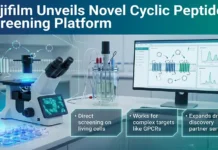
Fujifilm Advances Drug Discovery with New Cyclic Peptide Screening Platform

FUJIFILM Corporation has developed a new screening methodology aimed...

Move Beyond Visibility: Why Cold Chain Orchestration is Now Essential for Thermal Assurance

As life sciences supply chains become more volatile, real-time...
- Advertisement -

Clinical research generates extensive amounts of data, yet most of it is siloed or generally unavailable to a larger pool of willing potential researchers.

If this data were liberated to the masses, we would venture into a world of endless possibilities where the search for new cures and treatments could be accelerated. From curing cancer to combating cardiovascular disease, clinical research data sharing has the potential to benefit many health care goals.

Clinical research data sharing for cardiovascular scientific discovery
The Duke Clinical Research Institute (DCRI) is at the forefront of this movement to engage in data sharing and research transparency, as noted by Drs. Eric Peterson and Michael Pencina in the short video below.

DCRI is the first academic institution to share their data with the general research community around the world, believing that better, faster and more innovative research will happen if academic institutions share their data.

The DCRI is releasing data from their Duke Databank for Cardiovascular disease. It contains de-identified patient records of more than 100,000 procedures on more than 50,000 patients. Approved researchers will have access to the data to test clinical hypothesis, develop clinical trial protocols and assess long term outcomes and trends.

“Researchers who have good questions can ask questions of that data, analyze it in a protected environment, and ultimately make discoveries that hopefully will help heart disease patients in the future,” says Peterson, in the video.

Results with clinical research data sharing
Secondary analysis of clinical trial research data has already yielded amazing results. For example, Project Datasphere, one of the initiatives of the CEO Roundtable on Cancer, was founded by former President George H.W. Bush who challenged the industry to be โ€œbold and venturesomeโ€ in the fight against cancer.

Project Datasphere paved the way to share, integrate and analyze collective cancer research data into one single location and currently contains data from 34,000 patients and a base of more than 1400 researchers accessing the data for new discovery.

So far 15 articles, abstracts and posters based on Project DataSphere data have been accepted by peer reviewed publications. No doubt, this is just the tip of the iceberg. Project Datasphere recognizes that the true power comes from increasing the volume of data about patients, and the group is actively working towards a 100,000-patient goal.

Through Project Datasphere and other programs, clinical trial data sharing is firmly entrenched in the pharmaceutical industry. It is our hope that other academic research institutions follow in the footsteps of the DCRI and Project Datasphere to overcome any internal challenges and liberate historical clinical research on a data sharing platform. We would welcome the opportunity to share our experiences of this voyage of discovery.

Learn how SAS plays a role in the Duke Databank for Cardiovascular Disease

Author: Patrick Homer

Author Image

Patrick Homer leads the Commercial Life Sciences practice at SAS, where he has been responsible for developing a number of advanced analytical applications, such as predictive modeling for physician segmentation, demand forecasting for inventory optimization, social media analytics, master data management for physician spending reporting, visualization of real world data, as well as launch sequence pricing optimization.

Prior to joining SAS, Homer spent 20 years working in the pharmaceutical industry, starting his career in sales, then progressing to running sales teams before moving into business development at Quintiles for sales outsourcing.Clinical research data sharing promises new cures and treatments.

World Pharma Today brings together the global pharmaceutical industry โ€” from R&D leaders and regulatory affairs professionals to manufacturers and distribution executives โ€” through trusted editorial, market intelligence, and digital engagement.

Our 2026 Media Pack offers integrated solutions to reach your audience:

  • Magazine & Digital Editions Showcase your brand within premium pharmaceutical industry coverage read by executives and decision - makers worldwide.
  • Industry Insights & Reports Align with data - driven analysis, trend reports, and regional roundups across the global pharmaceutical and life sciences value chain.
  • Brand Authority & Credibility Position your company as a thought leader through expert commentary, interviews, and special features.

Latest stories

Related stories

Smart Thermal Packaging Enhancing Drug Stability Systems

Maintaining the stability of sensitive pharmaceutical compounds requires more than just standard insulation. Smart thermal packaging integrates advanced temperature control and real-time tracking to create a secure distribution environment. By ensuring that drugs remain within strict thermal parameters throughout their journey, these systems protect the efficacy of medications and enhance the reliability of pharmaceutical distribution networks worldwide.

Fujifilm Advances Drug Discovery with New Cyclic Peptide Screening Platform

FUJIFILM Corporation has developed a new screening methodology aimed...

Move Beyond Visibility: Why Cold Chain Orchestration is Now Essential for Thermal Assurance

As life sciences supply chains become more volatile, real-time...

Quantum Machine Learning in Pharma Research Growth

The convergence of artificial intelligence and quantum processing is opening new avenues for rapid discovery and innovation within the life sciences. By utilizing advanced mathematical models that operate across multi-dimensional datasets, researchers can now identify complex biological patterns and predict molecular behaviors with a speed that surpasses traditional computational methods. This transformation is accelerating the development of novel therapies and providing deeper insights into disease mechanisms, fundamentally altering the trajectory of pharmaceutical research and development.

Subscribe

- Never miss a story with notifications

- Gain full access to our premium content

- Browse free from any location or device.

Media Packs

Expand Your Reach With Our Customized Solutions Empowering Your Campaigns To Maximize Your Reach & Drive Real Results!

โ€“ Access theMedia Pack Now

โ€“ Book a Conference Call

โ€“ Leave Message for Us to Get Back

Translate ยป