












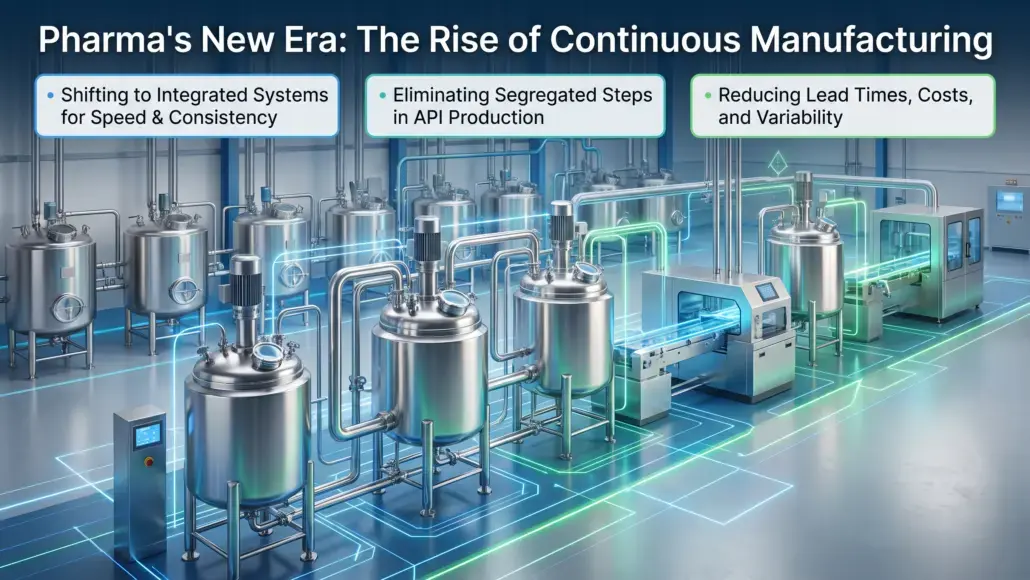
The pharmaceutical industry is currently undergoing a significant shift from traditional batch processing toward integrated systems that prioritize speed and consistency. For decades, the production of active pharmaceutical ingredients has relied on segregated steps, where each stage of synthesis occurs in isolation. This legacy approach often results in long lead times, increased inventory costs, and the potential for batch-to-batch variability. However, the adoption of continuous manufacturing improving small-molecule production efficiency is now allowing organizations to streamline these workflows, reducing the physical footprint of facilities while enhancing the reliability of the final product. By maintaining a constant flow of materials through the synthesis, crystallization, and drying stages, manufacturers can identify deviations in real time rather than waiting for the completion of a multi-day batch cycle. This transition is not merely a technical upgrade but a strategic move to address the rising demand for complex therapies that require precision and cost-effectiveness.
Integration of Flow Chemistry in Pharmaceutical Synthesis
The movement toward continuous flow chemistry represents a fundamental change in how molecules are constructed at a commercial scale. In a flow reactor, reagents are pumped through a temperature-controlled environment, allowing for precise control over reaction kinetics and thermal management. This level of control is particularly beneficial for highly exothermic reactions that might be hazardous in a large batch vessel. By utilizing smaller reaction volumes at any given moment, the risk of thermal runaway is significantly mitigated, enabling the safe use of reagents that were previously considered too volatile for industrial application. In addition, the high surface area to volume ratio in micro-reactors facilitates rapid mixing and heat transfer, ensuring that every molecule experiences the same conditions during the synthesis process. This uniformity is a primary driver behind continuous manufacturing improving small-molecule production efficiency, as it minimizes the formation of impurities and secondary byproducts.
As the industry moves away from large glass-lined reactors, the modularity of flow systems offers unprecedented flexibility. Engineers can now assemble specialized production skids that are tailored to specific chemical transformations, which can be easily reconfigured or swapped as production needs change. This modular approach reduces the downtime associated with cleaning and validating large-scale equipment between batches. Additionally, the ability to perform multi-step syntheses in a single continuous stream eliminates the need for the isolation and storage of intermediate compounds. By removing these intermediate steps, manufacturers can significantly reduce the risk of material degradation and contamination, while also lowering the total volume of solvent required for the process. The resulting reduction in solvent waste aligns with broader industry goals for sustainable manufacturing practices, making the entire synthesis route more environmentally and economically viable.
Regulatory Pathways and Quality by Design Implementation
Regulatory agencies have become increasingly supportive of continuous methods, recognizing that real-time monitoring provides a higher degree of quality assurance than traditional end-product testing. The implementation of Quality by Design principles allows manufacturers to define a design space within which the process is guaranteed to produce a consistent output. In a continuous system, process analytical technology can be integrated at various points to measure critical quality attributes such as particle size, moisture content, and chemical purity. If the sensors detect a slight drift away from the target specifications, the system can automatically adjust parameters like flow rate or temperature to bring the process back into control. This proactive approach to quality management ensures that only material meeting the highest standards proceeds to the next stage, effectively eliminating the need for expensive batch rejections.
The shift toward this new regulatory paradigm requires a thorough understanding of the relationship between process parameters and product quality. Manufacturers must invest in sophisticated modeling and simulation tools to predict how changes in raw material properties will impact the steady-state operation of the line. By building these predictive capabilities, companies can satisfy regulatory requirements for process validation while also gaining deeper insights into the underlying chemistry. The data generated by these systems provides a comprehensive audit trail, which is essential for maintaining compliance in a highly scrutinized industry. As more firms successfully navigate the filing process for continuous-produced drugs, the collective knowledge base expands, paving the way for wider adoption across the small-molecule sector.
Economic Advantages of Steady State Processing Models
The financial case for continuous manufacturing improving small-molecule production efficiency is rooted in the optimization of capital and operational expenditures. Traditional batch facilities require vast amounts of space for large reactors, filtration units, and storage tanks for intermediates. In contrast, continuous lines occupy a fraction of that space, allowing for smaller, more efficient manufacturing centers that can be located closer to target markets. This smaller footprint allows for more sustainable land use and lower infrastructure costs. This reduction in facility size leads to significant savings in heating, ventilation, and air conditioning costs, as well as lower property taxes and maintenance expenses. In addition, the ability to produce material on demand reduces the capital tied up in work-in-progress inventory. Instead of producing several months’ worth of supply in a single batch, manufacturers can adjust their output to match current market demand, minimizing the risk of overproduction and stock expiration.
Labor costs are also impacted by the move to automation and continuous processing. While the initial setup requires highly skilled engineers and data scientists, the day-to-day operation of a continuous line is less labor-intensive than a manual batch process. The integration of automated control systems reduces the number of operators needed on the floor, allowing staff to focus on higher-value tasks such as process optimization and troubleshooting. Over the long term, the increased throughput and yield of continuous systems lead to a lower cost per gram of the active ingredient. For generic manufacturers and firms producing high-volume medicines, these marginal gains in efficiency can be the difference between a profitable product and one that is unsustainable in a competitive market.
Technical Barriers to Scaling Continuous Flow Systems
Despite the clear benefits, the transition to continuous manufacturing is not without its technical challenges. One of the most significant hurdles is the handling of solids within a flow system. While liquids and gases are easily managed through pumps and pipes, the presence of slurries or precipitates can lead to clogging and inconsistent flow rates. Developing specialized equipment, such as oscillatory baffled reactors and screw-based crystallizers, has been necessary to address these issues. These technologies ensure that solids remain in suspension and move through the system at a controlled rate, preventing the accumulation of material that could disrupt the steady state. Engineers must also consider the residence time distribution of the material, ensuring that all portions of the product spend the correct amount of time within the reactor to reach full conversion.
Another challenge lies in the integration of legacy equipment with new continuous modules. Many pharmaceutical firms operate facilities that were designed decades ago, and retrofitting these spaces for continuous lines requires substantial engineering effort. There is also the matter of data management, as the sheer volume of information generated by real-time sensors can overwhelm traditional laboratory information management systems. Companies must build the digital infrastructure necessary to store, analyze, and act upon this data in real time. This digital transformation is a prerequisite for success, as the efficiency gains of continuous manufacturing are only realized when the system is backed by accurate and timely information. Overcoming these barriers requires a commitment to long-term research and development, as well as a willingness to rethink established engineering practices.
Sustainability and Waste Reduction in Active Ingredient Synthesis
The pharmaceutical sector is under increasing pressure to reduce its environmental impact, and continuous manufacturing offers a viable path toward greener chemistry. In a batch process, the frequent charging and discharging of reactors results in significant material losses and the consumption of large volumes of cleaning agents. Continuous systems, once brought to a steady state, can run for weeks or even months without interruption, drastically reducing the waste associated with startup and shutdown procedures. The precise control over reaction conditions also leads to higher yields, meaning that less raw material is required to produce the same amount of final product. This efficiency is a core component of continuous manufacturing improving small-molecule production efficiency, as it directly reduces the resource intensity of the synthesis process.
In addition, the ability to perform solvent recovery in real time further enhances the sustainability profile of continuous operations. Waste streams can be processed and recycled back into the system, minimizing the need for hazardous waste disposal and the purchase of fresh solvents. The smaller footprint of continuous facilities also means that they have a lower impact on the surrounding environment, requiring less land and energy to operate. By adopting these technologies, pharmaceutical companies can not only improve their bottom line but also demonstrate their commitment to corporate social responsibility. As sustainability becomes a key metric for investors and consumers alike, the move toward continuous manufacturing represents a proactive step toward a more responsible and efficient future for the industry.