









AbbVie reported data from a pair of Phase III studies showing that Skyrizi (risankizumab) led to significantly more psoriatic arthritis patients achieving the primary endpoint of at least 20% improvement on American College of Rheumatology (ACR20) criteria than placebo at 24 weeks. Company president Michael Severino said AbbVie is “encouraged” by the KEEPsAKE-1 and KEEPsAKE-2 study results demonstrating the IL-23 inhibitor’s potential in this patient population.
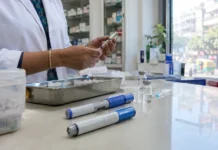
Both ongoing trials are evaluating Skyrizi in adults with active psoriatic arthritis. KEEPsAKE-1 recruited 964 patients who had an inadequate response or intolerance to at least one disease modifying anti-rheumatic drug (DMARD), while KEEPsAKE-2 included 444 patients who had an inadequate response or intolerance to biologic therapy and/or DMARDs. Participants were randomised to receive Skyrizi or placebo, administered by subcutaneous injection, for a period of 24 weeks. Besides the main goal of ACR20 at week 24, ranked secondary endpoints included change from baseline in the Health Assessment Questionnaire-Disability Index (HAQ-DI) and at least a 90% improvement on the Psoriasis Area Severity Index (PASI 90).
Over 50% achieve ACR20
Top-line results showed that 57% and 51% of Skyrizi-treated patients in KEEPsAKE-1 and KEEPsAKE-2, respectively, achieved ACR20 response at week 24, versus 34% and 27% of those on placebo. In addition, PASI 90 rates of 52% and 55% were seen in the Skyrizi groups of KEEPsAKE-1 and KEEPsAKE-2, respectively, whereas only 10% achieved that goal in the placebo arms. Further, in the KEEPsAKE-1 trial, there was a change of -0.31 from baseline on the HAQ-DI score for patients who received Skyrizi, versus a change of -0.11 for placebo. The corresponding changes in KEEPsAKE-2 were -0.22 and -0.05, respectively.
Serious adverse events occurred in 2.5% and 4% of patients given Skyrizi in KEEPsAKE-1 and KEEPsAKE-2, respectively, compared with 3.7% and 5.5% for placebo, while rates of serious infections were similar between treatment groups. In KEEPsAKE-1, there was one death in the Skyrizi arm, although this was not considered to be related to the study drug. There were no deaths reported in KEEPsAKE-2. AbbVie said full results from both KEEPsAKE studies will be presented at upcoming medical meetings and published in a peer-reviewed journal.
AbbVie is leading global development and commercialisation of Skyrizi under a 2016 partnership with Boehringer Ingelheim. The drug, which generated $435 million for AbbVie in the third quarter of 2020, was approved by regulators in the US and Europe in 2019 to treat adults with moderate-to-severe plaque psoriasis who are candidates for systemic therapy. It has also been cleared in Japan for the treatment of plaque psoriasis, generalised pustular psoriasis, erythrodermic psoriasis and psoriatic arthritis in adults who have an inadequate response to conventional therapies.