







Close
CDMO Safety Testing 2026
Novotech

South Korean Pharma Sector Attracts Despite Drug Nod Delays

Note* - All images used are for editorial and illustrative purposes only and may not originate from the original news provider or associated company.

Subscribe

- Never miss a story with notifications

- Gain full access to our premium content

- Browse free from any location or device.

Media Packs

Expand Your Reach With Our Customized Solutions Empowering Your Campaigns To Maximize Your Reach & Drive Real Results!

โ€“ Access the Media Pack Now

โ€“ Book a Conference Call

โ€“ Leave Message for Us to Get Back

Related stories

BeOne Signs $2B Trispecific Antibody Deal with Huahui Health

BeOne Medicines has entered into a high-value agreement with...

Quantum Machine Learning in Pharma Research Growth

The convergence of artificial intelligence and quantum processing is opening new avenues for rapid discovery and innovation within the life sciences. By utilizing advanced mathematical models that operate across multi-dimensional datasets, researchers can now identify complex biological patterns and predict molecular behaviors with a speed that surpasses traditional computational methods. This transformation is accelerating the development of novel therapies and providing deeper insights into disease mechanisms, fundamentally altering the trajectory of pharmaceutical research and development.

Quantum Sensors Enabling Advanced Drug Diagnostics

The landscape of medical diagnostics is being reshaped by the introduction of sensing technologies that operate with atomic-level sensitivity. By providing high-fidelity measurements and real-time data, these tools allow for the detection of subtle biological changes and chemical markers that were previously invisible to conventional equipment. This advancement is enhancing the precision of drug testing and clinical monitoring, leading to earlier disease detection and more effective therapeutic interventions across the global healthcare spectrum.
- Advertisement -

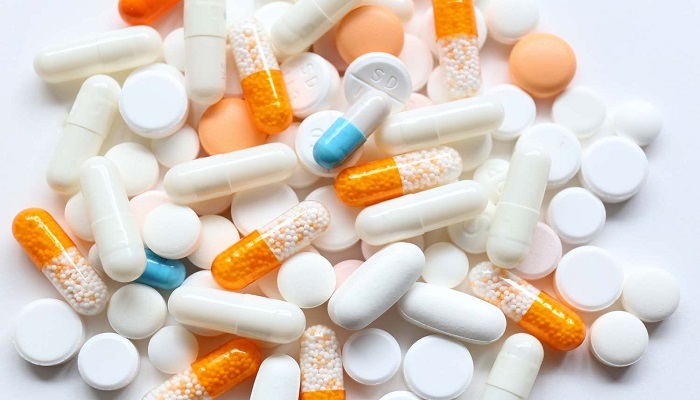
According to a survey from Fitch Solutions, South Korea’s pharmaceutical market attractiveness is expected to stay strong despite ongoing concerns about the country’s slow pace of drug authorizations.

According to the analysis, the pharmaceutical business will remain competitive due to high per-capita spending on drugs and a highly creative R&D environment.

Fitch stated that the government’s support for the pharmaceutical industry, as demonstrated by the recent announcement of new legislation to improve medicine accessibility, will be beneficial for South Korea’s long-term potential as an attractive proposition for pharmaceutical firms.

Pharmaceutical sales are expected to expand at a 4.3% compound annual growth rate (CAGR) in local market terms, growing from KRW28.5 trillion in 2022 to KRW35.3 trillion by 2027, according to Fitch. It equates to a $32.1 billion gain overall.

It has been suggested that the predicted extension of the schedule for pharmaceutical approval in South Korea is likely to continue.

According to the Ministry of Food and Drug Safety (MFDS), the review length for 235 medications licensed in South Korea between 2011 and 2020 climbed to 353 days in 2020 from 276 days in 2011, as per a research study completed in 2022 by the Korea Research-based Pharma Industry Association (KRPIA).

The US Food and Drug Administration, European Medicines Agency, and Japanโ€™s Pharmaceuticals and Medical Devices Agency have decreased the timeframe for new drug approval and review by ten, five, and three days, respectively, between 2011 and 2020.

According to Fitch, patients in South Korea continue to be at a disadvantage in terms of the number of novel medications available, although gradual improvements will continue to close the gap.

Despite this, it is anticipated that South Korea will persist in upholding applicable regulations to augment the availability of medication and guarantee that progressive products are suitably appraised.

In November 2022, the South Korean Ministry of Food and Drug Safety (MFDS) declared the commencement of a new program, known as Global Innovative Products on Fast Track (GIFT), which is analogous to the breakthrough therapy designation system of the United States Food and Drug Administration (FDA).

In the span of two years, the Korean Fast Track system has granted expedited authorization to more than 20 medications, among them being treatments for the orphan, cancer, and COVID-19 diseases, as reported by Fitch.
Latest stories

Related stories

BeOne Signs $2B Trispecific Antibody Deal with Huahui Health

BeOne Medicines has entered into a high-value agreement with...

Quantum Machine Learning in Pharma Research Growth

The convergence of artificial intelligence and quantum processing is opening new avenues for rapid discovery and innovation within the life sciences. By utilizing advanced mathematical models that operate across multi-dimensional datasets, researchers can now identify complex biological patterns and predict molecular behaviors with a speed that surpasses traditional computational methods. This transformation is accelerating the development of novel therapies and providing deeper insights into disease mechanisms, fundamentally altering the trajectory of pharmaceutical research and development.

Quantum Sensors Enabling Advanced Drug Diagnostics

The landscape of medical diagnostics is being reshaped by the introduction of sensing technologies that operate with atomic-level sensitivity. By providing high-fidelity measurements and real-time data, these tools allow for the detection of subtle biological changes and chemical markers that were previously invisible to conventional equipment. This advancement is enhancing the precision of drug testing and clinical monitoring, leading to earlier disease detection and more effective therapeutic interventions across the global healthcare spectrum.

Quantum Computing Optimizing Pharma Supply Chains

The global distribution of pharmaceutical products is facing unprecedented challenges that demand a new level of logistical precision and resilience. By utilizing advanced analytical models, companies can now navigate complex international networks with greater efficiency, ensuring that temperature-sensitive medicines and life-saving therapies reach their destinations without delay. This evolution toward a more intelligent and responsive supply chain is critical for maintaining public health and responding effectively to emerging medical needs on a global scale.

Subscribe

- Never miss a story with notifications

- Gain full access to our premium content

- Browse free from any location or device.

Media Packs

Expand Your Reach With Our Customized Solutions Empowering Your Campaigns To Maximize Your Reach & Drive Real Results!

โ€“ Access theMedia Pack Now

โ€“ Book a Conference Call

โ€“ Leave Message for Us to Get Back

Translate ยป