











Close
Smartlab Europe
Inizio Ignite

AGC Biologics Heidelberg Facility to Further Supply Plasmid DNA for COVID-19 Vaccine

Note* - All images used are for editorial and illustrative purposes only and may not originate from the original news provider or associated company.

Subscribe

- Never miss a story with notifications

- Gain full access to our premium content

- Browse free from any location or device.

Media Packs

Expand Your Reach With Our Customized Solutions Empowering Your Campaigns To Maximize Your Reach & Drive Real Results!

– Access the Media Pack Now

– Book a Conference Call

Leave Message for Us to Get Back

Related stories

Predictive Analytics in Labs: Driving Smarter Decisions in Pharma

The application of statistical algorithms and machine learning techniques to historical research data is enabling scientists to anticipate experimental outcomes and identify emerging patterns with unprecedented accuracy. By moving from a retrospective view of data to a forward-looking perspective, research facilities can optimize their strategies and focus their resources on the most promising therapeutic avenues.

IoT Applications Enhancing Laboratory Operational Efficiency

The integration of internet-connected sensors and smart devices is fundamentally reshaping how research facilities monitor their environment and manage their instrumentation. By providing a constant stream of real-time data, these technological advancements allow for a more granular level of control over laboratory operations, ensuring that the delicate conditions required for high-stakes pharmaceutical research are maintained with absolute precision.

Optimizing Pharma Workflows with Integrated Lab Software Solutions

The modern laboratory environment requires a unified approach to data management and process control to remain competitive. By bridging the gap between disparate instruments and legacy databases, research facilities can eliminate operational silos and create a high-speed environment where innovation is no longer hindered by fragmented digital infrastructure.
- Advertisement -

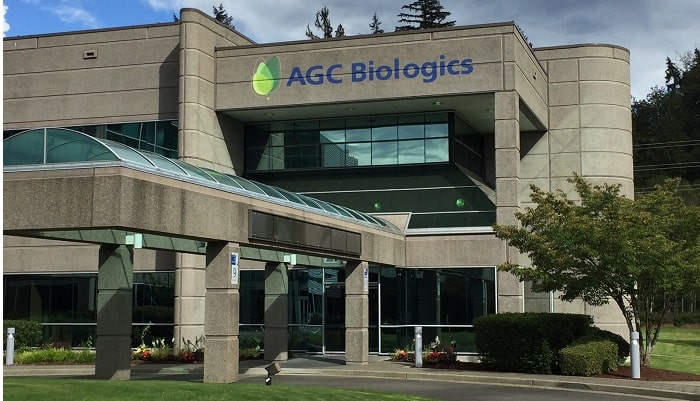
AGC Biologics, a leading global Biopharmaceutical Contract Development and Manufacturing Organization (CDMO), has announced its partnership with BioNTech SE to further supply Plasmid DNA (pDNA) starting material for the Pfizer-BioNTech COVID-19 vaccine, at AGC’s Heidelberg, Germany facility.

“We are honored that BioNTech has entrusted us to become part of their global supply network in an effort to make the vaccine available to as many people as possible around the world,” says AGC Biologics Chief Business Officer, Mark Womack. “We are very proud of our efforts to provide our global customers with the essential materials needed to rapidly deliver vaccines in the fight against the COVID-19 pandemic.”

AGC Biologics will manufacture and supply BioNTech with pDNA starting material, an essential component of BioNTech’s mRNA-based vaccine manufacturing process.

“The team at Heidelberg is enthusiastically embracing this important project with BioNTech,” says AGC Biologics General Manager, Heidelberg, Dieter Kramer. “Every team member has a deep sense of pride in our COVID-19 teams and we look forward to supporting BioNTech in the production of their mRNA-based COVID-19 vaccine with Plasmid DNA.”

AGC Biologics’ Heidelberg facility has over 20 years of experience delivering a very wide range of microbial programs for our customers. In addition, the site is AGC’s Center of Excellence for Plasmid DNA (pDNA) production, as part of their end-to-end Cell and Gene Therapy offering.

About AGC Biologics:
AGC Biologics is a leading global biopharmaceutical Contract Development and Manufacturing Organization (CDMO) with a strong commitment to deliver the highest standard of service as we work side-by-side with our clients and partners, every step of the way. We provide world-class development and manufacture of mammalian and microbial-based therapeutic proteins, plasmid DNA (pDNA), viral vectors and genetically engineered cells. Our global network spans the U.S., Europe and Asia, with cGMP-compliant facilities in Seattle, Washington; Boulder, Colorado; Copenhagen, Denmark; Heidelberg, Germany; Milan, Italy; and Chiba, Japan and we currently employ more than 1,700 employees worldwide. Our commitment to continuous innovation fosters the technical creativity to solve our clients’ most complex challenges, including specialization in fast-track projects and rare diseases.

About the Vaccine:
The Pfizer-BioNTech COVID-19 Vaccine, which is based on BioNTech proprietary mRNA technology, was developed by both BioNTech and Pfizer. BioNTech is the Marketing Authorization Holder in the European Union, and the holder of emergency use authorizations or equivalents in the United States (jointly with Pfizer), United Kingdom, Canada and other countries in advance of a planned application for full marketing authorizations in these countries.


Latest stories

Related stories

Predictive Analytics in Labs: Driving Smarter Decisions in Pharma

The application of statistical algorithms and machine learning techniques to historical research data is enabling scientists to anticipate experimental outcomes and identify emerging patterns with unprecedented accuracy. By moving from a retrospective view of data to a forward-looking perspective, research facilities can optimize their strategies and focus their resources on the most promising therapeutic avenues.

IoT Applications Enhancing Laboratory Operational Efficiency

The integration of internet-connected sensors and smart devices is fundamentally reshaping how research facilities monitor their environment and manage their instrumentation. By providing a constant stream of real-time data, these technological advancements allow for a more granular level of control over laboratory operations, ensuring that the delicate conditions required for high-stakes pharmaceutical research are maintained with absolute precision.

Optimizing Pharma Workflows with Integrated Lab Software Solutions

The modern laboratory environment requires a unified approach to data management and process control to remain competitive. By bridging the gap between disparate instruments and legacy databases, research facilities can eliminate operational silos and create a high-speed environment where innovation is no longer hindered by fragmented digital infrastructure.

Advanced Robotics Driving Pharmaceutical Lab Efficiency

The implementation of high-speed robotic systems and automated handling technologies is fundamentally altering the productivity of modern research facilities. By taking over repetitive physical tasks and operating with sub-millimeter precision, these mechanical innovators are allowing scientific staff to redirect their cognitive energy toward complex analysis and the development of breakthrough therapies.

Subscribe

- Never miss a story with notifications

- Gain full access to our premium content

- Browse free from any location or device.

Media Packs

Expand Your Reach With Our Customized Solutions Empowering Your Campaigns To Maximize Your Reach & Drive Real Results!

– Access theMedia Pack Now

– Book a Conference Call

Leave Message for Us to Get Back

Translate »