













NeoGenomics Europe S.A. Opens its Doors in Rolle, Switzerland Laboratory Hosting Business Leaders, Dignitaries and Local Government Officials

Note* - All images used are for editorial and illustrative purposes only and may not originate from the original news provider or associated company.

Related stories

Managing Quality and Regulatory Risks in Pharmaceutical Technology Transfer

Technology transfer moves more than manufacturing instructions. It moves process knowledge, supplier dependencies, labeling requirements, packaging specifications, and the evidence needed to demonstrate control. For medical device manufacturers, including those supporting drug-device combination products, these interfaces can become recurring sources of compliance gaps during site transitions, acquisitions, and remediation. The central problem is often not a missing procedure. It is a quality system that allows connected activities to change independently. A label revision may be approved while packaging artwork, supplier instructions, or production-system data still reflect an obsolete version. Staying inspection-ready requires manufacturers to manage these dependencies as one controlled system. Why Compliance Gaps Keep Recurring Findings are treated as documentation defects Revising a procedure can resolve an immediate discrepancy without changing the behavior that caused it. If unclear decision rights, weak escalation, or ineffective training remain, the same failure may surface elsewhere. Corrective and preventive action should distinguish the observed finding from its underlying cause and establish how effectiveness will be demonstrated. Ownership is divided across connected functions Quality, Regulatory Affairs, labeling, packaging engineering, operations, suppliers, and digital-system owners often maintain separate workflows. Each team may complete its assigned task while an interface remains uncontrolled. For example, changing an instruction for use can affect packaging configuration, translations, technical documentation, inventory disposition, and release controls. Transitions expose unresolved weaknesses Acquisitions and site transfers can introduce conflicting procedures, incomplete knowledge transfer, or different assumptions about validated processes. Regulatory changes add further demands. When these events coincide with CAPA or change-control backlogs, teams may prioritize administrative closure over risk reduction. Without a coordinated impact assessment, local fixes can create new gaps downstream. Establish the Regulatory Baseline Inspection readiness starts with knowing which requirements apply to the product, activity, and market. Pharmaceutical, device, and combination-product obligations are not interchangeable; transfer planning should identify the applicable requirements rather than assume one quality framework covers every operation. According to FDA’s Quality Management System Regulation overview and FAQs, the QMSR became effective on February 2, 2026, incorporates ISO 13485:2016 by reference, and introduced the updated device inspection process under Compliance Program 7382.850. ISO 13485 certification does not exempt a manufacturer from FDA inspection or guarantee compliance with FDA requirements. For devices marketed in the European Union, Regulation (EU) 2017/745, Annex I, Section 23, provides the primary requirements for information supplied with devices, including labels and instructions for use. Teams should assess the applicable provisions alongside relevant language, product-specific, and market requirements. A labeling review should therefore evaluate required content and consistency with the device’s intended purpose and supporting documentation—not merely artwork accuracy. How to Identify the Real Gaps Begin with a cross-functional assessment that follows actual product and information flows. Select representative transfers, label changes, supplier changes, and CAPAs, then trace each from initiation through implementation and effectiveness review. Map dependencies: Identify affected specifications, suppliers, packaging components, systems, validation activities, and training. Compare records with practice: Check whether approved procedures match what operators and reviewers actually do. Test traceability: Follow a requirement through technical documentation, labeling, production instructions, and release evidence. Examine recurrence: Look for repeated deviations, reopened actions, overdue changes, and findings shared across sites. Assess capacity: Determine whether qualified owners have enough time and authority to complete corrective work. Prioritize gaps by potential patient or user harm, regulatory impact, likelihood of recurrence, and detectability. Document the rationale; an old overdue item is not automatically more important than a newly identified high-risk weakness. Align Quality, Labeling, Packaging, and Change Control Create a coordinated remediation plan with one accountable owner for each action, named contributors, acceptance criteria, and required evidence. Separate immediate containment from systemic correction. Containment might prevent obsolete labels from being issued; correction might redesign approval and implementation controls so obsolete versions cannot return. Use change control as the integration point. Before approval, evaluate effects on regulatory submissions or notifications, technical documentation, supplier controls, packaging performance, validation, electronic master data, inventory, and training. Record both identified impacts and justified decisions that particular activities are unaffected. During technology transfer, define readiness gates before production or release responsibilities move. These should address the transfer of process knowledge, acceptance criteria, receiving-site capability, required qualification or validation, approved documents, and personnel competence. The appropriate evidence depends on the product and process; a generic checklist cannot replace a documented assessment. Finally, verify implementation where the work happens. Confirm that current instructions are available, suppliers received approved requirements, systems contain correct versions, and affected personnel can perform their tasks. A signed approval is not evidence that every downstream change took effect. Mistakes That Undermine Inspection Readiness Closing CAPAs on task completion alone: Effectiveness checks should test whether the underlying failure has been controlled. Updating labels in isolation: Assess packaging, supplier, system, documentation, and inventory consequences. Counting closures instead of evidence: Dashboards need defensible records behind their status indicators. ...

State of API & Peptide CDMO Capacity

Pharmaceutical companies planning peptide or complex small-molecule launches are...

What Goes Into Synthetic Urine? The Chemistry Behind Replicating a Biological Fluid

Synthetic urine sounds simple until you look closely at...
- Advertisement -

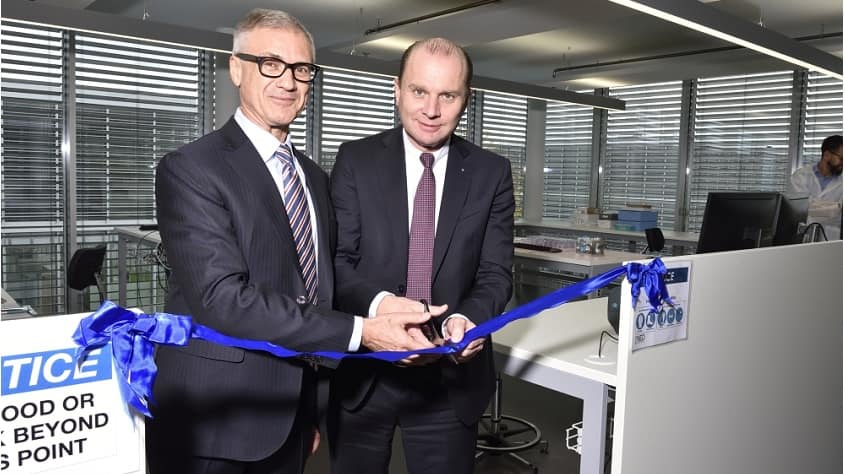
NeoGenomics Inc , a leading global specialty oncology testing laboratory, opened the doors of its new Rolle, Switzerland facility on Wednesday, November 8th to bring its unique Pharma Services offering to the global research community.

Rolle was chosen as NeoGenomics’ European Headquarters because of the existing talent pool, favorable business environment, and proximity to leading academic institutions in Geneva and Lausanne.

The event kicked off with a ribbon-cutting ceremony and remarks by NeoGenomics’ Chairman and CEO, Douglas VanOort, and a brief presentation of NeoGenomics’ oncology testing services by Dr. Steven Brodie and Dr. Gina Wallar. There were personalized tours of the facility by NeoGenomics’ leadership, finishing off with meetings with local government officials. The open house kicks off NeoGenomics’ official plans to provide esoteric testing for the global oncology research community.

NeoGenomics is absolutely delighted to open our first specialized oncology laboratory outside the United States here in Rolle,” said Douglas VanOort. “The canton of Vaud is known for its growing life sciences industry, and we are very appreciative of the opportunity to join this vibrant community. We also appreciate the warm welcome from governmental officials here, and look forward to many years of growth for this new facility.”

Mr. Philippe Leuba, Minister of Economic Affairs, Innovation and Sport, State of Vaud stated “The launch of NeoGenomics’ activities in Rolle follows the announcement of the Incyte manufacturing plant in Yverdon-les-Bains yesterday. More than ever, our canton, and more generally the entire Health Valley of Western Switzerland, is profiling itself as a leading center of scientific and industrial expertise in Europe. The presence of more than 20,000 people active in the field of life sciences in the canton of Vaud offers a unique and privileged access to a pool of talents necessary for the development of companies and their innovations.”

About NeoGenomics, Inc.
NeoGenomics, Inc. specializes in cancer genetics testing and information services. The Company provides one of the most comprehensive oncology-focused testing menus in the world for physicians to help them diagnose and treat cancer. The Company’s Pharma Services Division serves pharmaceutical clients in clinical trials and drug development.

Headquartered in Fort Myers, FL, NeoGenomics operates CLIA certified laboratories in Aliso Viejo and Fresno, California; Tampa and Fort Myers, Florida; Houston, Texas and Nashville, Tennessee. NeoGenomics serves the needs of pathologists, oncologists, academic centers, hospital systems, integrated service delivery networks, and managed care organizations throughout the United States.

NeoGenomics Europe S.A. Opens its Doors in Rolle, Switzerland Laboratory Hosting Business Leaders, Dignitaries and Local Government Officials

NeoGenomics, Inc.
Steven C. Jones
Director of Investor Relations
(239) 325-2001
sjones@neogenomics.com

Never miss a pharmaceutical headline

The pharmaceutical industry moves fast – stay on top of it with our must - read briefings.

  • The top pharma and life sciences stories, straight to your inbox
  • The biggest news, features, interviews, and analysis
  • Dedicated coverage of the key developments driving the global pharmaceutical sector

Subscribe

- Never miss a story with notifications

- Gain full access to our premium content

- Browse free from any location or device.

Media Packs

Expand Your Reach With Our Customized Solutions Empowering Your Campaigns To Maximize Your Reach & Drive Real Results!

– Access the Media Pack Now

– Book a Conference Call

– Leave Message for Us to Get Back

Latest stories

Related stories

Managing Quality and Regulatory Risks in Pharmaceutical Technology Transfer

Technology transfer moves more than manufacturing instructions. It moves process knowledge, supplier dependencies, labeling requirements, packaging specifications, and the evidence needed to demonstrate control. For medical device manufacturers, including those supporting drug-device combination products, these interfaces can become recurring sources of compliance gaps during site transitions, acquisitions, and remediation. The central problem is often not a missing procedure. It is a quality system that allows connected activities to change independently. A label revision may be approved while packaging artwork, supplier instructions, or production-system data still reflect an obsolete version. Staying inspection-ready requires manufacturers to manage these dependencies as one controlled system. Why Compliance Gaps Keep Recurring Findings are treated as documentation defects Revising a procedure can resolve an immediate discrepancy without changing the behavior that caused it. If unclear decision rights, weak escalation, or ineffective training remain, the same failure may surface elsewhere. Corrective and preventive action should distinguish the observed finding from its underlying cause and establish how effectiveness will be demonstrated. Ownership is divided across connected functions Quality, Regulatory Affairs, labeling, packaging engineering, operations, suppliers, and digital-system owners often maintain separate workflows. Each team may complete its assigned task while an interface remains uncontrolled. For example, changing an instruction for use can affect packaging configuration, translations, technical documentation, inventory disposition, and release controls. Transitions expose unresolved weaknesses Acquisitions and site transfers can introduce conflicting procedures, incomplete knowledge transfer, or different assumptions about validated processes. Regulatory changes add further demands. When these events coincide with CAPA or change-control backlogs, teams may prioritize administrative closure over risk reduction. Without a coordinated impact assessment, local fixes can create new gaps downstream. Establish the Regulatory Baseline Inspection readiness starts with knowing which requirements apply to the product, activity, and market. Pharmaceutical, device, and combination-product obligations are not interchangeable; transfer planning should identify the applicable requirements rather than assume one quality framework covers every operation. According to FDA’s Quality Management System Regulation overview and FAQs, the QMSR became effective on February 2, 2026, incorporates ISO 13485:2016 by reference, and introduced the updated device inspection process under Compliance Program 7382.850. ISO 13485 certification does not exempt a manufacturer from FDA inspection or guarantee compliance with FDA requirements. For devices marketed in the European Union, Regulation (EU) 2017/745, Annex I, Section 23, provides the primary requirements for information supplied with devices, including labels and instructions for use. Teams should assess the applicable provisions alongside relevant language, product-specific, and market requirements. A labeling review should therefore evaluate required content and consistency with the device’s intended purpose and supporting documentation—not merely artwork accuracy. How to Identify the Real Gaps Begin with a cross-functional assessment that follows actual product and information flows. Select representative transfers, label changes, supplier changes, and CAPAs, then trace each from initiation through implementation and effectiveness review. Map dependencies: Identify affected specifications, suppliers, packaging components, systems, validation activities, and training. Compare records with practice: Check whether approved procedures match what operators and reviewers actually do. Test traceability: Follow a requirement through technical documentation, labeling, production instructions, and release evidence. Examine recurrence: Look for repeated deviations, reopened actions, overdue changes, and findings shared across sites. Assess capacity: Determine whether qualified owners have enough time and authority to complete corrective work. Prioritize gaps by potential patient or user harm, regulatory impact, likelihood of recurrence, and detectability. Document the rationale; an old overdue item is not automatically more important than a newly identified high-risk weakness. Align Quality, Labeling, Packaging, and Change Control Create a coordinated remediation plan with one accountable owner for each action, named contributors, acceptance criteria, and required evidence. Separate immediate containment from systemic correction. Containment might prevent obsolete labels from being issued; correction might redesign approval and implementation controls so obsolete versions cannot return. Use change control as the integration point. Before approval, evaluate effects on regulatory submissions or notifications, technical documentation, supplier controls, packaging performance, validation, electronic master data, inventory, and training. Record both identified impacts and justified decisions that particular activities are unaffected. During technology transfer, define readiness gates before production or release responsibilities move. These should address the transfer of process knowledge, acceptance criteria, receiving-site capability, required qualification or validation, approved documents, and personnel competence. The appropriate evidence depends on the product and process; a generic checklist cannot replace a documented assessment. Finally, verify implementation where the work happens. Confirm that current instructions are available, suppliers received approved requirements, systems contain correct versions, and affected personnel can perform their tasks. A signed approval is not evidence that every downstream change took effect. Mistakes That Undermine Inspection Readiness Closing CAPAs on task completion alone: Effectiveness checks should test whether the underlying failure has been controlled. Updating labels in isolation: Assess packaging, supplier, system, documentation, and inventory consequences. Counting closures instead of evidence: Dashboards need defensible records behind their status indicators. ...

State of API & Peptide CDMO Capacity

Pharmaceutical companies planning peptide or complex small-molecule launches are...

What Goes Into Synthetic Urine? The Chemistry Behind Replicating a Biological Fluid

Synthetic urine sounds simple until you look closely at...

Danaher Prepares to Introduce Advanced AI-Powered Laboratory

In a significant step for pharmaceutical research, Danaher has...

Subscribe

- Never miss a story with notifications

- Gain full access to our premium content

- Browse free from any location or device.

Media Packs

Expand Your Reach With Our Customized Solutions Empowering Your Campaigns To Maximize Your Reach & Drive Real Results!

– Access theMedia Pack Now

– Book a Conference Call

– Leave Message for Us to Get Back

Translate »