












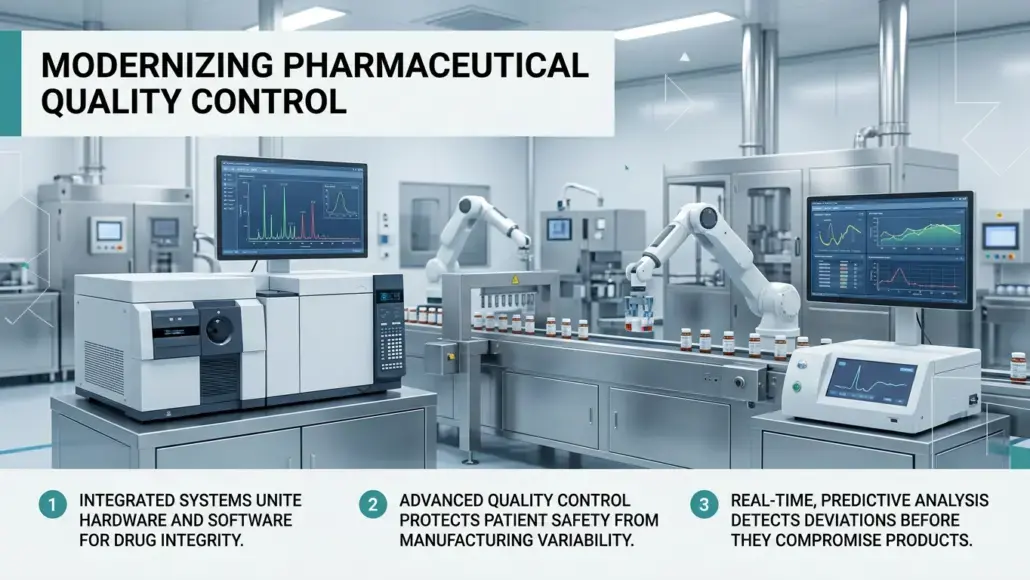
Maintaining the integrity of drug products requires a sophisticated integration of hardware, software, and rigorous protocol. Within the modern production environment, pharmaceutical quality control stands as the definitive barrier between manufacturing variability and patient safety. The evolution of analytical instrumentation has transitioned from retrospective batch testing to real-time, predictive analysis, allowing manufacturers to identify potential deviations before they compromise an entire production run. This shift is driven by the necessity to adhere to stringent regulatory frameworks, such as the United States Food and Drug Administration (FDA) 21 CFR Part 11 and the European Medicines Agency (EMA) guidelines, which demand absolute data integrity and traceability. The rigor of these standards ensures that every chemical entity produced maintains a consistent therapeutic profile, minimizing the risks associated with dosage errors or the presence of unwanted degradation products.
The complexity of modern drug formulations, particularly those involving multi-component delivery systems, necessitates a granular approach to analytical chemistry. Instruments must be capable of resolving closely related substances with high precision, often at the limits of detection. This level of detail is essential for verifying the absence of genotoxic impurities or residual solvents that could pose a long-term health risk. As the industry moves toward more personalized therapies, the role of rapid, reliable analysis becomes even more pronounced. The commitment to maintaining a state of control over the analytical process is a fundamental requirement for any organization seeking to lead in the competitive pharmaceutical sector.
Integration of Advanced Chromatography in Compliance Workflows
Liquid chromatography, particularly High-Performance Liquid Chromatography (HPLC) and Ultra-High Performance Liquid Chromatography (UHPLC), remains the cornerstone of modern pharmaceutical quality control. These systems allow for the precise separation, identification, and quantification of each component within a drug formulation. The advancement of column technology, utilizing sub-two-micron particles, has significantly increased throughput while reducing solvent consumption, aligning with both operational efficiency and sustainability goals. By implementing these high-resolution systems, laboratories can detect trace levels of impurities or degradation products that might otherwise go unnoticed, ensuring that every dose meets the specified potency and purity profiles required for market approval.
The evolution of stationary phase chemistry has allowed for more specialized separations, such as those required for chiral molecules or large biomolecules. Hydrophilic Interaction Liquid Chromatography (HILIC) and Reversed-Phase (RP) systems are frequently used in tandem to provide a comprehensive view of the sample composition. This multidimensional approach is critical for the characterization of biologics, where the complexity of the molecule requires multiple orthogonal techniques to verify its identity and purity. The ability to automate these separations through high-precision gradient pumps and autosamplers ensures that the results are reproducible across different laboratories and analysts, which is a vital aspect of quality assurance protocols.
The digitalization of chromatography data systems (CDS) has further enhanced the reliability of these analytical processes. Modern CDS platforms provide automated audit trails and electronic signatures, which are essential for maintaining a high standard of pharmaceutical quality control. These systems minimize human intervention in data handling, thereby reducing the risk of transcription errors or intentional data manipulation. As regulatory bodies increase their scrutiny of data lifecycle management, the role of automated, integrated chromatography solutions becomes even more critical in demonstrating a state of control over the manufacturing process. These digital architectures are designed to be scaleable, allowing for the management of vast amounts of data across global laboratory networks while maintaining a single source of truth for all analytical results.
Spectroscopic Innovations for Real-Time Process Monitoring
The implementation of Process Analytical Technology (PAT) has been significantly bolstered by advancements in vibrational spectroscopy, including Near-Infrared (NIR) and Raman spectroscopy. Unlike traditional methods that require sample preparation and offline analysis, these spectroscopic techniques enable non-destructive, real-time monitoring of critical quality attributes (CQAs) directly on the production line. For instance, NIR spectroscopy is frequently utilized for the rapid identification of raw materials upon arrival at the facility, as well as for monitoring moisture content and blend uniformity during the granulation and mixing stages. This capability reduces the lead time for batch release and minimizes the need for expensive, time-consuming laboratory testing.
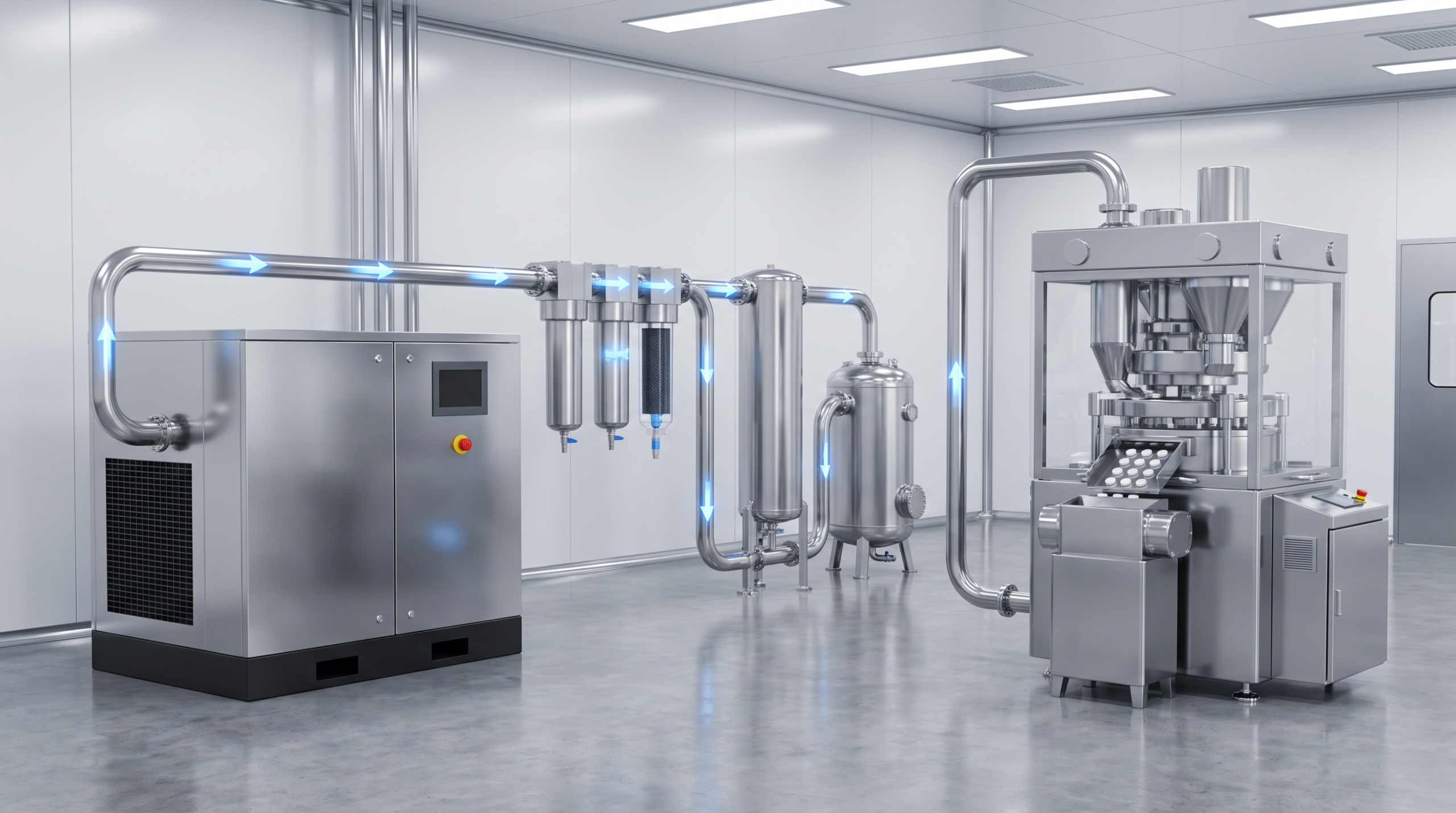
Raman spectroscopy offers unique advantages in the analysis of aqueous solutions and the characterization of polymorphic forms of active pharmaceutical ingredients (APIs). Because Raman signals are relatively insensitive to water, it is an ideal tool for monitoring crystallization processes and biopharmaceutical fermentation. By integrating these advanced instruments into the manufacturing infrastructure, companies can achieve a more granular understanding of their processes. This depth of insight is fundamental to the successful execution of pharmaceutical quality control, moving away from a “test-to-release” mentality toward a framework where quality is built into the process itself. The deployment of fiber-optic probes allows for the remote placement of the analyzer, protecting the sensitive instrumentation from the harsh conditions of the production floor while providing continuous data streams.
Advanced laboratory instruments supporting pharmaceutical research and testing often provide the preliminary data needed to calibrate mass spectrometry methods for late-stage production. In the context of quality assurance protocols, MS is increasingly utilized for the detection of genotoxic impurities, such as nitrosamines, which have recently been the subject of significant regulatory focus. The ability to quantify these substances at parts-per-billion (ppb) levels ensures that manufacturers can proactively address contamination risks and avoid costly product recalls. The hyphenation of chromatography with mass spectrometry (LC-MS or GC-MS) provides a multidimensional view of the sample, offering confidence in the chemical identity and quantity of the drug components.
The adoption of mass spectrometry in the quality control setting has been facilitated by the development of compact, easy-to-use mass detectors that can be integrated into standard HPLC stacks. These systems do not require the extensive expertise of a dedicated mass spectroscopist, making the technology accessible to a wider range of laboratory personnel. By providing mass confirmation for every peak in a chromatogram, these detectors add an extra layer of certainty to the identification process. This is particularly valuable in the analysis of unknown impurities or when verifying the presence of specific degradation products during stability studies. The integration of MS technology into routine workflows represents a significant leap forward in the analytical capabilities of the pharmaceutical industry.
Automation and Robotic Sampling in High-Throughput Environments
The pressure to increase output while maintaining stringent safety standards has led to the widespread adoption of automation within the quality control laboratory. Automated sample preparation systems can handle repetitive tasks such as weighing, dilution, and filtration with a level of precision and consistency that exceeds manual operations. This reduction in manual handling is a key factor in optimizing quality assurance protocols, as it eliminates one of the most common sources of analytical variability. Robotics can also be deployed to manage the transport of samples between different analytical stations, ensuring that testing schedules are maintained without interruption.
The implementation of laboratory information management systems (LIMS) and electronic laboratory notebooks (ELN) facilitates the flow of information from the sample intake stage to final reporting. These digital tools provide several benefits for large-scale operations:
- Centralized data storage for all analytical results, facilitating rapid trend analysis.
- Automated alerts for any results that fall outside of specified limits (OOS), allowing for immediate investigation.
- Integration with enterprise resource planning (ERP) systems to synchronize quality release with supply chain requirements.
- Standardized testing protocols across multiple sites to ensure global product consistency and regulatory compliance.
- Automated report generation that reduces the administrative burden on laboratory staff and speeds up the release process.
By using these automated workflows, pharmaceutical organizations can significantly improve their operational resilience. The ability to process vast quantities of data with minimal latency allows for faster decision-making and more agile responses to manufacturing challenges. The use of collaborative robots (cobots) that can work safely alongside humans is becoming more common, providing a flexible solution for tasks that are difficult to fully automate. These systems are designed to be easily reprogrammed, allowing the laboratory to adapt to new testing requirements as the product portfolio evolves.
Digital transformation also extends to the maintenance and calibration of the instruments themselves. Smart instruments can now monitor their own health and alert technicians when service is required, preventing unexpected failures during critical testing cycles. This proactive approach to instrument management ensures that the laboratory remains operational and that the data produced is always of the highest quality. The use of remote diagnostics allows service engineers to troubleshoot issues from a distance, reducing the need for on-site visits and minimizing downtime. These advancements contribute to a more efficient and reliable analytical environment, supporting the overall goals of the quality assurance protocols function.
Regulatory Evolution and Future Analytical Trends
The regulatory environment is continuously shifting toward more data-centric and risk-based approaches. Regulatory agencies are encouraging the adoption of continuous manufacturing, which necessitates an even higher level of analytical integration. In a continuous production environment, quality assurance protocols must be performed at every stage of the process, rather than just at the end. This requires the development of even more durable sensors and the application of advanced data analytics to interpret the massive streams of information generated during production. Artificial intelligence and machine learning are beginning to play a role in this area, offering the potential to predict quality outcomes based on historical data patterns.
The move toward continuous manufacturing also requires a fundamental change in the way that batches are defined and released. Instead of testing a discrete quantity of material at the end of a run, manufacturers must demonstrate that the process remained in a state of control throughout its entire duration. This involves the use of sophisticated statistical process control (SPC) techniques to monitor the stability of the system in real time. The integration of advanced analytical instruments into this framework is essential for providing the data needed to support these new manufacturing models. As these technologies become more widely adopted, they will enable a more responsive and efficient pharmaceutical supply chain.
The emergence of personalized medicine and decentralized manufacturing poses new challenges for traditional quality control models. When drugs are produced in small batches for specific patients, the time and cost associated with traditional testing become prohibitive. This necessitates the development of “lab-on-a-chip” technologies and portable analytical devices that can provide rapid, reliable results at the point of care. These miniaturized systems must maintain the same level of accuracy and precision as their benchtop counterparts while being simple enough for non-experts to operate. As these technologies mature, they will become integral to the broader framework of quality assurance protocols, allowing for a more flexible approach to drug safety.
Looking into the future, the use of virtual reality (VR) and augmented reality (AR) in the training of laboratory personnel is expected to become more prevalent. These tools can provide immersive, hands-on training for complex analytical procedures without the risk of damaging expensive equipment or wasting valuable reagents. This will help to address the growing shortage of skilled analytical chemists and ensure that laboratory staff are always up to date with the latest technologies. The commitment to continuous improvement in analytical methodology remains the most effective strategy for managing the complexities of modern drug manufacturing and protecting public health. By embracing these innovative solutions, the pharmaceutical industry can continue to deliver life-saving therapies with the highest possible level of assurance.