







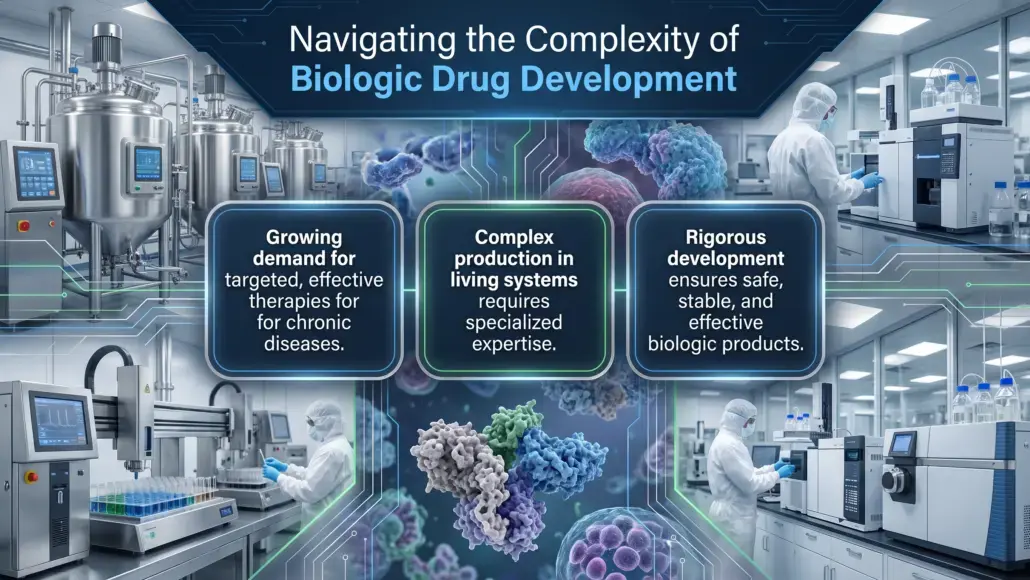

The pharmaceutical industry is experiencing a profound expansion in the biologic sector, driven by the need for more targeted and effective therapies for chronic diseases. Unlike small molecules, biologics are produced in living systems, which introduces a high degree of complexity in both discovery and manufacturing. This complexity necessitates a rigorous approach to large molecule development supporting complex biologic drug programs to ensure that products are safe, stable, and effective. The heterogeneity of large molecules, such as monoclonal antibodies and fusion proteins, requires extensive analytical characterization to monitor post-translational modifications that can affect therapeutic activity. As pipelines shift toward multi specific antibodies and complex proteins, the demand for sophisticated engineering and production platforms continues to rise.
Success in this field depends on the ability to maintain consistency across the entire development life cycle. Even minor changes in the manufacturing environment can lead to significant differences in the final product’s quality profile. Therefore, developers are focusing on integrated data management and real time monitoring to maintain strict control over bioreactor conditions. When large molecule development supporting complex biologic drug programs is managed with this level of oversight, the risk of batch failure is minimized, and the path to commercialization becomes more predictable. The focus is shifting from simple yield optimization to a holistic understanding of the relationship between process parameters and product quality attributes. This scientific depth is essential for managing the technical challenges inherent in biologic production.
Optimizing cell line development for high yield antibody production
The foundation of any successful biologic program is a stable and productive cell line. Researchers prioritize the selection of host cells that can consistently express the target protein with the desired quality attributes. Chinese Hamster Ovary cells remain the industry standard due to their ability to perform human like glycosylation and their adaptability to large scale suspension culture. The process of cell line development involves the transfection of host cells with the gene of interest, followed by rigorous screening to identify the highest producing clones. By utilizing automated platforms for single cell cloning and early stage screening, organizations can reduce the time required to establish a lead cell bank.
Advances in genetic engineering, including the use of CRISPR and other gene editing tools, have allowed for the creation of host cell lines with specific modifications. These modifications can enhance protein secretion, improve folding efficiency, or optimize glycosylation patterns. When the goal is to improve development efficiency, these engineered cell lines provide a significant advantage by reducing the need for extensive process optimization later in development. The stability of the cell line over multiple generations is also a critical consideration, as any genetic drift can impact the quality of the final product. Thorough characterization of the cell bank ensures that the production process remains consistent throughout the clinical and commercial phases of the program.
The integration of omics technologies, such as transcriptomics and proteomics, provides a deeper understanding of cell metabolism and its impact on protein expression. By analyzing the molecular profile of the cells under various culture conditions, researchers can identify the metabolic pathways that limit productivity. This knowledge allows for the design of specialized media and feed strategies that support high cell densities and prolonged viability. The resulting increase in titer not only improves the economics of the process but also simplifies the downstream purification steps. A well optimized cell line is thus a key enabler of a streamlined biologic development program.
Advanced analytical techniques for characterizing protein heterogeneity
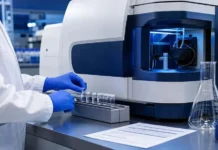
The inherent complexity of biologics means that the final product is often a mixture of different isoforms rather than a single chemical entity. Characterizing this heterogeneity is essential for ensuring the safety and efficacy of the drug. Mass spectrometry has emerged as the most powerful tool for analyzing the primary structure and post-translational modifications of large molecules. These modifications, such as glycosylation, phosphorylation, and deamidation, can significantly impact the half life and immunogenicity of the protein. By implementing high resolution mass spectrometry early in development, researchers can identify potential quality issues before they affect clinical outcomes.
In addition to primary structure analysis, the evaluation of higher order structure is critical for understanding protein folding and stability. Techniques such as circular dichroism and hydrogen-deuterium exchange mass spectrometry provide insights into the secondary and tertiary structure of the molecule. These methods are particularly important for detecting the presence of aggregates, which can cause adverse immune reactions in patients. When large molecule development supporting complex biologic drug programs is the objective, maintaining the structural integrity of the protein through the formulation and filling process is a primary concern. Analytical scientists must develop rigorous methods that can detect even subtle changes in the protein’s conformation.
The use of multi attribute method (MAM) testing is becoming more common as a way to replace multiple traditional assays with a single, comprehensive analysis. MAM allows for the simultaneous monitoring of multiple quality attributes, providing a more detailed view of the product’s quality profile in a shorter amount of time. This approach is particularly useful for supporting continuous manufacturing and real time release testing. By providing a data rich characterization of the protein, MAM facilitates a more informed discussion with regulatory agencies regarding the product’s specifications. The continuous refinement of analytical tools is essential for keeping pace with the increasing complexity of the biologic pipeline.
Scaling perfusion bioreactor systems for consistent biologic quality
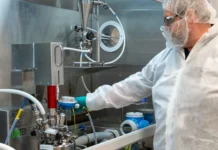
Traditional fed-batch manufacturing has long been the standard for biologic production, but the industry is increasingly turning to perfusion systems for complex molecules. Perfusion involves the continuous removal of spent media and the addition of fresh nutrients, while the cells are retained in the bioreactor. This approach allows for much higher cell densities and maintains the cells in a steady state for extended periods. The constant environment provided by perfusion systems is particularly beneficial for proteins that are sensitive to degradation or those that require precise control over glycosylation patterns. For organizations engaged in large molecule development supporting complex biologic drug programs, perfusion offers a way to produce high quality material with a smaller bioreactor footprint.
The scalability of perfusion systems has improved significantly with the development of single use bioreactor technology and advanced cell retention devices. These systems reduce the risk of contamination and simplify the transition from laboratory scale to clinical production. The use of automated control systems allows for the precise management of perfusion rates and nutrient concentrations, ensuring that the environment remains optimal for protein expression. This level of control is difficult to achieve in fed-batch systems, where the concentration of nutrients and metabolic byproducts fluctuates throughout the cycle. The steady state nature of perfusion also simplifies the integration of upstream and downstream processes, creating a continuous manufacturing flow.
Despite the advantages, the implementation of perfusion systems requires a high degree of technical expertise and a significant initial investment in infrastructure. The continuous nature of the process means that any equipment failure can have a major impact on the entire run. Therefore, manufacturers must prioritize system reliability and implement redundant control systems to mitigate these risks. Additionally, the large volume of media required for perfusion can be a significant cost driver, necessitating the development of efficient media recycling strategies. The long term benefits of improved product quality and increased throughput often outweigh these initial challenges, making perfusion an attractive option for the next generation of biologic programs.
Addressing post-translational modifications in complex protein structures
Post-translational modifications are a primary source of variability in biologic manufacturing and can significantly affect the therapeutic performance of the drug. Glycosylation, in particular, is a critical quality attribute that influences the stability, solubility, and receptor binding affinity of the protein. Achieving the desired glycan profile requires a deep understanding of the factors that influence the glycosylation pathway within the host cell. This includes the availability of nucleotide sugars, the activity of specific glycosyltransferases, and the physical environment of the bioreactor. When researchers focus on these initiatives, they must implement strategies to control these modifications throughout the production process.
The impact of glycosylation on the effector functions of monoclonal antibodies is well documented, with specific glycan structures being associated with enhanced or reduced antibody dependent cellular cytotoxicity. By tailoring the glycan profile through process control or cell line engineering, developers can optimize the therapeutic activity of the antibody for specific disease targets. This level of precision is essential for the development of biobetter products that offer improved efficacy over existing therapies. Additionally, the monitoring of other modifications, such as oxidation and deamidation, is necessary to ensure the long term stability of the product. These chemical changes can occur during production or storage and can lead to protein denaturation or aggregation.
Advanced formulation strategies are often required to protect complex proteins from degradation and to maintain their activity until administration. This involves the selection of appropriate buffers, stabilizers, and surfactants that minimize the impact of environmental stressors. The use of high concentration formulations is also becoming more common as the industry moves toward subcutaneous administration for patient convenience. However, high concentrations can increase the risk of protein-protein interactions and viscosity issues, requiring specialized analytical tools to evaluate the physical properties of the formulation. A holistic approach to addressing post-translational modifications and stability is essential for success.
Ensuring stability through innovative formulation strategies
The transition from a drug candidate to a stable therapeutic product requires a sophisticated understanding of the physical and chemical properties of the protein. Stability is not only a matter of preventing degradation but also ensuring that the molecule remains in its active conformation throughout its shelf life. This is particularly challenging for large molecules, which are prone to unfolding and aggregation under various stress conditions, such as temperature fluctuations, mechanical agitation, and exposure to light. When biologic programs are managed effectively, the formulation development process begins early in the discovery phase, allowing for the identification of potential stability issues before they become critical.
The use of high throughput formulation screening platforms allows for the rapid evaluation of hundreds of different buffer and excipient combinations. These platforms utilize small volumes of protein and automated analytical tools to assess stability under accelerated stress conditions. This data driven approach enables researchers to identify the optimal formulation parameters in a fraction of the time required by traditional methods. The inclusion of novel excipients, such as amino acids and sugar alcohols, can provide additional stabilization for proteins that are particularly sensitive to degradation. Additionally, the development of lyophilized formulations offers a way to extend the shelf life of products that are unstable in the liquid state, though this adds complexity to the manufacturing and administration process.
Strategic consideration of the final delivery device is also an integral part of the formulation development process. The interaction between the protein and the primary packaging materials, such as glass vials or pre filled syringes, can impact the stability and quality of the product. For example, the presence of silicone oil or tungsten residues in syringes can induce protein aggregation. By evaluating these interactions early, developers can select the most appropriate packaging materials and design formulations that are compatible with the intended delivery system. This integrated approach ensures that the final product meets the highest standards of safety and quality for the patient. The continued innovation in formulation science is a vital component of the success of modern biologic programs.