




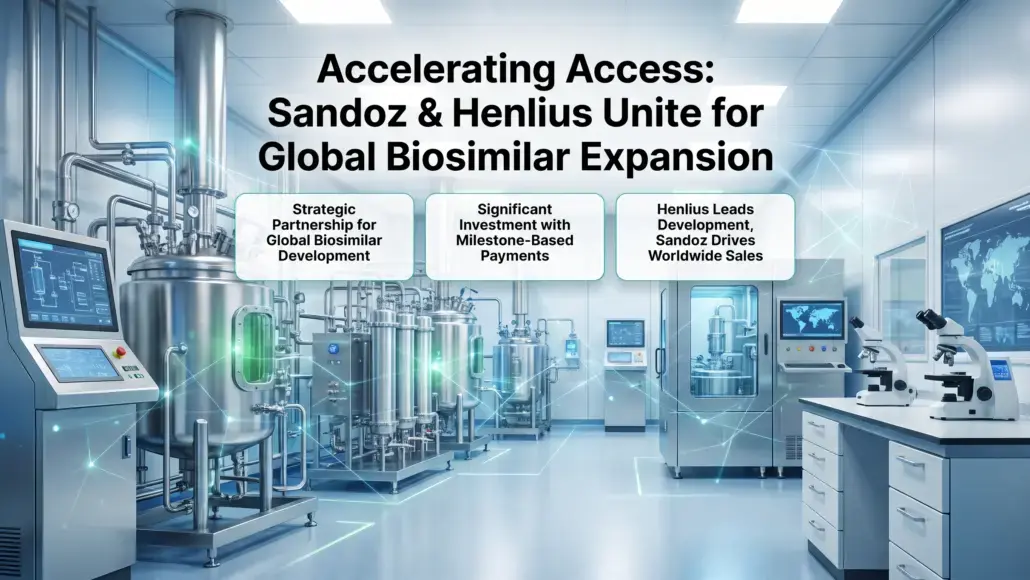
Sandoz has entered into a collaboration agreement with Shanghai Henlius Biotech to co-develop a series of new biosimilars across international markets. The milestone-based transaction carries a total consideration of up to $322m, including near-term payments of up to $100.5m associated with initial product candidates. Under the terms of this biosimilar collaboration, Henlius will oversee development and manufacturing operations, while Sandoz retains exclusive commercialisation rights worldwide, excluding China. This wide-arching agreement expands upon a partnership established between the two companies in April of last year for oncology therapeutics.
Targeted Therapies and Pipeline Candidates
The newly agreed portfolio encompasses up to 10 biosimilars, with an initial group of assets already finalized by the partner companies. Key programs include a biosimilar referencing Erbitux (cetuximab), the Eli Lilly and Merck KGaA antibody approved for colorectal cancer and forms of squamous cell carcinoma. Global sales for Erbitux grew by 6.6% to reach $1.7bn in 2025; although its core patents have expired, no biosimilar alternatives have reached the market due to the structural complexity of the molecule.
The program scope also covers biosimilar candidates referencing Amgen’s cholesterol-lowering medication Repatha (evolocumab) and GSK’s systemic lupus treatment Benlysta (belimumab). In addition, a recombinant human hyaluronidase is currently in technical development to facilitate subcutaneous administration, designed to increase the dispersion and absorption of other injected medicines.
Executive Commentary and Market Landscape
Richard Saynor, CEO of Sandoz, commented on the development:
“Expanding access to life-enhancing medicines for patients around the world lies at the heart of everything we do. By strengthening our collaboration with Henlius through this strategic agreement, one of our largest ever in biosimilars, we are not only underlining our commitment to patients but also taking another step towards capturing a significant share of the unprecedented biosimilar market opportunity that lies ahead.”
In an analytical research note, Jefferies analysts designated the link-up as “one of the largest biosimilar partnering agreements in Sandoz’s history”, adding that they “expect further in-licensing activity [at the company] to fill an upcoming industry pipeline void”.
Industry Loss-of-Exclusivity Outlook
The Henlius agreement broadens an already expansive development program at Sandoz, elevating the Swiss company’s biosimilar pipeline from 39 assets to a potential total of 46. The biosimilar collaboration arrives as the pharmaceutical sector confronts a major ongoing patent cliff. According to a 2025 report from GlobalData, the share of global prescription drug sales under patent protection is projected to decline from 12% in 2022 to 4% in 2030.
Addressing this industry transition, Sandoz stated that the transaction “represents another milestone in [its] strategy to capitalise on a significant share of the unprecedented global biosimilar loss-of-exclusivity market over the decade”.