











Airing Live on August 20, 2026
11:00AM EST | 5:00PM CEST
From Clinical to Commercial Manufacturing
Container closure integrity testing confirms whether a package meets defined requirements. But a pass/fail result does not always reveal when process variation began, what caused it, or whether the same risk is developing elsewhere in production.
That visibility gap matters because force patterns can begin to change before defects become visible or are detected downstream. By the time a problem is identified, the process condition that contributed to it may have been present much earlier.
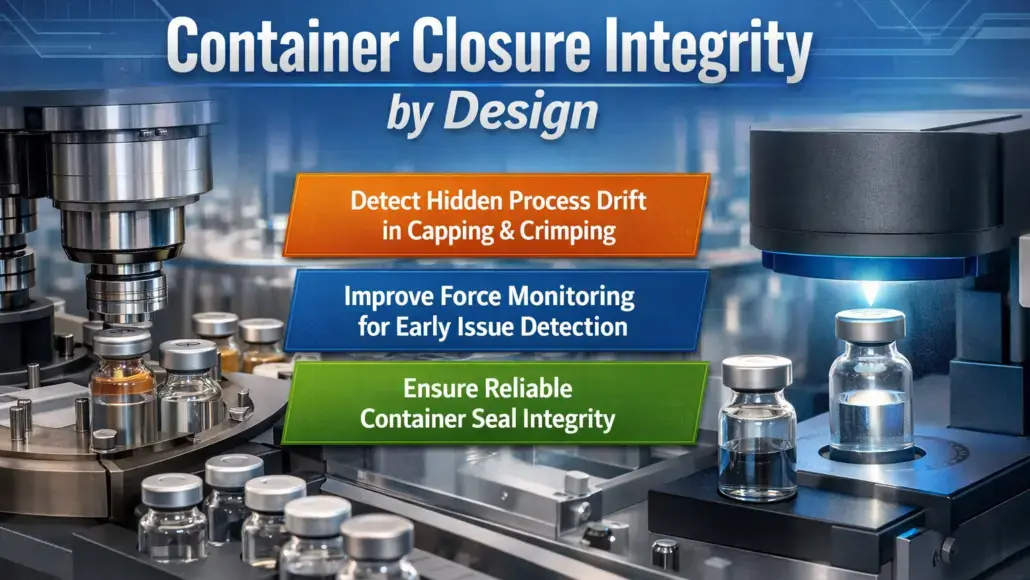
This webinar explores where that visibility gap occurs, why visual inspection and downstream container closure integrity testing may not reveal the process conditions behind a defect, and how earlier insight into applied forces during capping and crimping can support stronger integrity assurance before variation leads to rejects.
What you’ll take away:
- How to identify changes in force patterns as they develop, rather than reconstructing process conditions after a defect is detected
- Where visual inspection and pass/fail testing leave blind spots and how force data helps close them
- How force visibility at the product-equipment interface reinforces your contamination control strategy and quality risk management
- What proactive process data means for faster, cleaner process qualification and long-term product protection
This session will show how SmartSkin’s solutions reveal the actual force patterns your containers experience at the equipment interface giving your team a clear view of the conditions influencing seal quality, in real terms, before variation turns into a reject.