




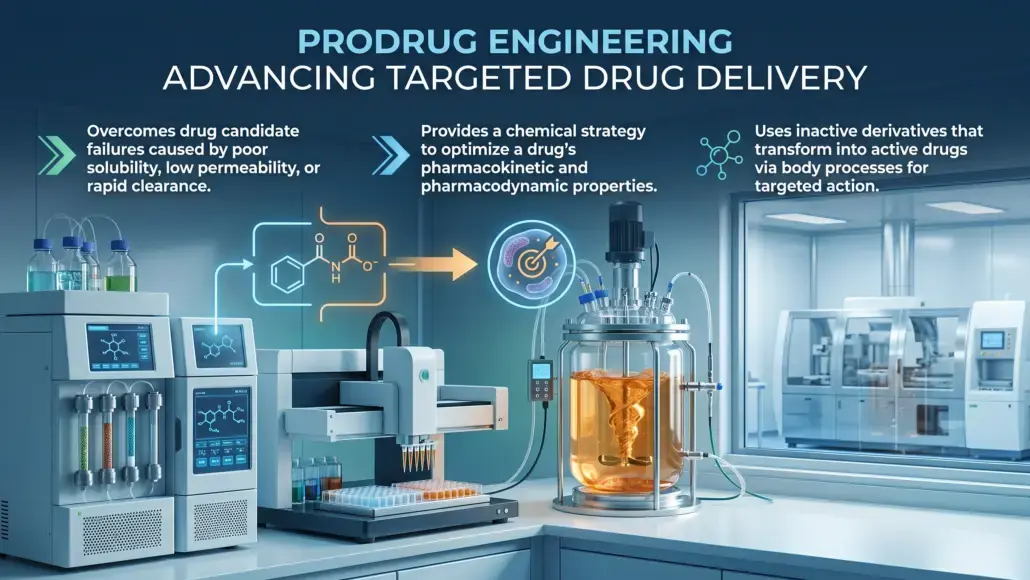
The pharmaceutical industry continuously seeks methods to optimize the pharmacokinetic and pharmacodynamic properties of active pharmaceutical ingredients. Many promising drug candidates fail in development due to poor solubility, low permeability, or rapid metabolic clearance. Prodrug engineering advancing targeted drug delivery offers a chemical solution to these biological hurdles. A prodrug is a pharmacologically inactive derivative of a parent drug that requires a chemical or enzymatic transformation within the body to release the active molecule. This strategic modification allows for the circumvention of various physiological barriers, ensuring that the drug reaches its intended site of action in a safe and effective manner. By tailoring the activation mechanism to specific tissues or conditions, prodrugs can significantly enhance the therapeutic index of a wide range of medicines.
Chemical Strategies for Enhancing Bioavailability and Stability
The design of a prodrug often begins with the identification of a specific limitation in the parent drug molecule. If a drug is too polar to cross the intestinal membrane, it can be modified with lipophilic groups to increase its permeability. Conversely, if a drug is too hydrophobic to be formulated in an aqueous solution, the addition of ionizable or hydrophilic moieties can improve its solubility. Prodrug engineering advancing targeted drug delivery utilizes various chemical linkages, such as esters, amides, and carbamates, to attach these functional groups. The choice of linkage is critical, as it determines the stability of the prodrug in different environments and the rate at which the active drug is released.
Esters are among the most common prodrug modifications because they are easily synthesized and are susceptible to hydrolysis by ubiquitous esterase enzymes in the blood and liver. This approach has been successfully used to improve the oral absorption of several antiviral and cardiovascular drugs. However, for more targeted applications, scientists may use more stable linkages that are only cleaved by specific enzymes overexpressed in diseased tissues. For instance, phosphate prodrugs are often employed to increase the solubility of intravenous drugs, as they are rapidly converted back to the parent drug by alkaline phosphatases on the surface of cell membranes. These chemical adjustments not only improve the initial absorption of the drug but also protect it from premature degradation, extending its half-life and reducing the frequency of dosing.
Site-Specific Activation and Tissue Targeting Mechanisms
The true power of prodrug engineering advancing targeted drug delivery lies in its ability to achieve site-specific activation. By exploiting the unique biochemical environment of certain tissues, researchers can design prodrugs that remain inactive until they reach their target. This is particularly valuable in oncology, where the goal is to deliver high doses of cytotoxic agents to tumor cells while minimizing exposure to healthy tissues. One common strategy is to target the hypoxic environment of solid tumors. Certain prodrugs are designed to undergo reduction only in the absence of oxygen, a condition that is rare in normal tissues but common in the core of a tumor.
Another approach involves targeting enzymes that are specifically upregulated in certain diseases. For example, many cancers overexpress specific proteases or glycosidases. By attaching a drug to a substrate that is specifically recognized by these enzymes, the drug is only released in the vicinity of the tumor cells. This strategy has been applied to the development of antibody-drug conjugates (ADCs), where a potent cytotoxin is linked to an antibody via a cleavable linker. While ADCs are a distinct class of therapeutics, the principles of prodrug engineering are fundamental to their design. Similarly, prodrugs can be designed to respond to changes in pH. The acidic environment of the stomach or the endosomes within a cell can trigger the release of a drug from a pH-sensitive carrier, ensuring that the therapeutic payload is delivered exactly where it is needed most.
Reducing Toxicity and Improving the Safety Profile
Beyond improving efficacy, prodrug engineering advancing targeted drug delivery is a vital tool for reducing the toxicity associated with many therapeutic agents. Many drugs cause adverse effects because they interact with receptors or enzymes in non-target tissues. By masking the active site of the drug or altering its distribution pattern, a prodrug can prevent these unwanted interactions. For example, some non-steroidal anti-inflammatory drugs (NSAIDs) can cause significant gastric irritation when taken orally. By formulating these drugs as prodrugs that are only activated after they have passed through the stomach and entered the bloodstream, the local irritating effect on the gastric mucosa can be eliminated.
Furthermore, prodrugs can be used to overcome issues related to “first-pass” metabolism. When an oral drug is absorbed, it passes through the liver, where it may be rapidly metabolized before it ever reaches the systemic circulation. By designing a prodrug that bypasses or resists early hepatic metabolism, a higher proportion of the active drug can reach the target site. This not only improves efficacy but also reduces the burden on the liver and minimizes the formation of potentially toxic metabolites. The ability to fine-tune the metabolic pathway of a drug through prodrug engineering allows for a more predictable and controlled therapeutic response, which is essential for managing drugs with a narrow therapeutic window.
Analytical Challenges and Future Directions in Prodrug Design
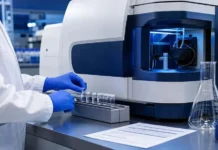
The development of prodrugs introduces additional layers of complexity to the pharmaceutical manufacturing and analytical testing processes. Scientists must not only characterize the parent drug but also the prodrug itself and any intermediates or byproducts formed during its activation. This requires the use of sophisticated analytical techniques, such as high-performance liquid chromatography (HPLC) and mass spectrometry, to monitor the stability and conversion kinetics of the prodrug in various biological matrices. Understanding the rate of conversion is essential for determining the correct dosage and ensuring that the drug levels remain within the therapeutic range.
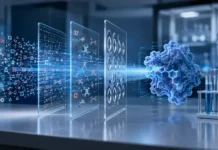
As the industry moves toward more complex delivery systems, such as nanoparticles and gene therapies, prodrug engineering advancing targeted drug delivery will continue to evolve. Researchers are now exploring the use of “smart” prodrugs that can respond to external stimuli, such as light, ultrasound, or magnetic fields. These systems offer an unprecedented level of control over the timing and location of drug release. Additionally, the integration of computational modeling and artificial intelligence is helping scientists predict the behavior of prodrugs in silico, allowing for the rapid screening of thousands of potential candidates. This digital approach to drug design is expected to accelerate the development of next-generation prodrugs, providing new hope for patients with conditions that are currently difficult to treat. The continued refinement of prodrug strategies represents a cornerstone of modern pharmaceutical innovation, driving the transition toward truly personalized and precise medicine.