









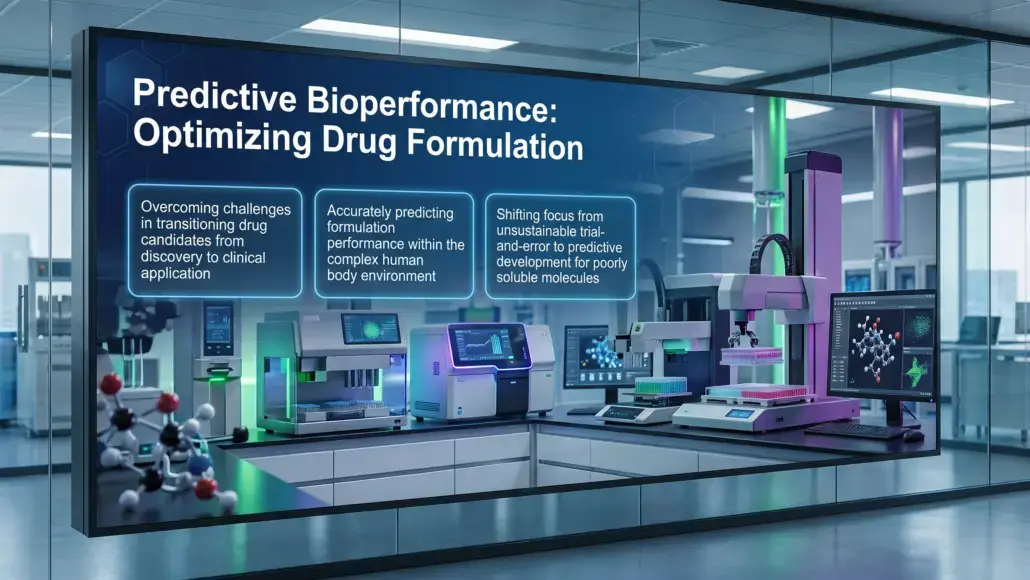
The pharmaceutical industry faces persistent challenges in the transition of drug candidates from discovery to clinical application. A primary obstacle is the accurate prediction of how a formulation will perform within the complex biological environment of the human body. As drug pipelines increasingly feature highly potent but poorly soluble molecules, the traditional trial-and-error approach to formulation development has become unsustainable. Instead, the focus has shifted toward predictive bioperformance optimizing drug formulation, a methodology that integrates computational modeling, advanced in vitro testing, and mechanistic insights to anticipate clinical outcomes before the first human dose is administered. This shift is driven by the need to reduce development timelines and minimize the risk of late-stage clinical failure due to suboptimal bioavailability or inconsistent pharmacokinetic profiles.
Integration of Physiologically Based Pharmacokinetic Modeling in Development
The application of physiologically based pharmacokinetic (PBPK) modeling represents a fundamental change in how formulation scientists approach drug design. These models simulate the absorption, distribution, metabolism, and excretion (ADME) of a drug by accounting for both the physicochemical properties of the molecule and the physiological characteristics of the target population. By using predictive bioperformance optimizing drug formulation techniques, researchers can identify the specific factors that limit oral absorption, such as gastric emptying rates, intestinal pH variations, or enzyme metabolism. This level of detail allows for the creation of virtual populations where the impact of physiological variability on drug exposure can be assessed.
Rather than relying solely on static dissolution tests, PBPK models incorporate dynamic variables that reflect the actual conditions of the gastrointestinal tract. This includes the interplay between drug solubility and intestinal permeability, which is often described using the Biopharmaceutics Classification System (BCS). For molecules in BCS Class II or IV, where solubility or permeability is low, predictive modeling helps determine whether a lipid-based delivery system, a solid dispersion, or a micronization strategy will be most effective. The ability to simulate these outcomes provides a rational basis for selecting excipients and manufacturing processes that are tailored to the specific needs of the molecule. Additionally, these models support the development of clinically relevant dissolution specifications, ensuring that the in vitro testing environment reflects the critical quality attributes that drive in vivo performance.
Advanced In Vitro Tools and Mechanistic Dissolution Testing
Traditional dissolution testing methods, such as the USP Apparatus I or II, are often insufficient for predicting the complex behavior of modern drug products. While these methods are essential for quality control and ensuring batch-to-batch consistency, they do not always capture the precipitation, supersaturation, or food-effect phenomena that occur in vivo. To enhance the accuracy of predictive bioperformance optimizing drug formulation, the industry has adopted more sophisticated in vitro tools. These include multicompartmental dissolution systems that mimic the transition of a drug from the stomach to the small intestine. By simulating the changing pH environment and the presence of bile salts, these systems provide a more realistic assessment of drug release and solubilization.
Flux-based assays have also emerged as a critical component of the predictive toolkit. These assays measure the rate at which a drug moves across a biomimetic membrane while simultaneously undergoing dissolution. This simultaneous measurement of dissolution and permeation is particularly valuable for formulations that rely on maintaining a supersaturated state. If a drug precipitates too quickly after entering the small intestine, its bioavailability will be severely compromised. Through the use of advanced analytics and real-time monitoring, scientists can observe these dynamics and adjust the formulation to include precipitation inhibitors or surfactants that stabilize the drug in solution. This mechanistic understanding is vital for ensuring that the formulation maintains its performance across different patient groups and dietary conditions.
Data-Driven Selection of Excipients and Delivery Platforms
The selection of excipients is no longer a matter of historical preference but a data-driven process aimed at optimizing the biopharmaceutical profile of the drug. Excipients play a functional role in modulating drug release, enhancing solubility, and protecting the active pharmaceutical ingredient from degradation. Within the framework of predictive bioperformance optimizing drug formulation, the interaction between the drug and the excipient is scrutinized at the molecular level. Computational chemistry and molecular dynamics simulations are utilized to predict how specific polymers will interact with a drug molecule to prevent crystallization or improve wetting.
For instance, in the development of amorphous solid dispersions, the choice of polymer is critical for maintaining the stability of the amorphous state during storage and upon ingestion. Predictive tools allow scientists to screen hundreds of polymer-drug combinations in silico to identify those with the highest glass transition temperatures and strongest intermolecular interactions. Similarly, for lipid-based delivery systems, predictive modeling can determine the optimal ratio of oils, surfactants, and co-solvents to ensure the formation of stable microemulsions in the intestinal fluid. This targeted approach to excipient selection reduces the number of experimental iterations required, leading to faster development cycles and more reliable product performance. It also allows for the early identification of potential compatibility issues that could lead to chemical instability or reduced efficacy over time.
Regulatory Impact and the Future of Virtual Bioequivalence
The regulatory environment is increasingly supportive of predictive modeling as a means of ensuring drug quality and efficacy. Regulatory agencies, such as the FDA and EMA, have recognized the value of PBPK modeling in supporting biowaivers, justifying clinically relevant specifications, and predicting the impact of formulation changes. The concept of virtual bioequivalence is gaining traction, where computational models are used to demonstrate that a new formulation or a generic version of a drug will perform similarly to the reference product. This approach has the potential to significantly reduce the need for large-scale bioequivalence studies in humans, particularly for post-approval changes or the development of pediatric dosage forms.
The integration of predictive bioperformance optimizing drug formulation into the regulatory submission process requires a high level of model validation and transparency. Scientists must demonstrate that their models are based on sound physiological principles and that the input data is accurate and reliable. As the industry moves toward more personalized medicine, these predictive tools will be essential for adjusting dosage regimens based on individual patient characteristics, such as genetics, age, or disease state. The continued evolution of these technologies will likely lead to a future where drug development is almost entirely informed by digital twins and virtual simulations, ensuring that every patient receives a formulation that is optimized for their specific biological needs. This progress represents a major step forward in the quest to deliver safer, more effective medicines to the global population while maintaining the highest standards of pharmaceutical excellence.