











The pharmaceutical industry has long been characterized by its massive investment in research and development, often coupled with a high rate of attrition. Historically, the process of drug formulation the science of combining an active pharmaceutical ingredient with various excipients to create a stable and effective medicine has been a laborious, manual endeavor. Scientists would rely on their experience and intuition to conduct thousands of “wet lab” experiments, searching for the perfect combination that ensures the drug remains stable, dissolves correctly, and reaches its target in the body. However, the rise of artificial intelligence in drug formulation is currently dismantling this inefficient model, replacing it with a data-driven approach that promises to accelerate the delivery of life-saving treatments to patients worldwide.
At its core, the application of AI in this field involves the use of machine learning drug development techniques to process and learn from complex biological and chemical data. Instead of testing every possible combination of ingredients, AI algorithms can sift through decades of historical data, identify hidden patterns, and predict which formulations are most likely to succeed. This move toward predictive modeling pharma represents a transition from descriptive science understanding why something happened to prescriptive science predicting what will happen and how to optimize it. As a result, the time required to develop a stable drug formulation is being slashed from years to months, fundamentally altering the economics of the biopharmaceutical sector.
The Power of Machine Learning in Recipe Optimization
One of the most immediate impacts of artificial intelligence in drug formulation is seen in the optimization of multi-component systems. A typical formulation might contain ten or more different excipients, each serving a unique purpose from binders and fillers to stabilizers and flavorings. The interaction between these components and the active drug is often non-linear and incredibly complex. Machine learning algorithms, particularly neural networks and random forests, excel at handling this complexity. They can simultaneously analyze hundreds of variables to determine the optimal concentration of each ingredient, ensuring the highest possible stability and performance.
Furthermore, AI-driven digital formulation tools are being used to solve the long-standing problem of “drug-excipient incompatibility.” By training models on chemical structure databases, AI can predict if a certain excipient will cause the active drug to degrade over time. This proactive screening allows formulators to rule out problematic combinations early in the process, avoiding costly failures during the late stages of development. By reducing the reliance on physical stability testing, which can take six months or more to provide definitive answers, AI is enabling a much more agile and responsive R&D environment.
Predictive Modeling for Bioavailability and Performance
Beyond the physical stability of the pill or injection, the ultimate measure of a formulation’s success is its performance in the human body. Predictive modeling pharma is increasingly being used to forecast how a drug will dissolve in the gastrointestinal tract and how much of it will be absorbed into the bloodstream a parameter known as bioavailability. AI models can simulate the environment of the human gut, taking into account factors like pH variability, enzyme presence, and food effects. This allows researchers to “test” their formulations on virtual patient populations before entering clinical trials.
This capability is especially vital for the development of complex drug molecules and biologics, which are notoriously difficult to deliver. For instance, AI can help design lipid nanoparticles that are optimized for mRNA delivery, predicting which lipid structures will provide the best protection for the delicate genetic cargo while ensuring efficient entry into the cell. By grounding these decisions in machine learning drug development, pharmaceutical companies can move forward with a much higher degree of confidence, knowing that their chosen formulation is mathematically optimized for clinical success. This precision is a cornerstone of the modern pharmaceutical landscape, where the cost of failure is too high to be left to chance.
Streamlining Regulatory Compliance and Data Integrity
The introduction of artificial intelligence in drug formulation also has significant implications for regulatory affairs. Agencies like the FDA are increasingly encouraging the use of “Quality by Design” (QbD) principles, which require a deep understanding of how manufacturing variables affect the final product’s quality. AI tools provide the perfect framework for QbD, as they can define the “design space” the safe operating window for a formulation with unparalleled accuracy. By using AI to monitor real-time data from the manufacturing floor, companies can ensure that every batch of medicine meets the same high standards, reducing the risk of recalls and ensuring a consistent supply of medication.
However, the use of AI also introduces new challenges in terms of data integrity and “explainability.” Regulatory bodies require that the decisions made by AI models are transparent and understandable. This is leading to the rise of “Explainable AI” (XAI) in the pharma sector, where models are designed to provide a clear rationale for their predictions. By ensuring that the “black box” of AI is opened, researchers can satisfy regulatory requirements while still reaping the benefits of advanced computation. This balance of innovation and oversight is essential for maintaining public trust in the medications that AI is helping to create.
Collaborative Intelligence and the Future of Discovery
As we look toward the future, the role of artificial intelligence in drug formulation will likely evolve from a standalone tool into a collaborative partner for human scientists. This “augmented intelligence” approach combines the intuitive and creative capabilities of experienced formulators with the raw processing power of machine learning. Researchers can use AI to explore “unconventional” formulation spaces that they might not have considered, leading to breakthroughs in the delivery of drugs that were previously thought to be undeliverable.
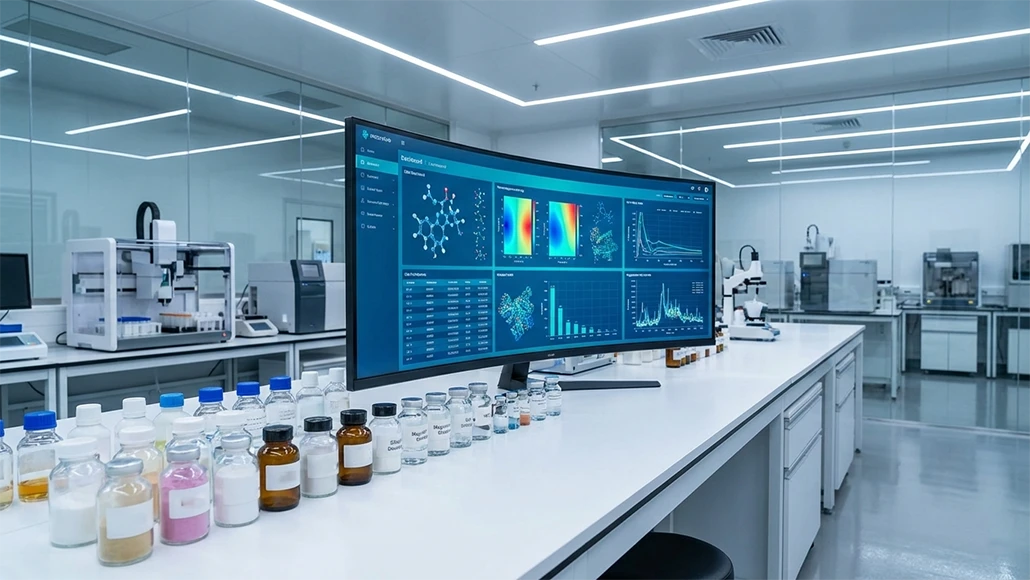
Moreover, the integration of AI with automated “robotic” laboratories is creating a closed-loop system of discovery. In these facilities, an AI model designs an experiment, a robot executes it, and the resulting data is immediately fed back into the model to refine the next prediction. This autonomous cycle of learning and experimentation is the ultimate realization of digital formulation tools, promising a future where new therapies can be developed with a speed and precision that was unimaginable just a decade ago. The ongoing digital transformation of the pharma industry is not just about adopting new software; it is about reimagining the very nature of pharmaceutical science for the 21st century.