









Close
Novotech
Jabsco PureFlo 21 Single Use

South Korean Pharma Sector Attracts Despite Drug Nod Delays

Note* - All images used are for editorial and illustrative purposes only and may not originate from the original news provider or associated company.

Subscribe

- Never miss a story with notifications

- Gain full access to our premium content

- Browse free from any location or device.

Media Packs

Expand Your Reach With Our Customized Solutions Empowering Your Campaigns To Maximize Your Reach & Drive Real Results!

– Access the Media Pack Now

– Book a Conference Call

Leave Message for Us to Get Back

Related stories

How Mobile Field Hospitals Are Changing Emergency Care

Healthcare systems can collapse overnight, particularly in natural disasters...

How Automation Is Transforming Mail-Order Pharmacy Operations: Efficiency, Accuracy and ROI

This article includes: Expanding the Role of Mail-Order Pharmacies ...

Designing Biotech Financial Models for Series B Success

Building a compelling Series B case in biopharma goes well beyond efficacy data and market size projections. Sophisticated investors are increasingly focused on CMC risk, licensing obligations, and the defensibility of your manufacturing timeline. This article breaks down what the financial model behind a strong Series B actually looks like and what quietly kills deals that should have worked.
- Advertisement -

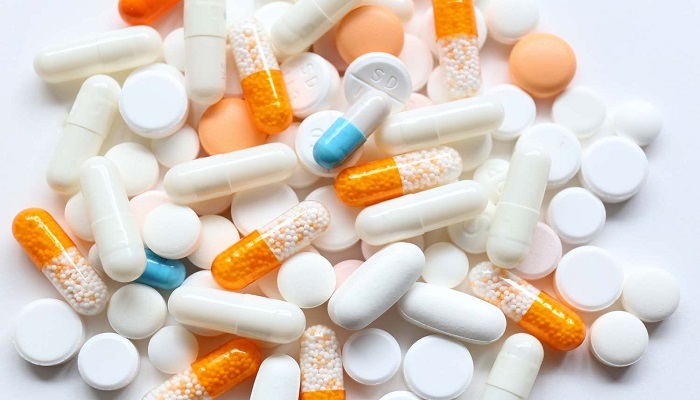
According to a survey from Fitch Solutions, South Korea’s pharmaceutical market attractiveness is expected to stay strong despite ongoing concerns about the country’s slow pace of drug authorizations.

According to the analysis, the pharmaceutical business will remain competitive due to high per-capita spending on drugs and a highly creative R&D environment.

Fitch stated that the government’s support for the pharmaceutical industry, as demonstrated by the recent announcement of new legislation to improve medicine accessibility, will be beneficial for South Korea’s long-term potential as an attractive proposition for pharmaceutical firms.

Pharmaceutical sales are expected to expand at a 4.3% compound annual growth rate (CAGR) in local market terms, growing from KRW28.5 trillion in 2022 to KRW35.3 trillion by 2027, according to Fitch. It equates to a $32.1 billion gain overall.

It has been suggested that the predicted extension of the schedule for pharmaceutical approval in South Korea is likely to continue.

According to the Ministry of Food and Drug Safety (MFDS), the review length for 235 medications licensed in South Korea between 2011 and 2020 climbed to 353 days in 2020 from 276 days in 2011, as per a research study completed in 2022 by the Korea Research-based Pharma Industry Association (KRPIA).

The US Food and Drug Administration, European Medicines Agency, and Japan’s Pharmaceuticals and Medical Devices Agency have decreased the timeframe for new drug approval and review by ten, five, and three days, respectively, between 2011 and 2020.

According to Fitch, patients in South Korea continue to be at a disadvantage in terms of the number of novel medications available, although gradual improvements will continue to close the gap.

Despite this, it is anticipated that South Korea will persist in upholding applicable regulations to augment the availability of medication and guarantee that progressive products are suitably appraised.

In November 2022, the South Korean Ministry of Food and Drug Safety (MFDS) declared the commencement of a new program, known as Global Innovative Products on Fast Track (GIFT), which is analogous to the breakthrough therapy designation system of the United States Food and Drug Administration (FDA).

In the span of two years, the Korean Fast Track system has granted expedited authorization to more than 20 medications, among them being treatments for the orphan, cancer, and COVID-19 diseases, as reported by Fitch.
Latest stories

Related stories

How Mobile Field Hospitals Are Changing Emergency Care

Healthcare systems can collapse overnight, particularly in natural disasters...

How Automation Is Transforming Mail-Order Pharmacy Operations: Efficiency, Accuracy and ROI

This article includes: Expanding the Role of Mail-Order Pharmacies ...

Designing Biotech Financial Models for Series B Success

Building a compelling Series B case in biopharma goes well beyond efficacy data and market size projections. Sophisticated investors are increasingly focused on CMC risk, licensing obligations, and the defensibility of your manufacturing timeline. This article breaks down what the financial model behind a strong Series B actually looks like and what quietly kills deals that should have worked.

CMC Bottleneck in Drug Development and IND Delays

Ask any experienced biopharma program manager what derails an IND filing most often, and the answer is rarely surprising: it is CMC. Not insufficient efficacy data, not toxicology surprises CMC. This article examines why Chemistry, Manufacturing, and Controls continues to be the most underestimated risk in early drug development, and what program leaders can do about it.

Subscribe

- Never miss a story with notifications

- Gain full access to our premium content

- Browse free from any location or device.

Media Packs

Expand Your Reach With Our Customized Solutions Empowering Your Campaigns To Maximize Your Reach & Drive Real Results!

– Access theMedia Pack Now

– Book a Conference Call

Leave Message for Us to Get Back

Translate »