








Close
CDMO Safety Testing 2026
Novotech

Cancer Mutation Analysis Through AI- A Strong Step Forward

Note* - All images used are for editorial and illustrative purposes only and may not originate from the original news provider or associated company.

Subscribe

- Never miss a story with notifications

- Gain full access to our premium content

- Browse free from any location or device.

Media Packs

Expand Your Reach With Our Customized Solutions Empowering Your Campaigns To Maximize Your Reach & Drive Real Results!

โ€“ Access the Media Pack Now

โ€“ Book a Conference Call

โ€“ Leave Message for Us to Get Back

Related stories

Novartis Expands Radioligand Therapy Manufacturing in US

Swiss pharmaceutical company Novartis has started construction of a...

AI-Driven Cold Chains Transforming Pharma Supply Systems

The integration of artificial intelligence into cold chain management is reshaping the pharmaceutical supply landscape. AI-driven cold chains utilize predictive visibility and intelligent thermal control to optimize logistics operations across global networks. By anticipating risks and automating complex decisions, these systems ensure the integrity of temperature-sensitive medications, significantly enhancing the reliability and efficiency of pharmaceutical distribution on a global scale.

Cold Chain Intelligence Enhancing Pharma Logistics Safety

Global pharmaceutical logistics faces unprecedented challenges in maintaining product integrity during transit. Cold chain intelligence offers a sophisticated solution by integrating predictive monitoring and thermal assurance into a connected supply chain. This approach ensures that life-saving medications and vaccines reach their destination without compromising safety or efficacy, marking a significant evolution in healthcare distribution.
- Advertisement -

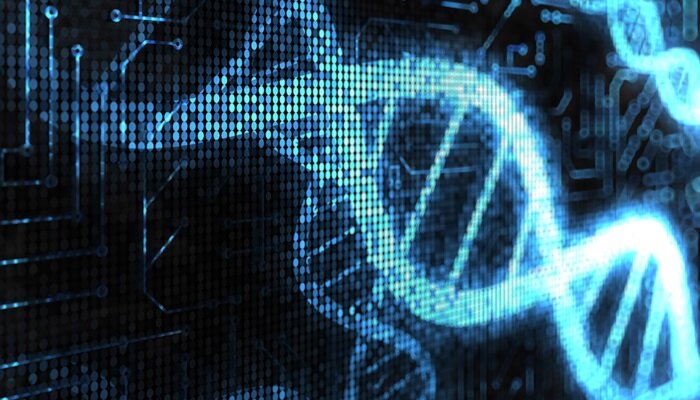
When single-cell data is combined with a self-learning algorithm, it is a revelation as to how structural changes can go on to trigger cancer. This new methodology can indeed pave the road for cancer treatments that are personalised in nature.

Since cancer has many faces, it has a range of cancer mutations too. The totality of genomic alterations across an individual is what experts term the “mutational landscape.” Depending on the kind of cancer, these cancers differ from one another. It is well to be noted that people suffering from the same kind of cancer also have varied mutations.

Researchers have already documented mutational landscapes when it comes to different types of cancer. Somatic structural variants SVs account for more than half of the cancer-driving mutations. These happen to be those mutations in cells that pop up over the lifespan, like during cell division, when copying errors slide into the DNA and hence amend the structure of the chromosome.

These are hereditary in nature and are identified only in the cells that are affected and in the daughter cells. As age catches up, such genomic alterations tend to become more numerous, and the person’s mutation landscape resembles a unique mosaic.

Even though somatic SVs play a key role in the development of cancer, very little is known about them. As per Dr. Ashley Sanders, head of the Genome Stability and Somatic Mosaicism Lab at the Max Delbruck Center, there is still a dearth of methods that analyse effects on cell function. However, this is changing because of the new research findings that were recently published in one of the journals. A computational analysis method to identify as well as detect somatic EVs functional effect has been developed.

This has enabled the team to comprehend the molecular consequences related to individual somatic mutations across varied leukaemia patients, giving them new insights. It is also possible, according to Sanders, to use these findings to bring about therapies that target the mutated cells, thereby opening new gates when it comes to personalised medicine.

All these calculations happen to be based on Strand-seq data, which is an exclusive cell sequencing method that Sanders played a critical role in bringing about, and it was in 2012 that it was first introduced to the scientific community. This particular technique can analyse the cell genome in a much more detailed way than what happens with most conventional technologies.

Because of an experimental protocol which is sophisticated, this method can individually examine the two parental strands of the DNA.

Taking the work further, the research team is also able to gauge the nucleosome positions in each cell. Nucleosomes are DNA units that are wrapped around histone protein complexes. During gene expression, the position of the nucleosomes can differ with the wrapping, revealing if the gene is in an active state or not. The self-learning algorithm has been developed by Sanders which compares the gene activity within the patient cells either with or without SV mutations, thereby allowing to gauge the molecular impact of the structural variants. Sanders explains that they can now take a patient sample, have a look at the mutations that caused the disease, and also learn about the signalling pathways that these mutations which are disease causing disrupt. The team, for instance, was able to identify a unique but aggressive mutation in one of the leukaemia patients. This nucleosome analysis helped researchers with the data and specifics of the signalling pathways that are involved.

Sanders says that a single test can speak volumes about the mechanism involved related to cells in cancer formation and one can thereby use this knowledge to bring to fore customized treatments which are specific to every patientโ€™s unique condition.

Never miss a pharmaceutical headline

The pharmaceutical industry moves fast โ€“ stay on top of it with our must - read briefings.

  • The top pharma and life sciences stories, straight to your inbox
  • The biggest news, features, interviews, and analysis
  • Dedicated coverage of the key developments driving the global pharmaceutical sector

Latest stories

Related stories

Novartis Expands Radioligand Therapy Manufacturing in US

Swiss pharmaceutical company Novartis has started construction of a...

AI-Driven Cold Chains Transforming Pharma Supply Systems

The integration of artificial intelligence into cold chain management is reshaping the pharmaceutical supply landscape. AI-driven cold chains utilize predictive visibility and intelligent thermal control to optimize logistics operations across global networks. By anticipating risks and automating complex decisions, these systems ensure the integrity of temperature-sensitive medications, significantly enhancing the reliability and efficiency of pharmaceutical distribution on a global scale.

Cold Chain Intelligence Enhancing Pharma Logistics Safety

Global pharmaceutical logistics faces unprecedented challenges in maintaining product integrity during transit. Cold chain intelligence offers a sophisticated solution by integrating predictive monitoring and thermal assurance into a connected supply chain. This approach ensures that life-saving medications and vaccines reach their destination without compromising safety or efficacy, marking a significant evolution in healthcare distribution.

Digital Supply Networks Strengthening Pharma Delivery

The transition from traditional linear supply chains to integrated digital supply networks is revolutionizing how pharmaceutical products are delivered. By leveraging connected visibility and real-time analytics, these networks enhance the resilience of cold chain operations. This technological evolution ensures that healthcare systems can respond dynamically to shifts in demand while maintaining the highest standards of safety and efficiency for patient care.

Subscribe

- Never miss a story with notifications

- Gain full access to our premium content

- Browse free from any location or device.

Media Packs

Expand Your Reach With Our Customized Solutions Empowering Your Campaigns To Maximize Your Reach & Drive Real Results!

โ€“ Access theMedia Pack Now

โ€“ Book a Conference Call

โ€“ Leave Message for Us to Get Back

Translate ยป