












Close
CDMO Safety Testing 2026
Novotech

WHO & Republic of Korea Tie-Up For Biomanufacturing Training

Note* - All images used are for editorial and illustrative purposes only and may not originate from the original news provider or associated company.

Subscribe

- Never miss a story with notifications

- Gain full access to our premium content

- Browse free from any location or device.

Media Packs

Expand Your Reach With Our Customized Solutions Empowering Your Campaigns To Maximize Your Reach & Drive Real Results!

โ€“ Access the Media Pack Now

โ€“ Book a Conference Call

โ€“ Leave Message for Us to Get Back

Related stories

SK Bioscience Inks Colombia Vaccine Localization Deal

In a critical step for Colombia vaccine localization, SK...

Choosing Analytical Instruments for Pharma QC Labs

Selecting the right laboratory equipment is a critical decision that directly impacts the efficiency, accuracy, and compliance of pharmaceutical operations. Evaluating analytical instruments pharma QC requirements involves a deep dive into technical specifications, vendor reliability, and the potential for long-term scalability. By choosing tools that integrate seamlessly with existing digital workflows and international regulatory standards, laboratory managers can ensure that their facility is equipped to handle the rigorous demands of modern drug testing and quality assurance. This strategic approach minimizes operational risk and ensures the delivery of safe and effective medications to patients globally.
- Advertisement -

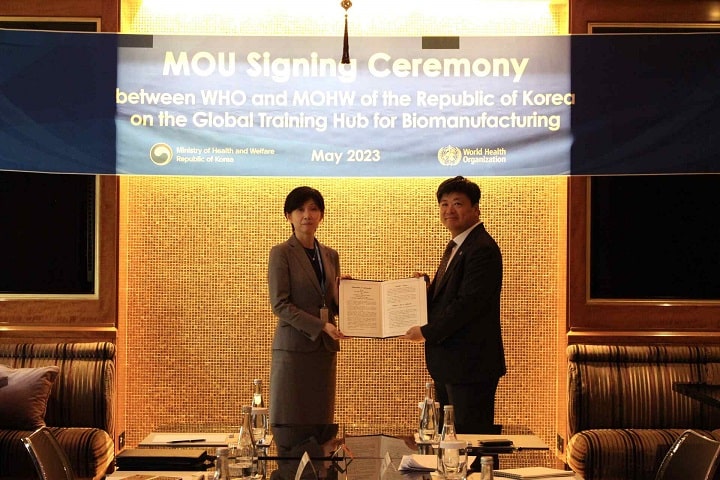
The World Health Organisation as well as the Republic of South Korea have gone ahead and inked a MoU so as to establish a worldwide training hub when it comes to biomanufacturing. The worldwide training centre will go on to serve entire low and middle-income countries (LMIC) so as to manufacture biologicals like insulin, vaccines, monoclonal antibodies, and also cancer medicines.

It is well to be noted that the COVID-19 pandemic went on to highlight the requirement to expand the local as well as regional production of vaccines as well as other mandatory health products across LMIC so as to make sure of equitable access.

To help countries with the know-how to quickly manufacture mRNA vaccines, the WHO, in collab with partners, went ahead and came up with the mRNA Technology Transfer programme with the launch of the hub facility in South Africa in April this year. The multilateral effort as well as other recent local manufacturing initiatives call for a workforce development strategy to bring on board, scale up, and also retain staff that work in these facilities with distinct competencies that are mandatory in bioproduction. These steps are indeed ambitious.

In order to address this gap, the WHO as well as the Republic of Korea have also gotten together in a closed partnership for more than a year and are now formalising their bent when it comes to the establishment of a worldwide training hub as far as biomanufacturing is concerned.

As per the Assistant Director General of WHO for Access to Medicines and Health Products, Dr. Yukiko Nakatani, they are delighted to ink this MoU so as to elevate their collaboration to another level and also partner when it comes to the development of an absolute training curriculum. They hope that this training hub, which happens to be world-class, will aid in building a skilled workforce and also ensure quality health products are developed across the world.

Apparently, the Korean government is offering a wide range of national training facilities as well as training programmes that cover the entire spectrum of biological development and is also widening its functions so as to accommodate a larger number of trainees across other nations with the construction of a Global Bio Education Campus anticipated to launch in 2025. At the Ministry of Health and Welfare, Republic of Korea, its Director General of the Global Vaccine Hub Office, Mr. Hwang Seunghyun, says that he hopes that the MoU will elevate the cooperation between Korea and WHO so as to make the biomanufacturing capacities of LMIC more robust.

Parallelly, the WHO is also intensifying the regulatory system’s strengthening so as to ensure the quality and safety of health products.

The stronger regulatory agencies shall also go on to scale up confidence across locally manufactured products as well as counter misinformation and, at the same time, thwart the availability of substandard and falsified drugs.

Never miss a pharmaceutical headline

The pharmaceutical industry moves fast โ€“ stay on top of it with our must - read briefings.

  • The top pharma and life sciences stories, straight to your inbox
  • The biggest news, features, interviews, and analysis
  • Dedicated coverage of the key developments driving the global pharmaceutical sector

Latest stories

Related stories

SK Bioscience Inks Colombia Vaccine Localization Deal

In a critical step for Colombia vaccine localization, SK...

Choosing Analytical Instruments for Pharma QC Labs

Selecting the right laboratory equipment is a critical decision that directly impacts the efficiency, accuracy, and compliance of pharmaceutical operations. Evaluating analytical instruments pharma QC requirements involves a deep dive into technical specifications, vendor reliability, and the potential for long-term scalability. By choosing tools that integrate seamlessly with existing digital workflows and international regulatory standards, laboratory managers can ensure that their facility is equipped to handle the rigorous demands of modern drug testing and quality assurance. This strategic approach minimizes operational risk and ensures the delivery of safe and effective medications to patients globally.

Spectrophotometers Driving Accuracy in Drug Quality

Precision in pharmaceutical analysis is fundamental to ensuring that every therapeutic agent delivered to a patient meets the highest safety and efficacy standards. The implementation of high-grade spectrophotometers drug quality control workflows provides a scientific basis for quantifying chemical properties and physical characteristics with unmatched reliability. By leveraging advanced spectral data, manufacturers can validate formulations and detect impurities early in the production cycle, thereby reinforcing the integrity of the global supply chain, ensuring regulatory compliance, and protecting the well-being of patients around the world.

Subscribe

- Never miss a story with notifications

- Gain full access to our premium content

- Browse free from any location or device.

Media Packs

Expand Your Reach With Our Customized Solutions Empowering Your Campaigns To Maximize Your Reach & Drive Real Results!

โ€“ Access theMedia Pack Now

โ€“ Book a Conference Call

โ€“ Leave Message for Us to Get Back

Translate ยป