












Close
CDMO Safety Testing 2026
Novotech

Pharma Future : Innovations In Drug Delivery Nanoparticles

Note* - All images used are for editorial and illustrative purposes only and may not originate from the original news provider or associated company.

Subscribe

- Never miss a story with notifications

- Gain full access to our premium content

- Browse free from any location or device.

Media Packs

Expand Your Reach With Our Customized Solutions Empowering Your Campaigns To Maximize Your Reach & Drive Real Results!

โ€“ Access the Media Pack Now

โ€“ Book a Conference Call

โ€“ Leave Message for Us to Get Back

Related stories

Quantum machine learning in pharma research growth

The convergence of artificial intelligence and quantum processing is opening new avenues for rapid discovery and innovation within the life sciences. By utilizing advanced mathematical models that operate across multi-dimensional datasets, researchers can now identify complex biological patterns and predict molecular behaviors with a speed that surpasses traditional computational methods. This transformation is accelerating the development of novel therapies and providing deeper insights into disease mechanisms, fundamentally altering the trajectory of pharmaceutical research and development.

Quantum sensors enabling advanced drug diagnostics

The landscape of medical diagnostics is being reshaped by the introduction of sensing technologies that operate with atomic-level sensitivity. By providing high-fidelity measurements and real-time data, these tools allow for the detection of subtle biological changes and chemical markers that were previously invisible to conventional equipment. This advancement is enhancing the precision of drug testing and clinical monitoring, leading to earlier disease detection and more effective therapeutic interventions across the global healthcare spectrum.

Quantum computing optimizing pharma supply chains

The global distribution of pharmaceutical products is facing unprecedented challenges that demand a new level of logistical precision and resilience. By utilizing advanced analytical models, companies can now navigate complex international networks with greater efficiency, ensuring that temperature-sensitive medicines and life-saving therapies reach their destinations without delay. This evolution toward a more intelligent and responsive supply chain is critical for maintaining public health and responding effectively to emerging medical needs on a global scale.
- Advertisement -

The pharmaceutical sector is still a hub for new patent developments. The development of novel treatment paradigms, the severity of unfulfilled requirements, and the increasing significance of technology like pharmacogenomics, digital therapies, and artificial intelligence are what propel activity. According to GlobalData’s study on Innovation in pharma: drug delivery nanoparticles, there have been over 136,000 patents filed and issued in the pharmaceutical business in only the previous three years.

But not all inventions are created equal, and they don’t always go up. Rather, an S-shaped curve represents their progression, which matches their normal lifetime of early emergence, rapid acceptance, and eventual stabilization and maturity.

Understanding an innovation’s present acceptance level, expected future trajectory, and potential effect all depend on where it is in its journey. It is particularly true for innovations that are in the emerging or accelerating phases.

The pharmaceutical sector will be shaped by almost 80 developments.

There are more than 80 innovation areas that will influence the pharmaceutical industry’s future, according to GlobalData’s Technology Foresights, which uses innovation intensity models based on more than 730,000 patents to construct the S-curve for the sector.

Tyrosine kinase inhibitors, mutant DNA polymerases, and modified multispecific antibodies are disruptive technologies in the early phases of application that should be constantly monitored within the emerging innovation stage. Adoption of the accelerated innovation fields, such as peptide pharmacophores, antibody-drug conjugates, and neuroprotective medicines, has been gradually rising. Targeted therapeutics for amyloid precursors and modified vector HIV-1 vaccines, which are already well-established in the market, are examples of mature innovation domains.

Drug delivery using nanoparticles is a significant advancement in the pharmaceutical

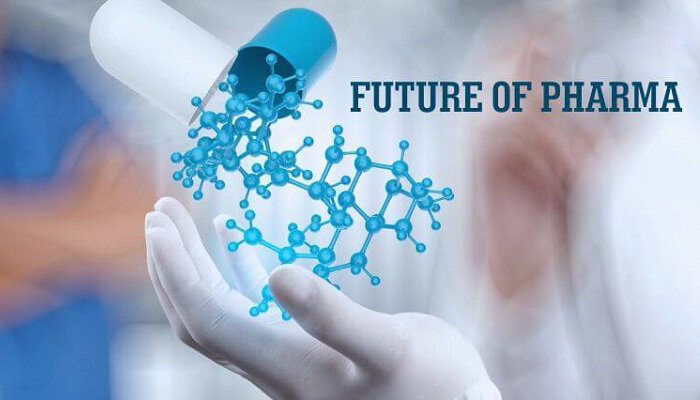
A nanoparticle is a tiny particle with a size range of one to one hundred nanometers. Controlled release treatment and targeted tissue distribution are two new uses for nanoparticles in medication administration. Patients are more likely to comply with less frequent doses and suffer less medication toxicity when pharmaceuticals are delivered in a focused and sustained manner. The most prevalent kinds of nanoparticles include metal, liposome, nanocrystal, and polymeric nanoparticles. One of the main benefits of this is the delivery of insoluble medications into the bloodstream via stable colloidal systems and regulated drug release.

Additionally, GlobalData’s study identifies the leading businesses in each field of innovation and evaluates the possible effect and reach of their patenting activities across various applications and geographical areas. The research and use of nanoparticles for medication delivery is being carried out by 130 firms, including technology suppliers, well-known pharmaceutical corporations, and emerging start-ups, according to GlobalData.

Application diversity quantifies how many applications are found for every patent. It divides businesses into two categories: “diversified” and “niche” innovators.

The term “geographic reach” describes how many nations each patent is registered in. It illustrates the range of planned geographic use, from “global” to “local.”

The company that files the most patents for medication delivery nanoparticles is Bristol-Myers Squibb. With a $125.28 billion market valuation, BMS is mainly focused on therapeutic initiatives related to cancer, hematology, cardiovascular disease, immunology, and fibrosis. Abraxane, a PX albumin-bound nanoparticle formulation with 130 nm particles, was authorized by the FDA in 2005 by Bristol-Myers Squibb to treat metastatic breast cancer. The two major patent filers in the field of medication delivery using nanoparticles are Ipsen and Insmed.

Well Shield is the leading business in terms of application variety, followed by Intezyne and Crystalplex.

In terms of geographic reach, Insmed is in the lead. Second and third place go to South Korean pharmaceutical business Yuhan and Laboratory Skin Care, respectively.

View the most recent Pharmaceutical thematic study report from GlobalData to learn more about the major topics and emerging technologies that are upending the pharmaceutical sector.

Latest stories

Related stories

Quantum machine learning in pharma research growth

The convergence of artificial intelligence and quantum processing is opening new avenues for rapid discovery and innovation within the life sciences. By utilizing advanced mathematical models that operate across multi-dimensional datasets, researchers can now identify complex biological patterns and predict molecular behaviors with a speed that surpasses traditional computational methods. This transformation is accelerating the development of novel therapies and providing deeper insights into disease mechanisms, fundamentally altering the trajectory of pharmaceutical research and development.

Quantum sensors enabling advanced drug diagnostics

The landscape of medical diagnostics is being reshaped by the introduction of sensing technologies that operate with atomic-level sensitivity. By providing high-fidelity measurements and real-time data, these tools allow for the detection of subtle biological changes and chemical markers that were previously invisible to conventional equipment. This advancement is enhancing the precision of drug testing and clinical monitoring, leading to earlier disease detection and more effective therapeutic interventions across the global healthcare spectrum.

Quantum computing optimizing pharma supply chains

The global distribution of pharmaceutical products is facing unprecedented challenges that demand a new level of logistical precision and resilience. By utilizing advanced analytical models, companies can now navigate complex international networks with greater efficiency, ensuring that temperature-sensitive medicines and life-saving therapies reach their destinations without delay. This evolution toward a more intelligent and responsive supply chain is critical for maintaining public health and responding effectively to emerging medical needs on a global scale.

Quantum security strengthening pharma data protection

Protecting sensitive patient information and proprietary research data is becoming a critical priority as the pharmaceutical industry navigates an increasingly complex digital landscape. By integrating advanced cryptographic methods and secure communication protocols, researchers can ensure the integrity of their clinical findings and the privacy of those involved in medical trials. This shift toward a more resilient digital infrastructure is essential for maintaining public trust and fostering global collaboration in the pursuit of life-saving therapeutic breakthroughs.

Subscribe

- Never miss a story with notifications

- Gain full access to our premium content

- Browse free from any location or device.

Media Packs

Expand Your Reach With Our Customized Solutions Empowering Your Campaigns To Maximize Your Reach & Drive Real Results!

โ€“ Access theMedia Pack Now

โ€“ Book a Conference Call

โ€“ Leave Message for Us to Get Back

Translate ยป