














Ergonomics should be a top priority for any organization undergoing digital transformation in the pharmaceutical industry. Integrating mobile health into your operations can revolutionize patient recruitment and retention in clinical trials, medication adherence, real-time data collection and monitoring, and drug development. However, adopting smart devices, mobile apps, digital therapeutics, communication tools and other mHealth solutions can impact productivity and data integrity.
Pivoting to mobile health has a learning curve. An ergonomic workplace is key to reducing your team’s mental workload, enabling them to overcome technical and usability issues and manage data privacy and cybersecurity risks that arise when adapting to new technology in pharmacy, biotechnology and generic drug manufacturing. Here are three ways to optimize your mobile pharma workforce with ergonomics.
Embracing Modular Spaces
Reimagine your office with modularity in mind. Modular amenities lend more versatility to your workplace, enabling you to reconfigure them for new processes to meet your operational needs. These features enable your team to adapt to ever-changing project requirements, research phases and regulatory workflows. From an ergonomic perspective, this adaptability is crucial because it reduces the physical strain and mental stress associated with working in a space ill-suited for the task at hand.
Prefabricated pods, moveable partitions and flexible furnishings are tried-and-true modular pharmaceutical workplace solutions. Modular units allow you to have laboratories, cleanrooms, GMP-compliant production areas and other controlled environments quickly without needing to build off-site and dealing with considerable operational disruption.
Modularity supports scalability. You can easily set up ad hoc workspaces for multidisciplinary teams of varying sizes that need to work together or separately, making your organization more agile.
Designing Comfortable Workstations
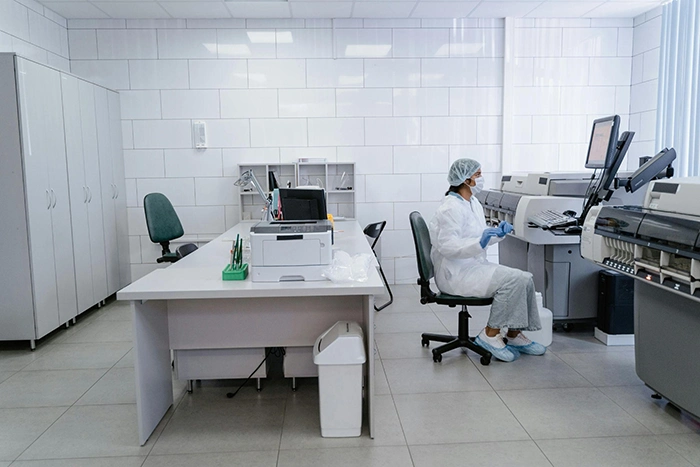
Digital transformation in the pharmaceutical industry often leads to increasingly sedentary lifestyles. Electronic processes keep employees glued to workstations. Work furniture with poor ergonomics causes bad posture, fatigue and musculoskeletal disorders, which can accelerate burnout by making already heavy workloads more physically and emotionally exhausting.
Proper chair, monitor and keyboard positioning is essential in designing comfortable workstations. The ideal chairs must have adjustable height and armrests and provide adequate lumbar support, allowing users to effortlessly sit upright and place both feet flat on the floor.
Observe a healthy distance between the monitor and the user. The ideal ergonomic monitor placement is around 20-40 inches away from the eyes, as this range promotes effective whole-body postural alignment. The ideal keyboard position is where the user can keep arms and hands neutral and relaxed. Tilting the keyboard’s top creates a more comfortable angle, helping reduce strain.
Creating Diverse Collaborative Zones

Remote and hybrid work arrangements are common among digitally transformed organizations in the pharmaceutical industry as a strategy to retain talent and gain more operational flexibility.
However, traditional office designs rarely foster creativity and innovation among geographically dispersed workforces. Designate work zones optimized for cross-functional groups to support collaboration as your teams shift between work modes.
Touchdown spots, project-based zones and quiet areas promote structure and autonomy. This strategy is a direct application of cognitive ergonomics, which aims to reduce mental fatigue by allowing employees to choose an environment that best suits their current task.
A quiet zone, for example, allows for the deep focus required for accurate data analysis, while a collaborative zone provides the tools and space for brainstorming. Put a premium on tech-enabled design, enabling in-office employees to have frictionless access to the tools they need whenever they need to connect with remote colleagues virtually.
Drive Productivity and Data Integrity With Ergonomics
The successful integration of mobile health technologies in the pharmaceutical industry hinges on the people using them, not just the technology itself. Prioritizing ergonomics is a strategic imperative. By embracing modular spaces, designing comfortable workstations and creating diverse collaborative zones, pharmaceutical companies can empower their workforce to navigate the challenges of digital transformation with greater ease and efficiency.
These ergonomic interventions foster a work environment that is agile, collaborative and conducive to focused work. Ultimately, investing in the well-being of your mobile pharma workforce is an investment in the future of your organization and the health of the patients you serve.