






Close
CDMO Safety Testing 2026
Novotech

Lilly Plans to Invest Additional $450 million at Manufacturing Site in Research Triangle Park

Note* - All images used are for editorial and illustrative purposes only and may not originate from the original news provider or associated company.

Subscribe

- Never miss a story with notifications

- Gain full access to our premium content

- Browse free from any location or device.

Media Packs

Expand Your Reach With Our Customized Solutions Empowering Your Campaigns To Maximize Your Reach & Drive Real Results!

โ€“ Access the Media Pack Now

โ€“ Book a Conference Call

โ€“ Leave Message for Us to Get Back

Related stories

BeOne Signs $2B Trispecific Antibody Deal with Huahui Health

BeOne Medicines has entered into a high-value agreement with...

Quantum Machine Learning in Pharma Research Growth

The convergence of artificial intelligence and quantum processing is opening new avenues for rapid discovery and innovation within the life sciences. By utilizing advanced mathematical models that operate across multi-dimensional datasets, researchers can now identify complex biological patterns and predict molecular behaviors with a speed that surpasses traditional computational methods. This transformation is accelerating the development of novel therapies and providing deeper insights into disease mechanisms, fundamentally altering the trajectory of pharmaceutical research and development.

Quantum Sensors Enabling Advanced Drug Diagnostics

The landscape of medical diagnostics is being reshaped by the introduction of sensing technologies that operate with atomic-level sensitivity. By providing high-fidelity measurements and real-time data, these tools allow for the detection of subtle biological changes and chemical markers that were previously invisible to conventional equipment. This advancement is enhancing the precision of drug testing and clinical monitoring, leading to earlier disease detection and more effective therapeutic interventions across the global healthcare spectrum.
- Advertisement -

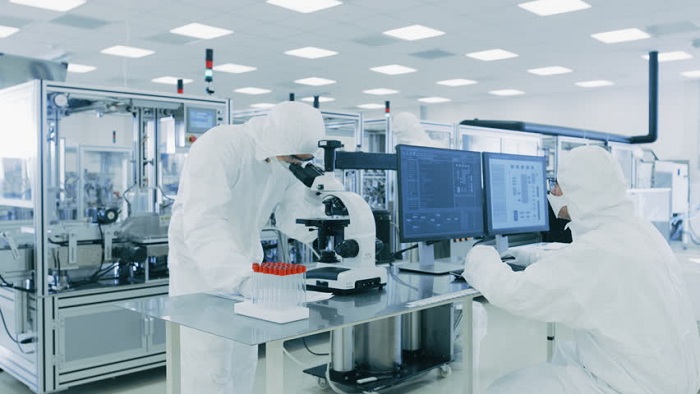
Eli Lilly and Company announced plans to invest an additional $450 million and create at least 100 new jobs to expand its manufacturing capacity at the company’s Research Triangle Park facility. The expansion includes additional parenteral filling, device assembly and packaging capacity to support an increased demand for Lilly’s incretin products that treat diabetes.

“As we move into 2023, Lilly is focused on finding innovative solutions to meet the growing demand for our medicines,” said Edgardo Hernandez, executive vice president and president, Lilly Manufacturing Operations. “Expanding our operations at Research Triangle Park will accelerate the rate at which we can produce medicines that patients rely on to address serious health challenges like diabetes. We’re on track to achieve the goal we shared in November 2022 of doubling incretin capacity by the end of this year, but this investment is key to ensuring even more patients will have access to medicines they need in the future.”

Since 2020, Lilly has committed roughly $4 billion to new manufacturing facilities in North Carolina, including $1.7 billion for the development and expansion of its site at Research Triangle Park. The company anticipates initial production at Research Triangle Park to begin this year, with preparations for inspections by the FDA ongoing.

Since 2014, Lilly has introduced 18 new medicines to make life better for people living with diseases like diabetes and cancer and aims to introduce several potential new medicines in 2023. This expansion will play a pivotal role in delivering supply of existing Lilly medications, while preparing to bring the next generation of medicines to patients worldwide.

“When companies already in North Carolina choose to expand here, it reaffirms our status as the best state to do business,” Governor Roy Cooper said. “Our strong communities and our dedicated, well-trained workforce will help Lilly continue to succeed.”

When fully operational in 2027, this phase of the project is expected to create at least 100 new jobs, primarily manufacturing personnel who will use advanced technology to produce incretin treatments and medical devices.

North Carolina’s workforce has extensive experience in pharmaceutical manufacturing, and Lilly has established partnerships with local entities to ensure more people in the community have an opportunity to receive the education necessary to produce life-changing medicines. Through partnerships between Lilly, Wake Tech, Durham Tech and other local colleges and organizations, residents with high school diplomas or community college credits have an opportunity to refine their skills and earn the credentials needed to begin careers in pharmaceutical manufacturing.

As Lilly prepares for future growth expected from potential new medicines to treat diabetes, obesity, Alzheimer’s disease, cancer and autoimmune conditions, the company anticipates further expansion of its global manufacturing footprint to ensure sufficient supply of medicine.


https://investor.lilly.com/news-releases/news-release-details/lilly-plans-invest-additional-450-million-manufacturing-site

Latest stories

Related stories

BeOne Signs $2B Trispecific Antibody Deal with Huahui Health

BeOne Medicines has entered into a high-value agreement with...

Quantum Machine Learning in Pharma Research Growth

The convergence of artificial intelligence and quantum processing is opening new avenues for rapid discovery and innovation within the life sciences. By utilizing advanced mathematical models that operate across multi-dimensional datasets, researchers can now identify complex biological patterns and predict molecular behaviors with a speed that surpasses traditional computational methods. This transformation is accelerating the development of novel therapies and providing deeper insights into disease mechanisms, fundamentally altering the trajectory of pharmaceutical research and development.

Quantum Sensors Enabling Advanced Drug Diagnostics

The landscape of medical diagnostics is being reshaped by the introduction of sensing technologies that operate with atomic-level sensitivity. By providing high-fidelity measurements and real-time data, these tools allow for the detection of subtle biological changes and chemical markers that were previously invisible to conventional equipment. This advancement is enhancing the precision of drug testing and clinical monitoring, leading to earlier disease detection and more effective therapeutic interventions across the global healthcare spectrum.

Quantum Computing Optimizing Pharma Supply Chains

The global distribution of pharmaceutical products is facing unprecedented challenges that demand a new level of logistical precision and resilience. By utilizing advanced analytical models, companies can now navigate complex international networks with greater efficiency, ensuring that temperature-sensitive medicines and life-saving therapies reach their destinations without delay. This evolution toward a more intelligent and responsive supply chain is critical for maintaining public health and responding effectively to emerging medical needs on a global scale.

Subscribe

- Never miss a story with notifications

- Gain full access to our premium content

- Browse free from any location or device.

Media Packs

Expand Your Reach With Our Customized Solutions Empowering Your Campaigns To Maximize Your Reach & Drive Real Results!

โ€“ Access theMedia Pack Now

โ€“ Book a Conference Call

โ€“ Leave Message for Us to Get Back

Translate ยป