








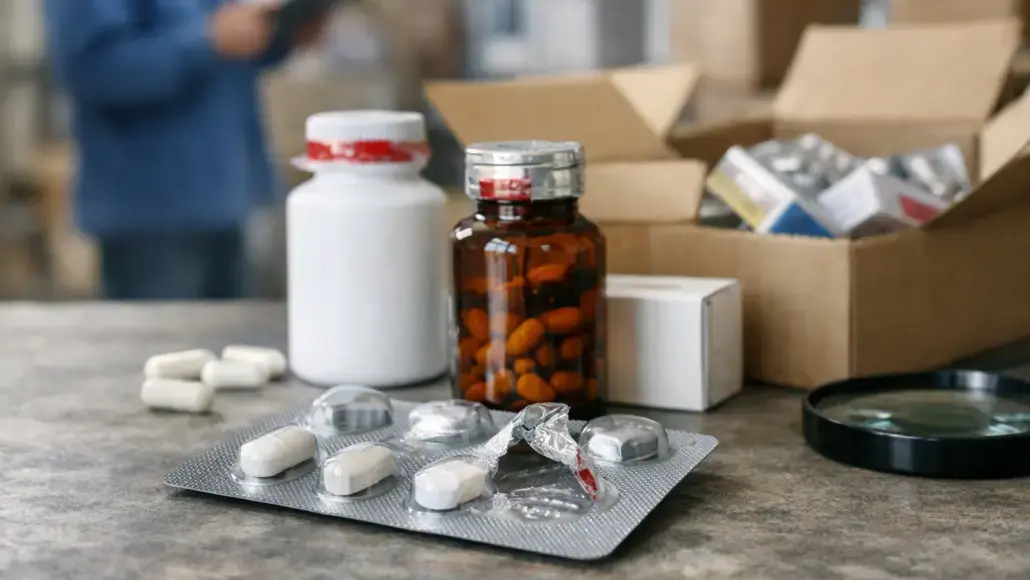
Counterfeit pharmaceuticals represent one of the most dangerous threats facing the healthcare industry today. These fake medications endanger patient lives, drain revenue from legitimate manufacturers and undermine trust in pharmaceutical brands. Protecting your supply chain requires more than standard packaging. It demands layered security solutions that authenticate products at every stage of distribution.
The Scale and Impact of Pharmaceutical Counterfeiting
The global counterfeit medicine market generates between $200 billion and $432 billion annually, according to a 2022 study published in the Journal of Global Health. This staggering figure makes pharmaceuticals one of the largest targets for counterfeiting worldwide. The financial impact extends beyond direct revenue loss. Brand reputation damage, regulatory penalties and legal liability create cascading costs that can devastate even established pharmaceutical companies.
Patient safety stakes are equally severe. Counterfeit medications may contain incorrect active ingredients, dangerous contaminants or no therapeutic value whatsoever. When patients receive fake drugs, they face delayed treatment, adverse reactions or complete treatment failure. These outcomes create medical emergencies while exposing manufacturers to litigation and regulatory scrutiny.
How Serialization and Tamper-Evident Technologies Protect Supply Chains
Regulatory pressure continues to intensify globally. The Drug Supply Chain Security Act (DSCSA) in the United States and the Falsified Medicines Directive (FMD) in Europe mandate serialization and traceability requirements. Pharmaceutical companies must implement systems that track individual product units from manufacturing through distribution to dispensing. Compliance demands sophisticated packaging solutions that combine tamper-evident features, unique identifiers and real-time authentication capabilities.
Modern brand protection strategies layer multiple security elements into pharmaceutical packaging. Tamper-evident seals provide immediate visual confirmation of product integrity. RFID smart labels enable track-and-trace functionality throughout the supply chain.
Serialization assigns unique identifiers to each product unit, creating a stronger, more traceable chain of custody across the pharmaceutical supply chain. Cryptographic authentication offers invisible security features that counterfeiters cannot easily replicate. When integrated effectively, these technologies create formidable barriers against counterfeiting while supporting regulatory compliance.
Real-World Examples of Pharmaceutical Brand Protection
The following case studies demonstrate how pharmaceutical companies and healthcare providers have implemented tamper-evident packaging and serialization technologies to combat counterfeiting. Each example shows measurable improvements in supply chain security and patient safety.
Case Study 1: CCL Healthcare
Reading Hospital in Pennsylvania couldn’t track lot numbers in crash cart trays and kits, making medication recalls nearly impossible to manage. When COVID-19 vaccines rolled out, the hospital discovered incorrect vaccine counts, creating urgent patient safety and compliance concerns. The facility needed an RFID solution that could provide real-time visibility while eliminating labor-intensive manual processes, prompting hospital leadership to partner with CCL Healthcare.
CCL Healthcare worked with Kit Check to implement RFID smart labels encoded with Beyond Use Dating capabilities. The CCL Healthcare system provided real-time visibility into inventory levels, lot numbers and expiration dates throughout internal distribution. The company’s RFID labels helped Reading Hospital track vaccines more accurately from storage to administration.
The implementation delivered dramatic efficiency gains. Staff reduced restocking time to just 2-3 minutes per tray, compared to the previous 20-30-minute manual process, reclaiming valuable labor hours for patient care. CCL Healthcare’s RFID smart labels and tamper-evident packaging are manufactured in accordance with cGMP and ISO standards, with 100% electronic verification. The facility increased daily vaccine administration capacity while reducing waste from expired doses, showing how item-level visibility can support recall readiness, diversion prevention and stronger supply chain integrity
Case Study 2: Ennoventure
A multinational pharmaceutical conglomerate operating across 52 countries faced counterfeit drugs circulating through unregulated online pharmacies and gray markets. The crisis threatened brand reputation while the organization committed to reducing its carbon footprint by 40% by 2030. Traditional anti-counterfeiting solutions required additional packaging materials that ran counter to sustainability goals, creating tension between brand protection and environmental commitments until Ennoventure provided an alternative.
Ennoventure’s invisible cryptographic authentication integrated with digital patient leaflets, achieving both objectives without production disruption. The Ennoventure solution was deployed across all 52 countries in six weeks with zero downtime. Unlike conventional security features adding packaging waste, Ennoventure’s technology eliminates printed inserts while providing stronger authentication.
The technology reduced counterfeit exposure by 84% while preventing 222,500 patients from being exposed to counterfeits annually and eliminating 420 tons of annual packaging waste. Ennoventure’s implementation reduced supply chain waste by 23%.
Case Study 3: Kezzler
Pfizer estimated significant revenue losses for Viagra in Asian and African markets where counterfeits posed health risks and damaged brand credibility. The Hong Kong branch faced urgent pressure to restore consumer trust in a market plagued by fake pharmaceuticals. Pfizer needed an authentication solution that consumers could verify themselves without specialized equipment, leading them to Kezzler’s dual-identifier approach.
Kezzler designed an authentication system featuring visible and hidden unique identifiers on every Viagra pack. The visible 2D barcode and hidden alphanumeric UID beneath a peel-off layer created two-factor authentication verifiable via mobile phones. Kezzler’s labels were applied at distribution centers rather than packaging lines, allowing Pfizer to achieve full deployment within weeks.
The implementation delivered a rapid impact. Pfizer Hong Kong achieved a 40% drop in counterfeit medications within one year, dramatically improving consumer confidence. The success prompted Pfizer to extend Kezzler’s solution to Lipitor and Norvasc in Hong Kong and to replicate the implementation in several other countries, validating Kezzler as a scalable brand-protection strategy for high-value pharmaceuticals.
Frequently Asked Questions
Pharmaceutical manufacturers often have questions about how specific packaging technologies prevent counterfeiting and protect brand integrity.
How does tamper-evident packaging prevent pharmaceutical counterfeiting?
Tamper-evident packaging creates visible evidence when someone attempts to open or alter a pharmaceutical product. These features include breakaway seals, shrink bands and peel-off layers that cannot be replaced once removed. When integrated with unique serialization codes, tamper-evident packaging makes it immediately obvious if a product has been compromised during distribution. This combination prevents counterfeiters from replacing genuine medications with fakes inside authentic packaging.
What role does RFID technology play in pharmaceutical brand protection?
RFID smart labels enable real-time tracking of pharmaceutical products throughout the supply chain while providing authentication capabilities that are extremely difficult to counterfeit. Each RFID tag contains a unique identifier that links to product information, including manufacturer, lot number and expiration date.
The technology allows automated verification at receiving points, eliminating manual checks while creating an auditable trail. RFID also supports serialization requirements under regulations like DSCSA and EU FMD, helping pharmaceutical companies maintain compliance while protecting against diversion and counterfeiting.
Protecting Pharmaceutical Brand Integrity
The case studies above demonstrate that effective pharmaceutical brand protection delivers measurable results. Tamper-evident packaging, RFID smart labels, serialization and cryptographic authentication create layered security that counterfeiters cannot easily defeat. When implemented strategically, these technologies reduce counterfeit exposure, protect patients from harm and preserve brand reputation while supporting regulatory compliance across global markets.