














This article includes:
- Expanding the Role of Mail-Order Pharmacies
- Overcoming Operational Hurdles With Error-Reduction Systems
- Examining the Key Pillars of Pharmacy Automation Transformation
- Capsa Healthcare: A Blueprint for Automated Success
- Frequently Asked Questions About Pharmacy Automation
- Automating Solutions for Mail-Order Pharmacies
Mail-order and central-fill pharmacies are scaling rapidly, driven by demand for convenience and long-term medication management. That growth puts pressure on fulfillment systems to deliver speed, consistency and accuracy at high volume.
Automation has moved from a competitive advantage in your pharmacy to an operational requirement. To provide a clear view of this shift, we partnered with Capsa Healthcare to bring you this comprehensive guide with expert insights into how systematization is reshaping pharmacy workflows and performance.
Expanding the Role of Mail-Order Pharmacies
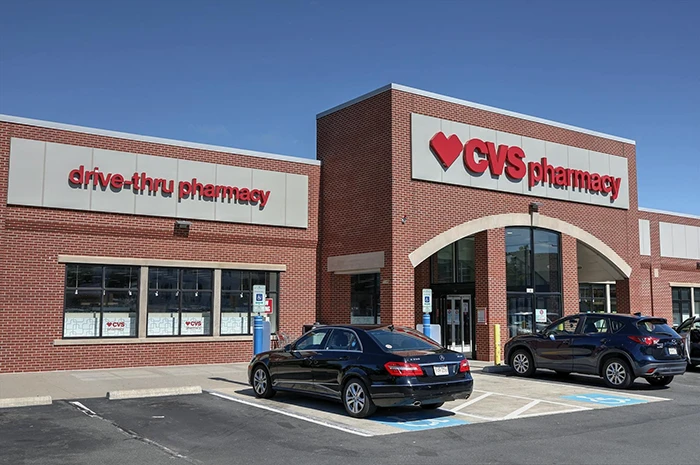
Mail-order prescription providers play a central role in managing chronic conditions at scale. As populations age and long-term therapies increase, prescription volumes continue to rise.
Traditional fulfillment models struggle to keep pace with that demand. Manual processes create bottlenecks, especially when handling repeat prescriptions, large batch orders and strict delivery timelines.
The global market for mail-order pharmacies has expanded and is set for dynamic growth to 2032. The market share is expected to increase from $57 billion to $193.6 billion, and production capacity, accessibility and continuity of care are key factors fueling this expansion. It depends on operational efficiency as a priority and not just a goal.
Overcoming Operational Hurdles With Error-Reduction Systems

High-volume pharmacy environments face three persistent challenges in error: risk, labor intensity and limited scalability. Manual dispensing introduces variability, and studies show that error rates range from 1.7% at the low end and 22% in extreme cases. This has a significant impact on patient safety and trust, with 7,000 deaths annually attributed to incorrect medication errors.
Labor and prescription volumes increase together, and larger staffing requirements affect margins and daily efficiency. Automated systems can fill in the gap while retaining sufficient human oversight. Your role as pharmacist or technician shifts toward verification, workflow management and exception handling while relying on technology to handle routine tasks.
Examining the Key Pillars of Pharmacy Automation Transformation
The leading dispensing technologies for mail-order prescription providers are built on the need for efficiency, accuracy and a clear return on investment.
Driving Unprecedented Efficiency
Automated dispensing and packaging systems process thousands of prescriptions per hour, with a throughput that exceeds manual capacity and reduces turnaround times across the board. Workflows become more predictable, and you can meet service-level agreements without overextending your staff or adding unnecessary shifts.
Ensuring Mission-Critical Accuracy
Accuracy requires layered verification and barcode scanning, automated counting and digital validation to reduce the chance of incorrect fills. Each step secures the closed-loop system with a structure that minimizes rework and supports consistent output, even during peak demand.
Realizing a Clear Return on Investment
Operational support systems can strengthen your bottom line as labor cost per prescription decreases, while throughput increases without requiring additional staffing. You can also reduce the costs of errors and inefficient handling. Over time, those gains compound into a clear return on investment. Technology adoption across the sector is accelerating the shift, with dispensing technologies and AI playing an increasingly important role in planning and execution.
Capsa Healthcare: A Blueprint for Automated Success
Capsa Healthcare stands out by focusing on full workflow design rather than isolated tools. Its approach centers on building integrated systems that align with each pharmacy’s unique operational needs.
Instead of layering systematization onto existing inefficiencies, its teams develop end-to-end solutions that streamline dispensing, packaging and verification within a single ecosystem. The company’s central fill automation solutions help you scale with demand, increasing your operation’s throughput while maintaining consistent workflows.
Capsa Healthcare’s systems support better organization, improved efficiency and adaptable infrastructure for long-term growth. This model reflects the success of a broader industry shift toward automation as a strategic investment instead of a tactical upgrade.
Frequently Asked Questions About Pharmacy Automation
Pharmacy dispensing technology raises several practical questions, especially regarding implementation and long-term impact.
What is the first step to implementing pharmacy automation?
Start with a workflow analysis. Identify bottlenecks, error points and inefficiencies before selecting technology. Streamlined operations work best when they solve defined problems.
How does automation integrate with a pharmacy’s existing software?
Most modern solutions connect with pharmacy management systems to maintain data continuity. Integration allows prescriptions, inventory and verification processes to move through a single workflow.
Does automation replace pharmacy staff?
It supports staff rather than replacing them. It removes repetitive tasks and allows teams to focus on oversight, verification and workflow management.
What is the future of mail-order pharmacy automation?
Expect deeper integration with AI’s predictive analytics. Systems will continue to improve demand forecasting, workflow optimization and operational visibility.
Automating Solutions for Mail-Order Pharmacies
Your pharmacy reshapes based on scale, management, accuracy and costs, which is where streamlined operations will begin to take on greater prominence. With growing demand, the gap between manual and automated operations continues to widen.
Pharmacies that invest in workflow optimization today can strategically reposition for long-term efficiency and stability. Those that delay adoption risk falling behind as expectations for speed and reliability continue to increase.